
I am so excited to share this Crochet Lace Motif tutorial with you, because it is genuinely one of the most beautiful things my hook has ever touched. Each petal-shaped element radiates outward with such precision and grace that the finished fabric looks like it was lifted from a Victorian dressing table.
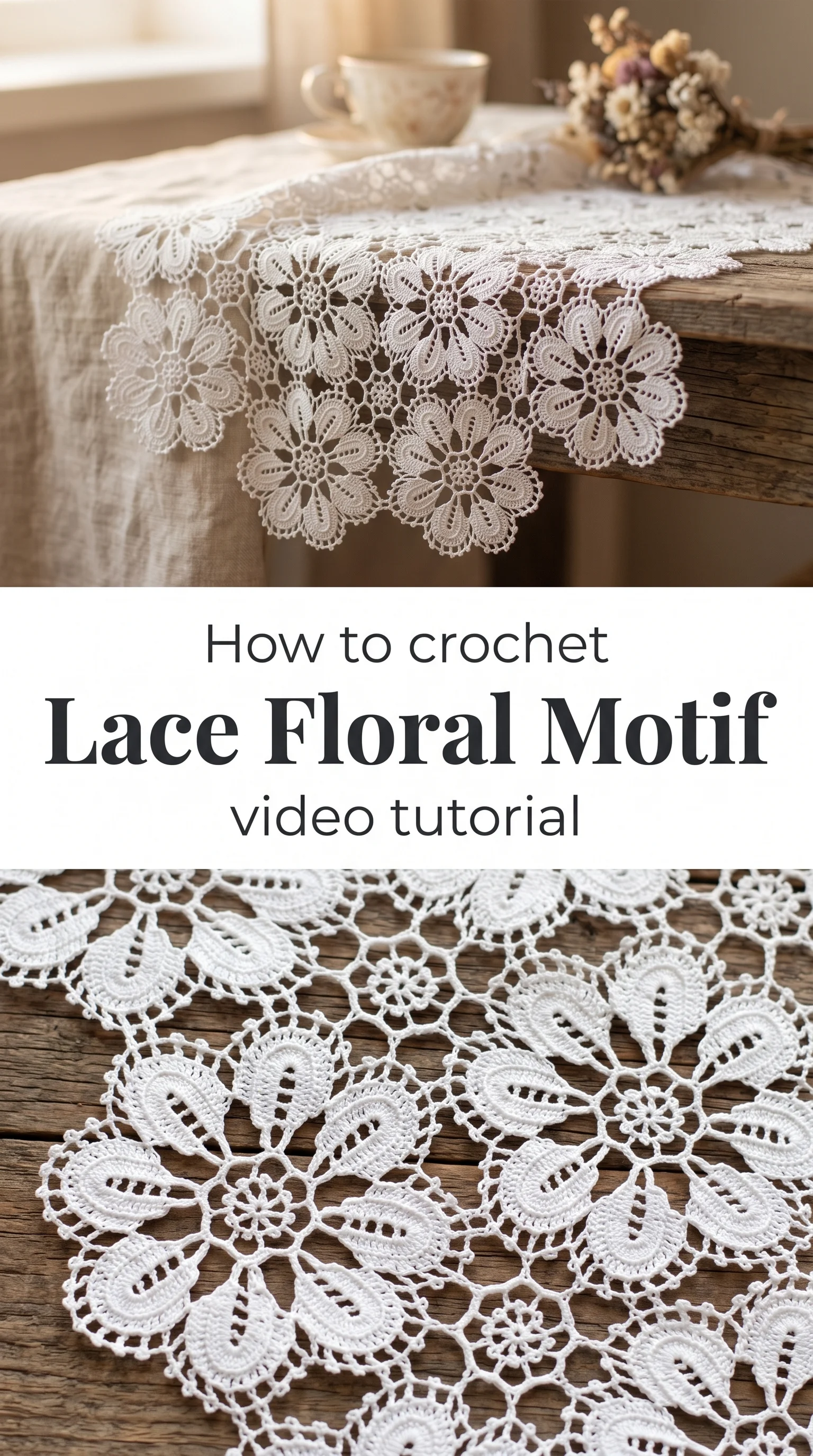
The Lace Motif
This Crochet Lace Motif is the kind of piece that makes people lean in closer and ask, with wide eyes, whether it came from a shop in Paris. Each motif blooms from a tight center ring into eight structured petals, their surfaces built up with raised, elongated loops that carry a dimensional texture you can feel beneath your fingertips. The overall impression is airy yet structured, like frozen snowflakes or pressed garden flowers, and the negative space between each joined motif gives the fabric a lightness that contradicts how substantial it actually feels. Whether you are an adventurous beginner or a comfortable intermediate crocheter, this pattern grows naturally and rewards you row by round with something genuinely lovely.
Lace Motif Related Posts:
- Crochet 3D Flower Square: A Beautiful Granny Motif
- Crochet Mitered Granny Square: A Colorful Classic Motif
- Crochet Cobblestone Blanket: A Textured Home Essential
- Crochet Knotted Headband: A Chic Everyday Accessory
White and ivory are the classic choices here, and for good reason because the open lace structure needs a clean, high-contrast background to show off every loop and arch. That said, a soft dusty rose or the palest sage green would carry this Crochet Lace Motif directly into modern slow-fashion territory, giving it a fresh and wearable softness. You can let the color do the storytelling while the stitch work speaks its quiet, intricate language.
Materials and Tools
For this Crochet Lace Motif, you will want a fingering weight or size 10 crochet thread cotton yarn, the kind that has a smooth, tightly plied finish that holds the crisp definition of each petal without going limp or fuzzy. A 1.5mm to 2mm steel crochet hook is ideal for working with thread-weight cotton, giving you the tight, even tension that lace demands, though if you prefer a slightly more relaxed drape, a 2.5mm hook works beautifully too. Pure cotton is the fiber of choice here because it blocks into shape like a dream and maintains that brilliant white over many washes. A tapestry needle with a blunt tip is essential for weaving in your ends invisibly, which matters enormously when the fabric is this open and delicate.
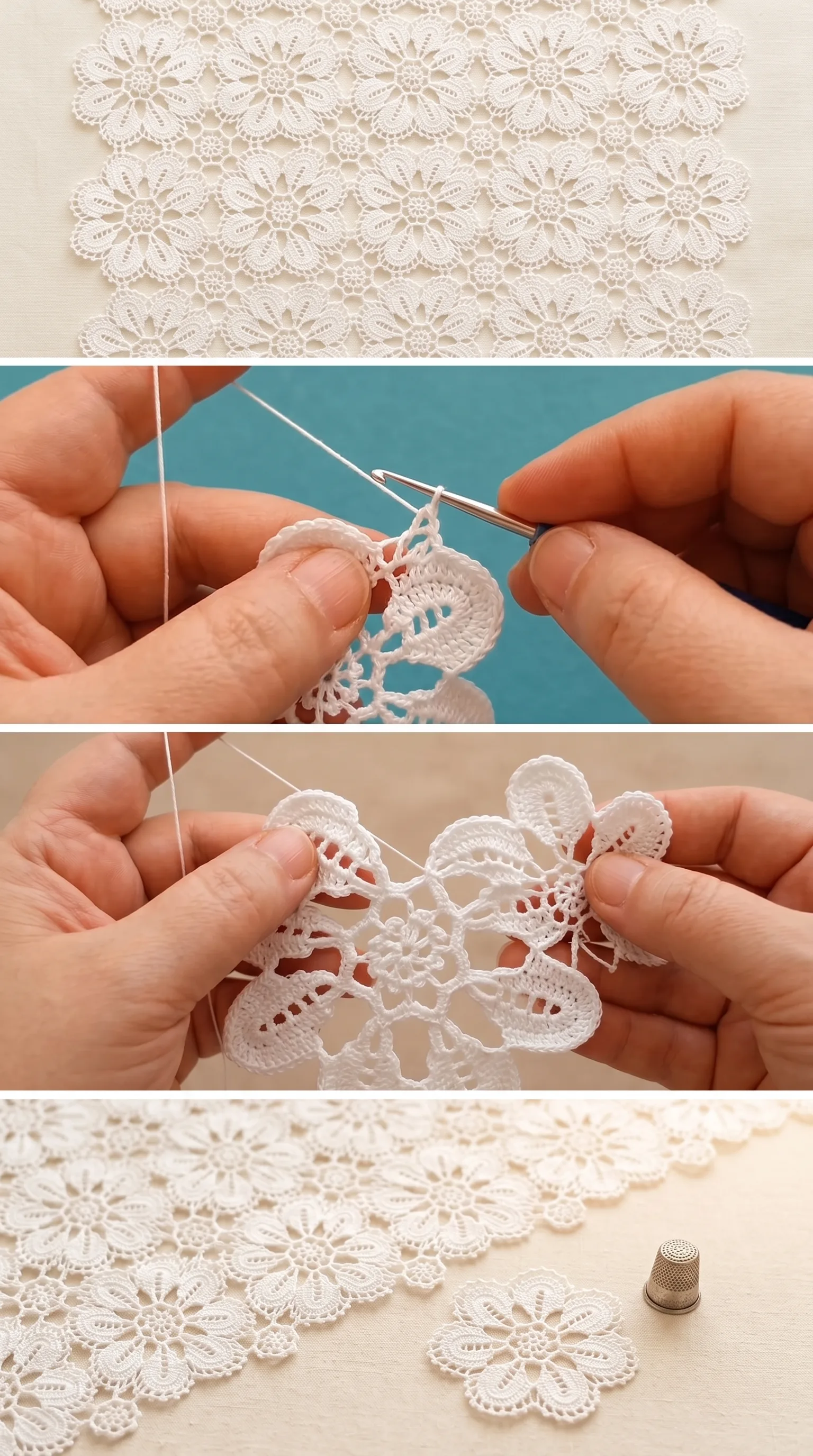
Stitch by Stitch
This pattern draws from a focused set of classic crochet stitches that layer together to create the motif’s dimensional floral surface.
BULLET:SC (Single Crochet) The foundational stitch used to establish the center ring and connect segments with clean, tight joins.
BULLET:DC (Double Crochet) The workhorse of each petal, stacked and arranged in fan formations that build the raised, rounded petal shapes.
BULLET:CH (Chain Stitch) Used to create the arching bridges between petals and the open mesh framework that gives the motif its characteristic lacy openness.
BULLET:SL ST (Slip Stitch) The quiet connector that closes rounds, joins motifs to one another, and keeps the whole fabric lying flat and true.
There is a genuinely meditative rhythm to working this motif, a counted loop here, a fan there, a chain bridge arching outward, and before long your hands find the pattern without your eyes needing to follow every step.
Construction
Each individual Crochet Lace Motif is worked in the round from the center outward, which means you always see the flower taking shape right in front of you rather than waiting until a seam is sewn. Once you have completed several motifs, they are joined as you go using SL ST connections at the outermost chain points, creating that seamless interlocking grid you can see spreading across the green background in the reference images. This join-as-you-go method is wonderfully beginner-friendly because it eliminates the need for any sewing afterward, and the alignment is largely guided by the motif’s own geometry. To customise the size of your finished piece, you simply keep adding motifs in any direction, making a small table centerpiece, a wide table runner, or a full garment panel entirely at your own pace.
Wearing Your Lace Motif
A large panel of this Crochet Lace Motif fabric makes a breathtaking overlay skirt worn over a silk slip for a warm evening out, or it can be shaped into a fitted sleeveless top that sits over a camisole. Smaller finished pieces work as delicate collar additions sewn onto a plain linen dress, adding that whisper of elegance that transforms the simplest wardrobe staple. The closer you get to finishing, the harder it becomes to put down, because every new motif joined is another bloom in a garden of your own making.
Blocking, Washing, and Keeping Your Lace Motif Crisp
Cotton lace responds magnificently to wet blocking, so once your piece is complete, soak it gently in cool water with a drop of gentle wool wash, then ease it onto foam blocking mats and pin each petal point outward into its full shape while it dries. This step is not optional if you want the motifs to lie flat and for every petal to read clearly, and the difference between a blocked and unblocked piece is genuinely remarkable. For ongoing care, hand wash in cool water and lay flat to dry away from direct sunlight, which can yellow white cotton over time. Store your finished lace piece rolled loosely around acid-free tissue rather than folded, as fold lines in cotton thread can become permanent creases that no amount of blocking will fully remove.
Every Crochet Lace Motif you finish is a small, real act of making something beautiful with your own hands, and that will never go out of style. Pin this article to your crochet board so you can find it whenever you are ready to start your first bloom, and tag your finished pieces so the rest of the community can admire what you have made.
Follow us on Pinterest and subscribe to the Newsletter so you don’t miss a thing!
Tutorial and photos of this lace motif by: Crochet Swan.