When your wardrobe calls for something that feels both effortless and intentional, the Crochet Batwing Sweater is the answer you have been looking for. In this article, you will discover everything from materials and stitches to construction tips and styling ideas to help you bring this piece to life with confidence.
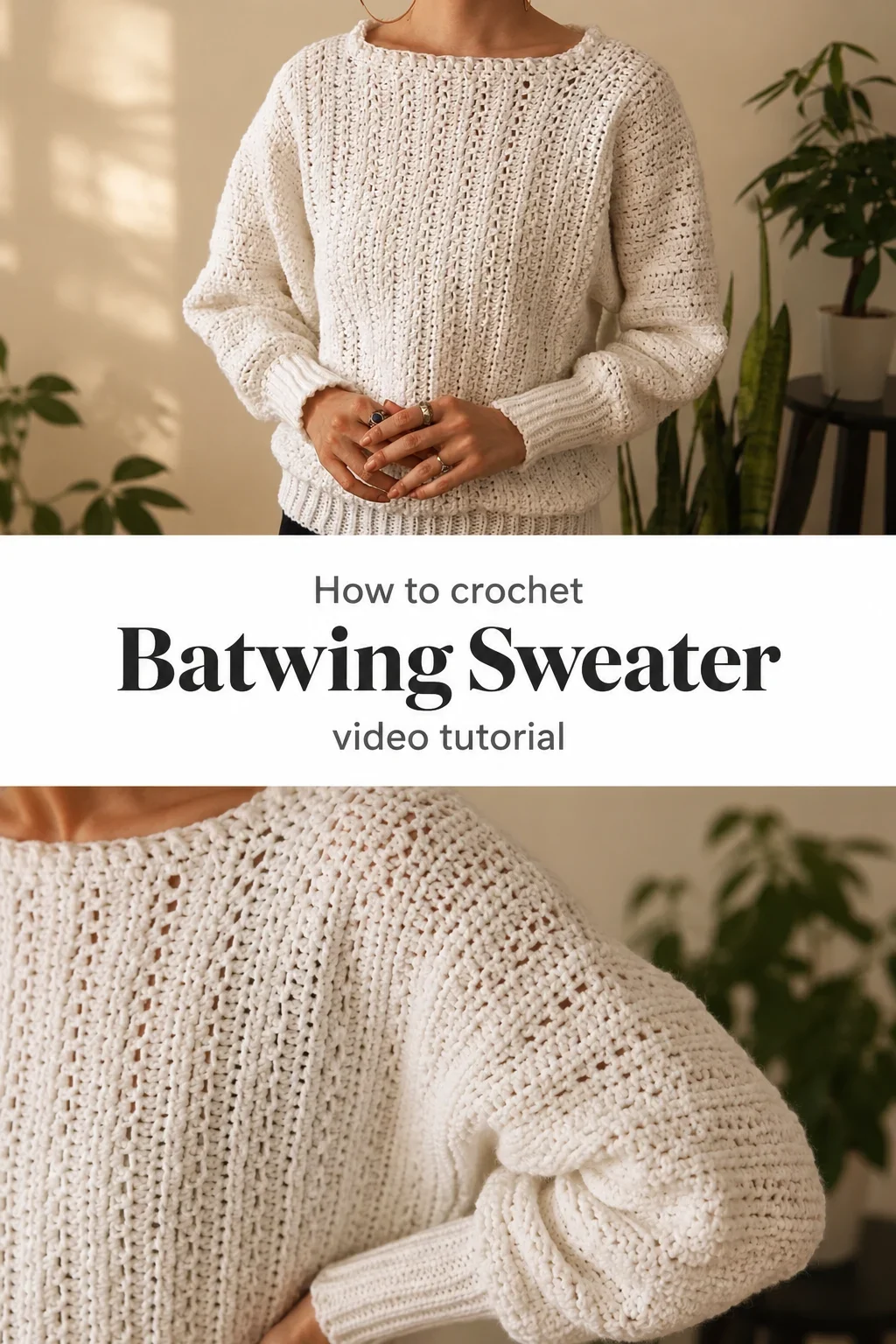
The Batwing Sweater
The Crochet Batwing Sweater is one of those rare garments that carries a sense of ease in every single stitch. Its wide, sweeping silhouette drapes across the shoulders with a soft generosity, creating a shape that feels airy yet structured against the body. This is a sweater for the woman who reaches for something beautiful on a quiet Sunday morning and still wears it out into the world. It suits every skill level from confident beginner to practiced intermediate crocheter, and it rewards patience with something truly wearable.
Batwing Sweater Related Posts:
- Crochet Polka Dot Tote: A Vibrant Everyday Bag
- Crochet Paw Motif Join: A Sweet and Playful Touch
- Crochet Pocket Cardigan: A Chic and Timeless Wrap
- Crochet Lace Trim: A Delicate and Timeless Detail
In cream or ivory, this sweater takes on a timeless quality that pairs with dark denim, linen trousers, or even a flowing midi skirt. You might also consider soft sage, warm oatmeal, or dusty rose for a palette that feels grounded in nature and slow living. This is the kind of piece that works just as well tucked loosely into high-waisted trousers as it does worn oversized over a slip dress in the cooler months.
Materials and Tools
To recreate this Crochet Batwing Sweater, you will want to reach for a chunky weight yarn, specifically a size 5 or 6 on the weight scale, in a fiber blend that has both softness and a little body to it. A cotton-acrylic blend or a merino wool blend works beautifully here, offering warmth without excessive weight and a slight sheen that catches the light in the most quiet, lovely way. Pair your yarn with a 6mm or 6.5mm crochet hook, which gives the fabric just enough openness to drape without losing its shape. A blunt tapestry needle for seaming and weaving in ends is your best finishing companion throughout this project.
Stitch by Stitch
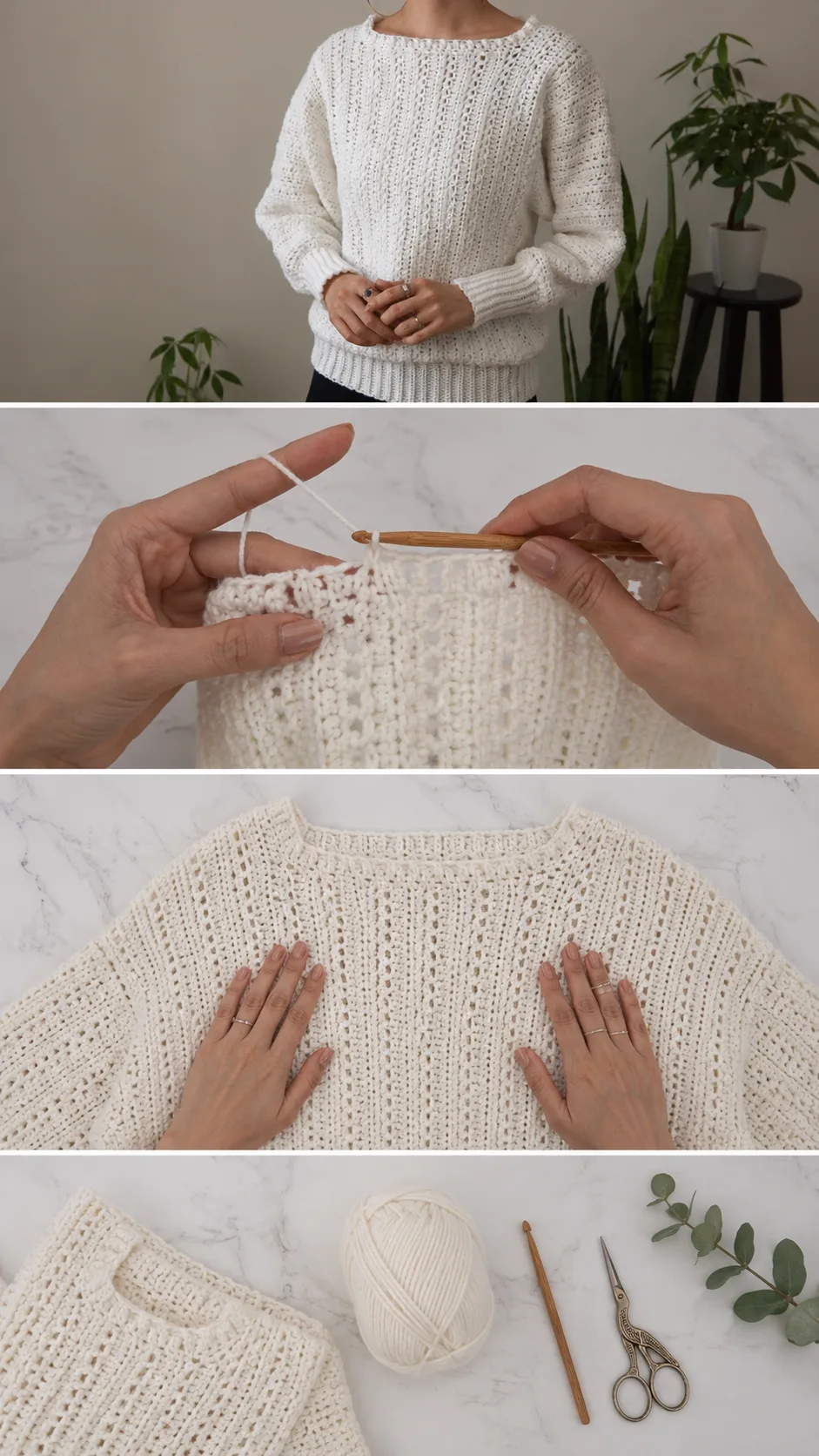
This pattern draws on a small and approachable collection of stitches that build into something far greater than their individual parts.
BULLET:SC (Single Crochet) The foundation of the ribbed cuffs and hem, SC creates a tight, tidy fabric with a satisfying density that anchors the entire sweater.
BULLET:DC (Double Crochet) The primary stitch of the body panels, DC works up quickly and produces that signature vertical texture you can see running across the torso and sleeves.
BULLET:CH (Chain Stitch) Used to create the starting foundation and to space out stitch patterns, the chain is the quiet connective thread that holds the design together.
BULLET:FPDC (Front Post Double Crochet) This textural stitch adds subtle vertical ribbing and dimension to the cuffs, giving the Crochet Batwing Sweater its polished, finished look at the wrists and hem.
There is something genuinely meditative about working rows of DC across a wide panel, the hook moving in a steady, unhurried rhythm that asks very little of your mind and gives a great deal back to your hands.
Construction
The Crochet Batwing Sweater is worked in flat panels, which makes it wonderfully beginner-friendly because you are never managing complex shaping in the round. The body is typically constructed as two rectangular pieces, front and back, which are then seamed together at the shoulders and sides, with the sleeve integrated into the wide batwing angle of the body rather than set in separately. This seamless-looking construction is what creates that iconic draped sleeve without any complicated increases or decreases. If you want a slightly longer silhouette or a cropped version, simply adjust the number of rows in your body panel before you begin seaming.
Wearing Your Batwing Sweater
Layer your finished Crochet Batwing Sweater over a simple white tee and wide-leg trousers for an effortlessly put-together everyday look that feels considered without trying too hard. On cooler evenings, wear it as a standalone top over a satin camisole tucked into a pleated skirt. Every time you pull it on, you will feel the quiet satisfaction of wearing something you made with your own hands.
Washing and Caring for Your Batwing Sweater
Once your Crochet Batwing Sweater is complete, a good wet block will transform it completely, opening up the stitch definition and encouraging the fabric to relax into its intended drape. Hand wash gently in cool water with a wool-safe or delicate soap, then press out the excess water without wringing and lay it flat on a blocking mat to dry in its natural shape. Avoid hanging the sweater to dry, as the weight of wet yarn will stretch the fabric in ways that are difficult to reverse. Store it folded in a drawer rather than on a hanger to preserve that beautiful, generous silhouette season after season.
Making a Crochet Batwing Sweater is an act of genuine self-care, and every row you complete is a row closer to something you will reach for again and again. The full video tutorial from @TCDDIY walks you through every step with warmth and clarity, so save this article to your Pinterest boards and share it with a fellow crafter who deserves their next favourite handmade piece.
Follow us on Pinterest and subscribe to the Newsletter so you don’t miss a thing!
Tutorial and photos of this batwing sweater by: TCDDIY.