
A crochet book cover is a soft armor for the stories you love most. It carries the quiet warmth of an afternoon spent reading by a window, the kind that smells like wool and old pages.
The Book Covers
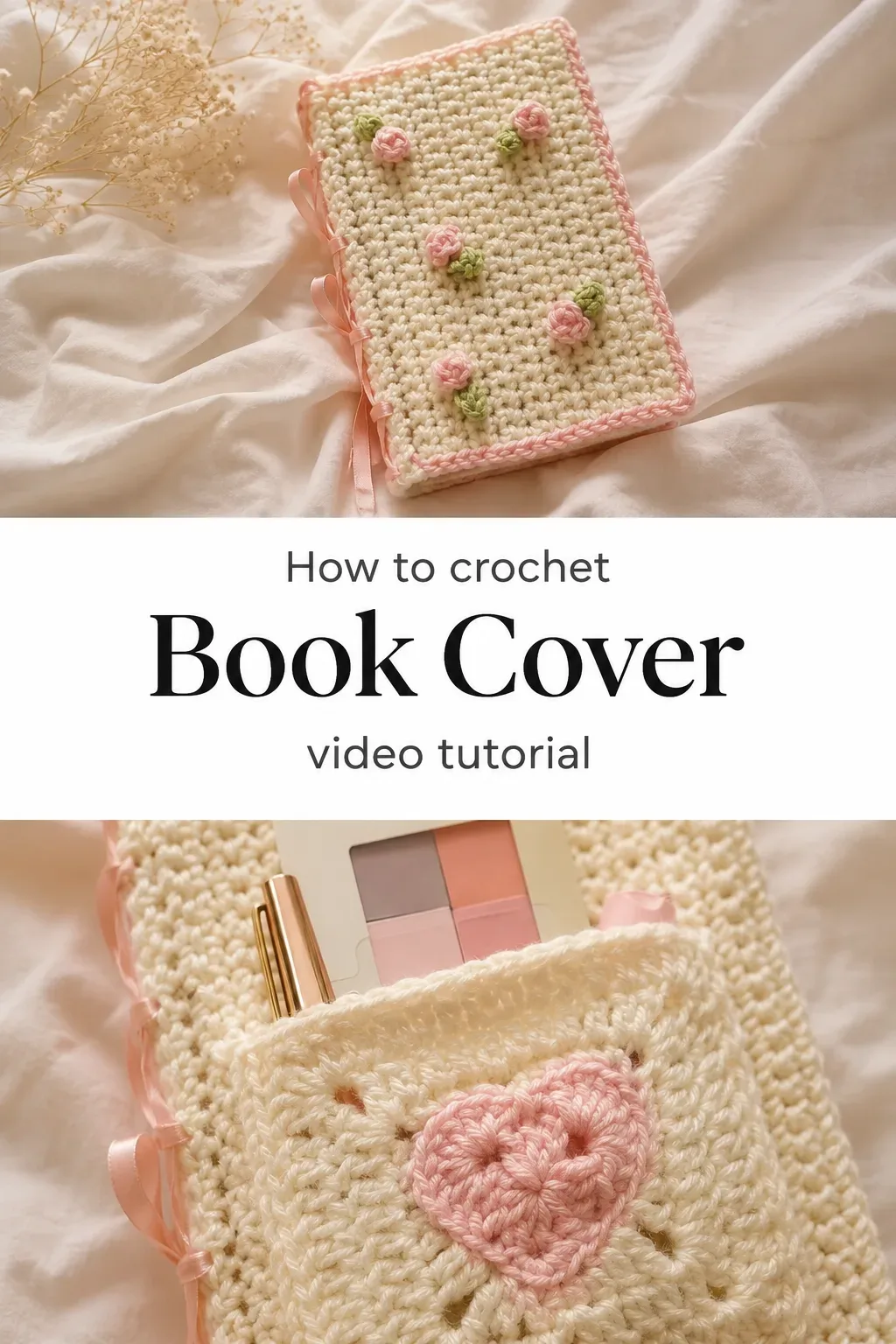
Crochet book covers are the kind of handmade object that makes people stop and ask where you got it. Worked in cream and blush, with a granny-square pocket appliquéd to the front and a crocheted heart stitched at its center, these covers slip over a paperback or hardcover and transform it into something worth keeping on a bedside table. The texture is substantial without being stiff, airy yet structured in the way only hand-crocheted fabric can manage. Whether you are wrapping a beloved classic like Jane Eyre or gifting a blank journal to a friend, these covers feel like a love letter in fiber form.
Book Covers Related Posts:
- Crochet Turtleneck Sweater: A Warm and Chic Essential
- Crochet Love Heart: A Sweet and Charming Keepsake
- Crochet Yarn Flowers: A Charming Handcrafted Delight
- Crochet Granny Square Bag: A Chic Two-Tone Accessory
The color palette shown in the tutorial leans into soft femininity, cream white paired with dusty rose and sage green, but the same construction reads beautifully in oatmeal with terracotta, or ivory with cornflower blue. One cover features a pink heart pocket and satin ribbon ties at the spine; the other is adorned with tiny crocheted roses scattered diagonally across the front, each one no bigger than a thumbnail. You can mix and match embellishments freely, making each crochet book cover feel personal and one-of-a-kind.
Materials and Tools
For these crochet book covers, a worsted weight yarn in a natural cotton or cotton-acrylic blend works beautifully, giving the fabric both structure and a soft drape that conforms to the book without pulling. The tutorial uses a 4mm crochet hook, which is the sweet spot for this yarn weight, producing a tight enough fabric to hold its shape while remaining flexible enough to slip the cover on and off easily. Cotton yarns are especially recommended here because they block predictably and hold embellishments like the appliquéd heart without any puckering. A blunt-tip yarn needle is the one extra tool you will reach for constantly, both for weaving in ends and for sewing the pocket panel onto the front of the cover.
Stitch by Stitch
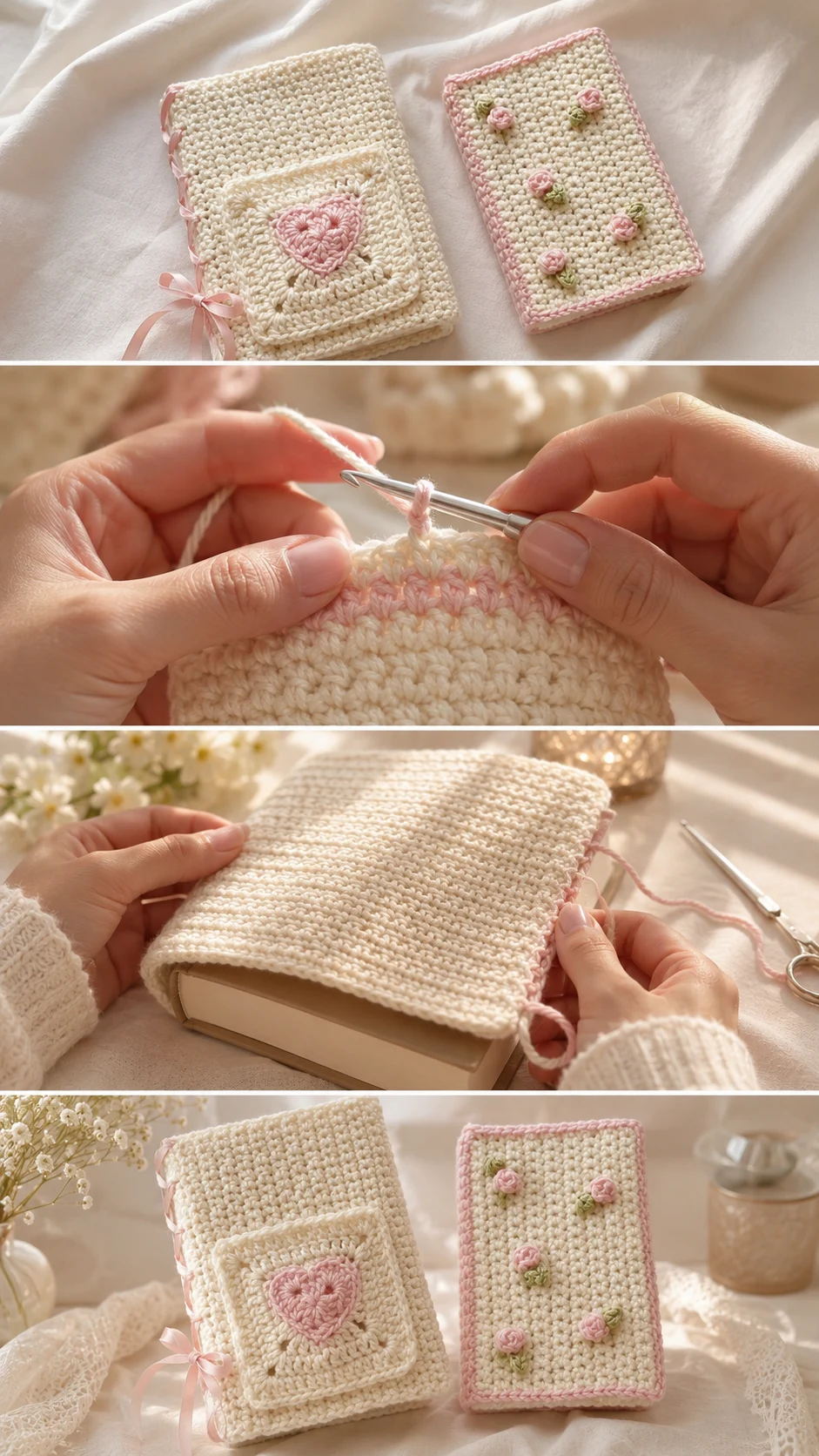
These crochet book covers are built on a handful of foundational stitches that any beginner can learn quickly.
BULLET:SC (Single Crochet) The primary stitch used for the main body panels, producing a dense, even fabric that gives the cover its satisfying weight and structure.
BULLET:DC (Double Crochet) Used in the granny-square pocket motif, the DC creates the open, lacy clusters that give the pocket its vintage character.
BULLET:SL ST (Slip Stitch) Used to join rounds and to create clean, invisible seams when assembling the pocket onto the cover front.
BULLET:YO (Yarn Over) A fundamental movement threaded through nearly every stitch in the pattern, and the motion that controls how snug or relaxed your tension becomes row by row.
Working rows of SC has a meditative rhythm to it, the hook entering, the yarn pulling through, the loop releasing, over and over until a rectangle of soft cream fabric grows beneath your hands like something organic and unhurried.
Construction
The cover itself is crocheted as a flat rectangle sized to wrap around your chosen book, front cover, spine, and back cover, all in one continuous panel. Once the main body is complete, a smaller square is worked separately to become the front pocket, and a crocheted heart is made in the round and sewn directly onto the pocket face before the pocket is slip-stitched into place. The full pattern and step-by-step assembly, including how to change colors cleanly mid-project, are shown in the video tutorial linked to this post. If you want to customize the size for a different book, simply measure your book’s total width including the spine and add a small amount for ease before you begin your foundation chain.
Wearing Your Book Covers
Tuck the finished crochet book cover over your current read and carry it in a tote bag to a café, where the cream and rose will catch every glance across the room. These covers also make deeply personal gifts, slipped over a poetry collection or a recipe journal tied with a satin bow at the spine, the kind of gift that feels considered rather than purchased. Finishing yours with a scattering of crocheted roses, as shown on the second cover in the tutorial, turns a plain notebook into something a person will never want to leave behind on a shelf.
Keeping Your Crochet Book Cover Fresh and Beautiful
Because these covers are made in cotton or a cotton blend, they respond well to a gentle hand wash in cool water with a mild detergent, followed by a careful reshape while damp and a flat dry away from direct sunlight. If your cover has ribbon ties or satin details, remove those before washing and reattach once everything is dry to prevent any color bleeding onto the yarn. Light blocking with a damp cloth and pins will keep the panel perfectly square and crisp, especially important if you notice any of the SC rows pulling diagonally after the first wear. Store your extra covers loosely folded in a fabric pouch rather than compressed in a drawer, so the embellishments keep their shape between uses.
Every crochet book cover you finish is proof that the ordinary things we carry daily deserve to be made beautiful. These covers are slow, intentional making at its most satisfying, and the result is something you will reach for every single day. If you make one, share it on Pinterest and tag it so others can find this free tutorial and start their own.
Follow us on Pinterest and subscribe to the Newsletter so you don’t miss a thing!
Tutorial and photos of this book covers by: mahum 🎀.