
The Crochet Zigzag Stitch Trim is built from bold diagonal lines of raised stitches that fan outward across a flat single-crochet base, creating a textured chevron relief that sits proud of the fabric like carved woodwork. From blanket edgings to bag straps, cardigan hems to pillow borders, this trim opens up a world of finishing possibilities that feel both graphic and handmade.
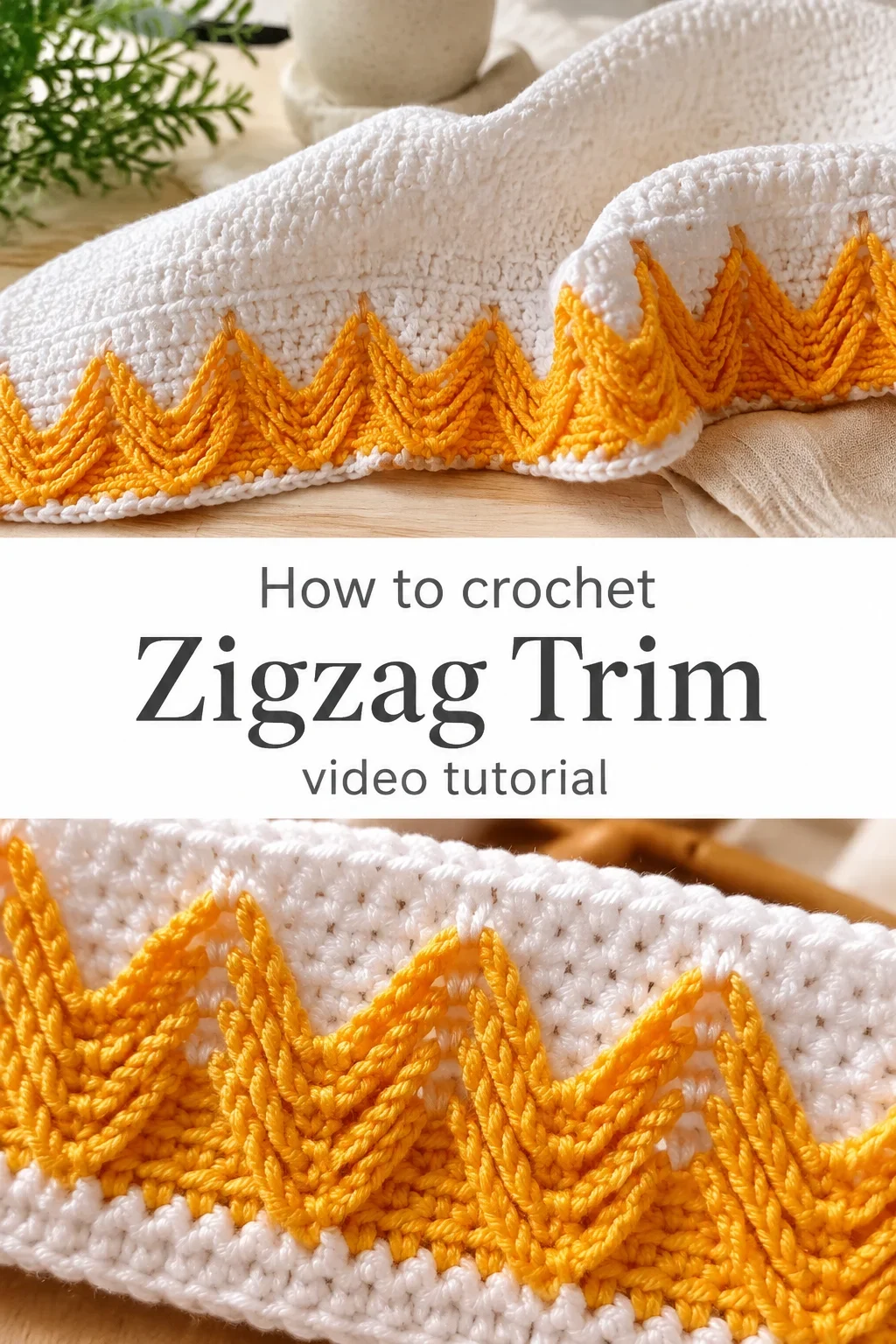
The Zigzag Stitch Trim
The Crochet Zigzag Stitch Trim has a presence that is airy yet structured, the kind of detail that draws the eye and invites the fingertip in equal measure. It belongs to the crafter who loves bold contrast, who reaches instinctively for that pop of golden yellow against a clean white base and feels the rightness of it before the hook even moves. Each zigzag spike rises from the fabric like the points of a crown, and the whole effect is graphic enough to be the statement on an otherwise simple piece. This trim is as much decoration as it is architecture.
Stitch Trim Related Posts:
- Crochet Snowflake Cardigan: A Festive Winter Essential
- Crochet Soap Saver Bag: A Clever Bathroom Essential
- Crochet Granny Square Blanket: A Timeless Floral Treasure
- Crochet Cat Beanie: A Charming Winter Essential
The colour combination shown in the tutorial, a warm marigold orange paired with crisp white, is pure sunshine made tangible, and it works beautifully for baby blankets, market totes, and home accessories alike. That said, this trim translates just as well in dusty sage and cream, deep terracotta and ecru, or even monochrome tones where the texture itself carries all the drama. Think of the base colour as your quiet and the contrast colour as your voice.
Materials and Tools
For the Crochet Zigzag Stitch Trim as shown, you will want to work with a DK weight yarn in two contrasting colours, one for the SC base and one for the raised zigzag overlay stitches. The tutorial uses what appears to be a smooth mercerised cotton or cotton-blend DK, which gives the raised stitches that clean, defined outline you can see in the finished piece. A 4mm crochet hook is ideal for this weight, giving you enough tension to keep the base fabric firm without compressing the spike stitches into nothing. A yarn needle for weaving ends is the only other tool you will truly need, though a row counter will help you keep track of your spike placement as the pattern builds.
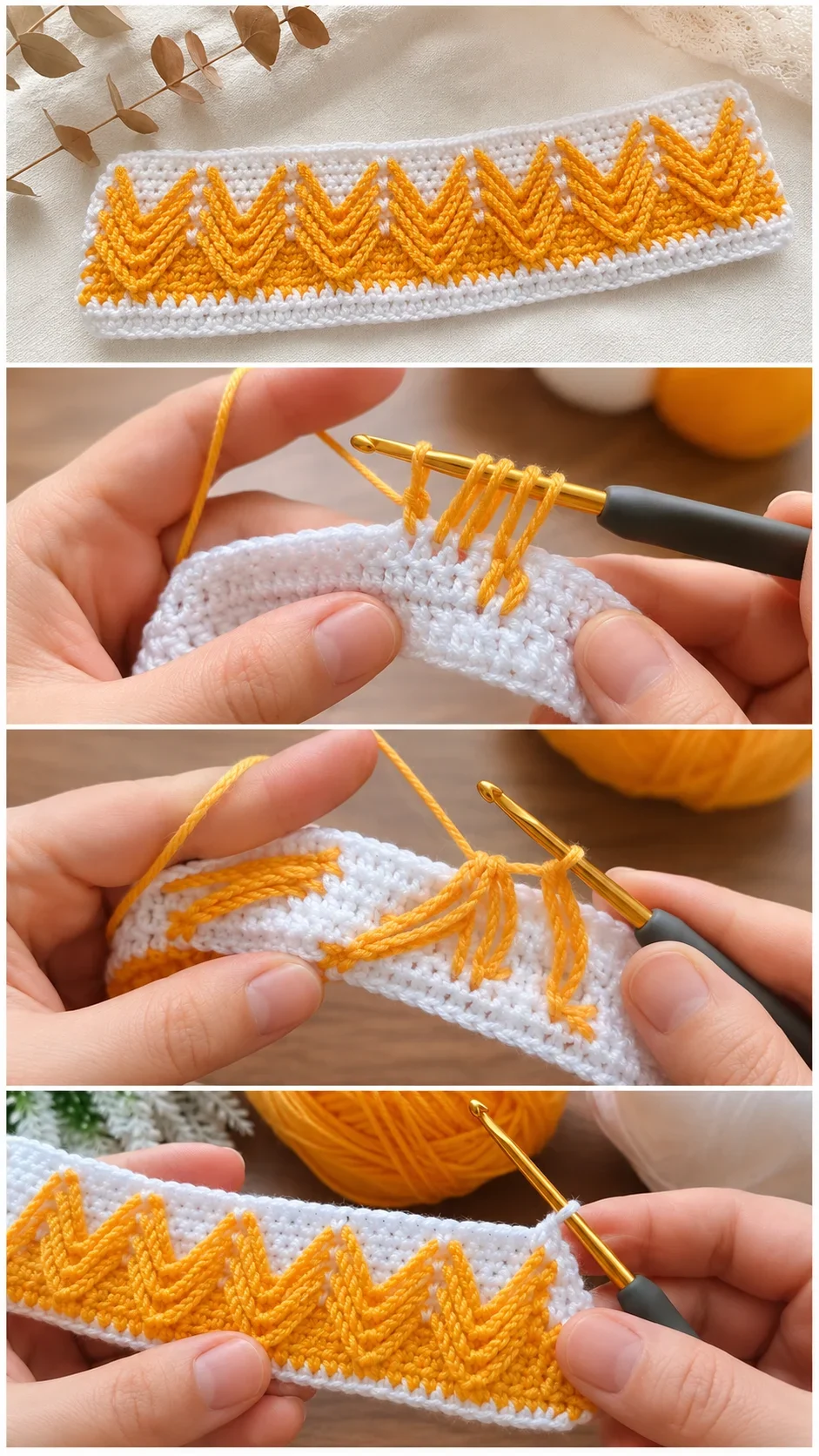
Stitch by Stitch
The Crochet Zigzag Stitch Trim draws on a small but satisfying collection of stitches that layer beautifully together.
BULLET:SC (Single Crochet) Forms the flat, dense base fabric across which all the decorative spike stitches are worked, giving the trim its structure and body.
BULLET:DC (Double Crochet) Used in the spike sequences to build the raised diagonal lines, the DC stitches are worked into rows below the current row to create that signature lifted effect.
BULLET:YO (Yarn Over) The fundamental action that begins each DC spike, looping the contrast yarn over the hook before inserting into a lower stitch to draw up the elongated loop.
BULLET:Spike Stitch A variation of the DC where the hook is inserted several rows below to create a long, pulled stitch that fans outward in a chevron formation across the surface.
Once you find the rhythm of counting your spike placements and dropping into lower rows, this stitch takes on a meditative quality, each fan of zigzag lines arriving like a small, satisfying reward for the SC rows that came before it.
Construction
The piece is worked flat in rows, beginning with a foundation chain in your base colour and building up a panel of SC rows before introducing the contrast colour for the spike stitch sequences. The zigzag overlay is not a separate piece applied afterward but rather is integrated into the fabric as you crochet, which means the two colours become one unified, dimensional surface. Beginners will find the SC base rows a reassuring warm-up before the spike rows introduce a new layer of technique, and the video tutorial walks through each moment of that transition with clarity. If you want a wider trim or a narrower one, simply adjust the number of base rows you work before beginning your first round of spike stitches.
Wearing Your Zigzag Stitch Trim
Finished panels of the Crochet Zigzag Stitch Trim work beautifully sewn along the hem of a linen summer skirt, stitched as a border around a handmade cushion cover, or used to edge a lightweight cotton baby blanket that someone will keep for years. The graphic boldness of the zigzag makes any plain object feel considered and crafted, the kind of finishing detail that turns functional into something people ask about. Once you complete your first trim panel, you will almost certainly find yourself eyeing every blank hem in your home.
Keeping Your Zigzag Trim Vibrant and Crisp
Because this trim is most striking when its raised spike stitches hold their shape, it benefits from a light wet block after finishing, pinned flat and left to dry naturally so the chevron lines stay defined and the base fabric lies even. If you have worked in cotton or a cotton-blend DK as recommended, a cool gentle machine wash or a hand wash in cool water will keep the colours true and the fibres from pilling. Avoid wringing or twisting the piece while wet, and instead roll it gently in a clean towel before reshaping and drying flat. Store finished items folded rather than hung to prevent any stretching in the spike stitches over time.
Every time you work a Crochet Zigzag Stitch Trim, you are practising the kind of slow, intentional making that turns ordinary objects into something worth keeping and passing on. The full video tutorial from Crochet Workshop will guide you through every spike and every row, and when you are done, you will have a trim that feels like it was always meant to be there. Save this to your Pinterest boards and share your finished pieces so others can find their way to this pattern too.
Follow us on Pinterest and subscribe to the Newsletter so you don’t miss a thing!
Tutorial and photos of this zigzag stitch trim by: Crochet workshop.