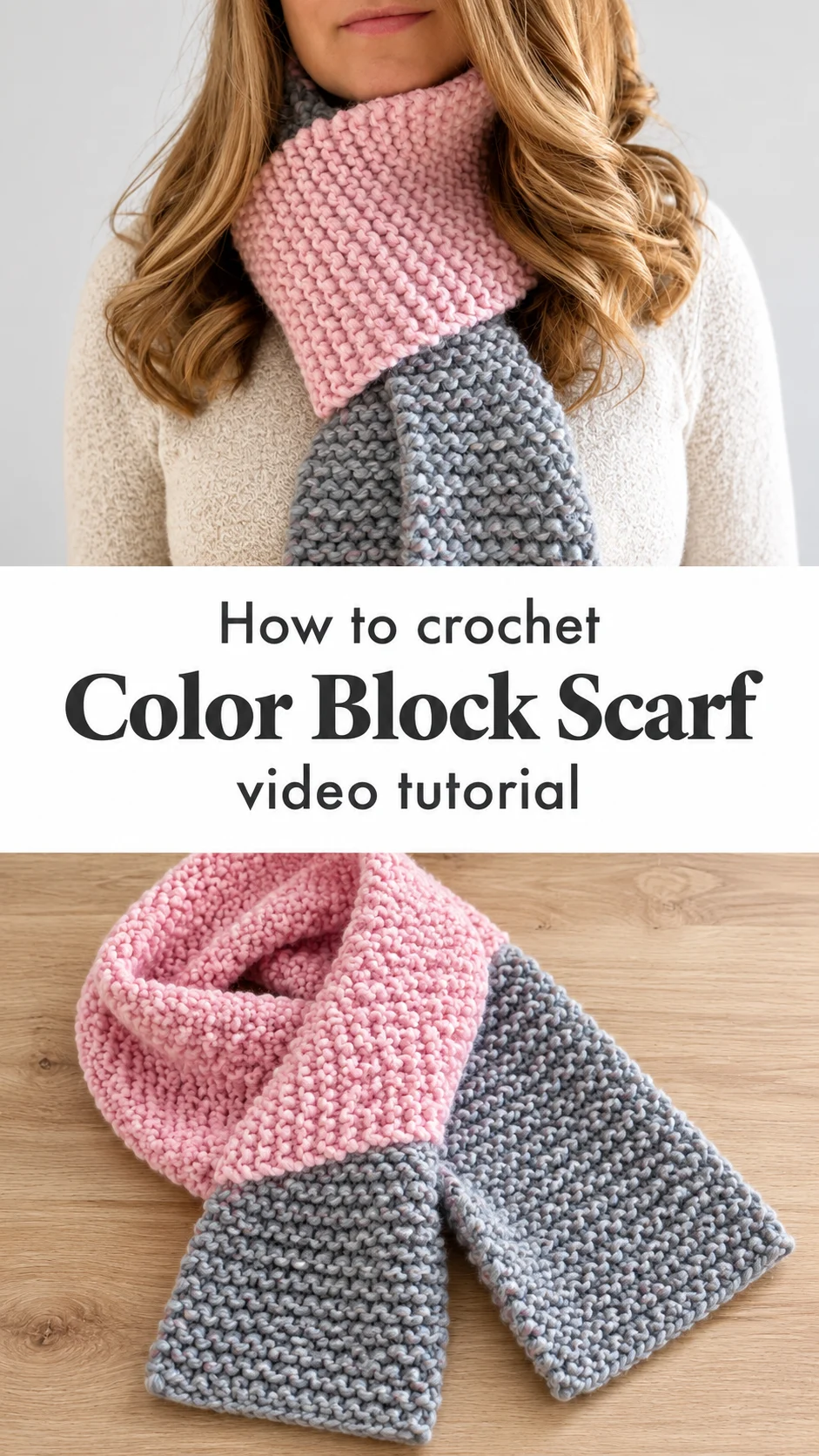
A crochet color block scarf pairs a soft blush pink half with a cool heathered grey half, and the result feels like wrapping up in a cushion. It is a quiet, cozy make that rewards slow evenings.
The Crochet Color Block Scarf
The crochet color block scarf is built from two bold sections of colour that meet in one clean line across the width. One half is a pale dusty pink, the other a grey with flecks of pink and white twisted through it. The fabric is dense and ridged, with a firm, squishy texture that traps warmth well. The yarn looks thick, close to a chunky weight, so the stitches read large and the scarf grows quickly. The ridges run along the width and sit in tidy horizontal bands. It is a design made for cold commutes, weekend walks and the hook of a coat rack by the door. The colour change is the whole show, so the shape stays simple and the details stay quiet. A plain grey or oatmeal sweater lets the pink glow without competing.
Wear it looped once for a soft collar, or let the two ends hang loose to show off both colours at once. It also makes a thoughtful gift, since the pink and grey pairing suits almost anyone. For the maker, it is a gentle way to practise even tension and a neat colour join.
Block Scarf Related Posts:
- Crochet Bag Base: A Structured and Timeless Essential
- Crochet Pocket Cardigan: A Chic and Timeless Wrap
- Crochet Clutch Bag: A Chic and Timeless Accessory
- Crochet Lace Tablecloth: A Timeless Elegant Statement
Materials
The crochet color block scarf needs two colours of chunky or bulky yarn, one smooth pink and one grey with a marled, slightly fuzzy twist. A wool blend or a soft acrylic gives the squishy body seen here, and a blend with some wool holds its shape better over a long strip. Pick a large hook, somewhere in the 8 to 10 mm range is a sensible general guide, and go by the yarn label rather than a fixed number. Chunky yarn at this hook size makes a fabric that is warm but not stiff. You will also want scissors and a yarn needle for weaving in the ends. The marled grey hides small tension wobbles, while the smooth pink shows every stitch, so choose a pink with a little body and no splitting plies.
Colour Blocking: The Detail That Defines It
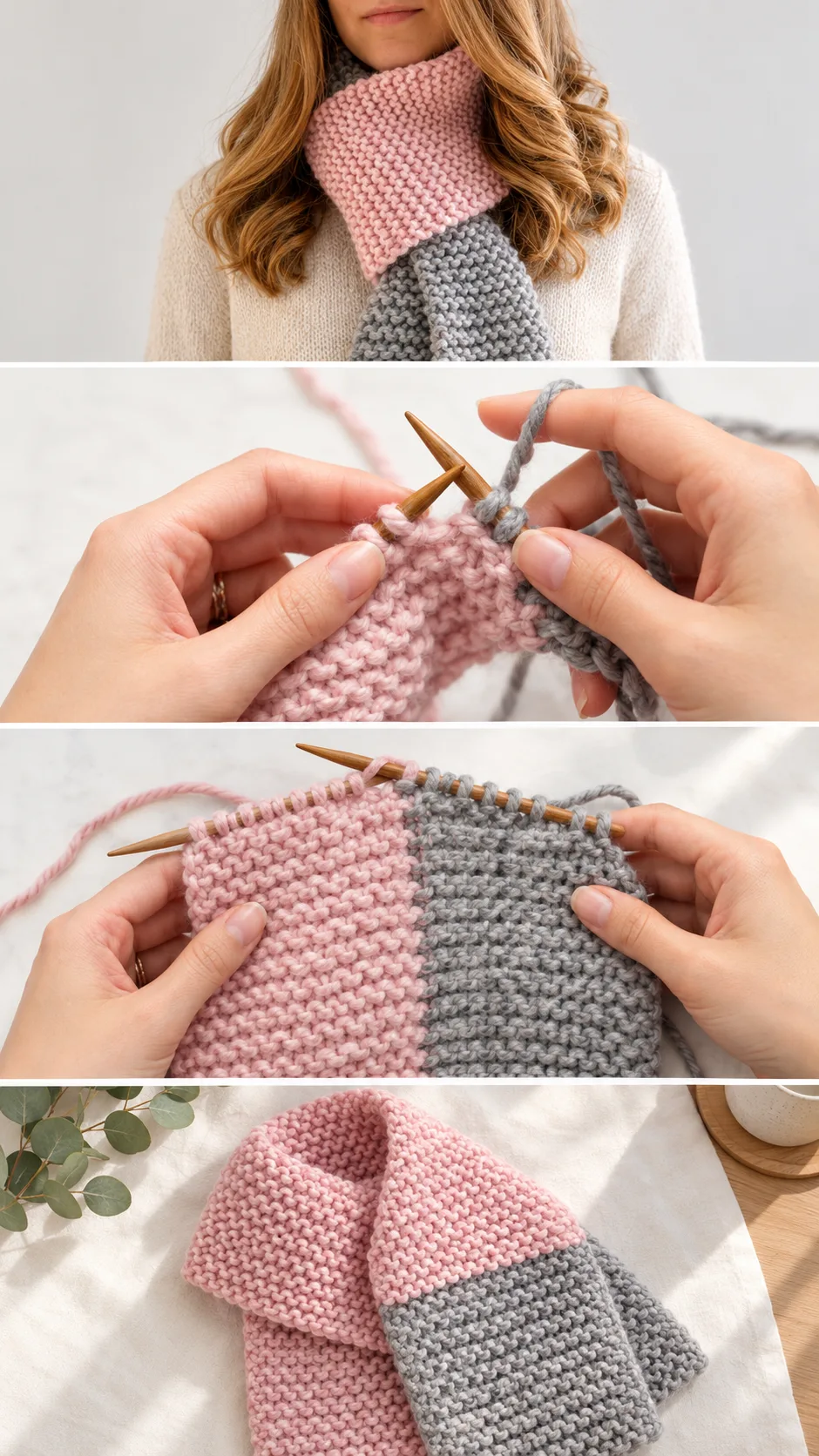
The signature of this scarf is the single sharp colour change at its centre. Rather than stripes, one colour simply stops and the other begins, giving a calm, graphic look.
The join sits along a full row, so the switch happens at the edge and the new colour carries across cleanly. Changing colour at the end of a row, rather than in the middle, keeps the line straight and the edge tidy. Leave a tail of several inches on both colours so the ends can be woven in without strain.
Watch how the tutorial handles the swap. Pause at the moment the new yarn is picked up and notice where it joins the old stitch, because a loose first stitch in the new colour is the most common flaw. If the join looks gappy, pull the working yarn a little snugger on that stitch and tighten the tail afterwards.
Pink beside a speckled grey is forgiving, since the grey carries hints of pink. Two flat solids would show any uneven stitch at the join more clearly, so a marled partner is a smart choice for a first colour block.
Choosing the Best Yarn for This Scarf
Fibre decides how the scarf wears. A wool or wool blend gives bounce and warmth, and the ridges stay crisp after months of use. A soft acrylic costs less, washes easily and suits sensitive skin, though it can feel slightly less breathable.
Cotton is the fibre to avoid here. It is heavy at this thickness, and a long strip will stretch and sag under its own weight. If the fabric feels stiff, go up a hook size or two. If it feels loose and floppy, go down.
Colour is the other big decision. The photos use dusty pink with a heathered grey, but the layout works with forest green and oatmeal, mustard and charcoal, or navy and cream. Keep one colour smooth and let the other carry some texture or flecking, and the pair will feel balanced rather than flat.
Shape, Ridges and Skill Level
This is a long rectangle worked flat, with ridged rows that sit horizontally across the width. The fabric is dense and reversible, so both sides look good, which matters because the scarf folds and twists as it is worn.
The skill level is beginner friendly. The stitches are simple and repeated, and the only new skill is the colour change. The part that takes patience is the sheer length. A rectangle that long can feel endless around the middle, and that is when tension tends to drift.
If the edges start to ripple or the sides pull in, check that you are not skipping the first or last stitch of a row. If the piece looks narrower than it should, your tension has tightened, so loosen your grip and relax your hand between rows.
How to Style a Crochet Color Block Scarf
In the photos the scarf is wrapped once at the neck, with the pink half folded into a wide collar and the grey half dropping down the front. That one wrap shows both colours and keeps the neck covered.
For a different look, drape it flat over the shoulders with the ends hanging evenly, which works over a camel coat. Or fold it in half and pull the ends through the loop for a snug knot that stays put in wind. A charcoal wool coat makes the pink pop, while a cream knit keeps the whole outfit soft.
It also suits a casual pairing with a denim jacket on a cool spring morning. The chunky ridges give a plain outfit some texture without extra effort.
Tips for a Neat Finish
Weave in the ends along the ridges rather than across them, so the tails disappear into the texture. Take extra care at the colour join, where two tails sit close together, and run them in opposite directions for a secure hold.
Blocking is optional with a dense fabric like this, but a light steam can even out any uneven rows. Hold the iron above the surface and never press, because pressing flattens the ridges that give the scarf its charm. If a wool blend feels rough after washing, a short soak in lukewarm water with a little conditioner softens it.
If the ends curl, the fabric is simply relaxing. Lay it flat to dry and the edges settle.
Following the Video Tutorial
The video below shows the stitches and the colour change in real time. Watch how the hands hold the yarn, and pause on the first few rows to copy the tension. Replay the colour join once or twice until the motion feels natural.
Work a short swatch first, so you can check the fabric against the photos before committing to the full length. If the swatch feels right, the scarf will too.
A Cozy Handmade Classic
This crochet color block scarf is a simple rectangle with one clear idea: two colours, one clean join, and a squishy ridged fabric between them. It turns out well when the yarn has some body, the tension stays even, and the colour change is made at the edge of a row.
Pick fibres that suit your skin, weave the ends in neatly, and let the colours do the talking.
Wrap it up and keep warm.
Video tutorial for the crochet color block scarf by Bhooked, watch the full video below.
VIDEO
Follow us on Pinterest and subscribe to the Newsletter so you don’t miss a thing!
Tutorial and photos of this color block scarf by: B.Hooked Crochet.