
A crochet phone bag in soft coral pink, with raised rows of tiny woven-looking blocks, is a small project that feels far more intricate than it is to make. It holds your phone neatly and shows off a texture worth admiring.
The Crochet Phone Bag
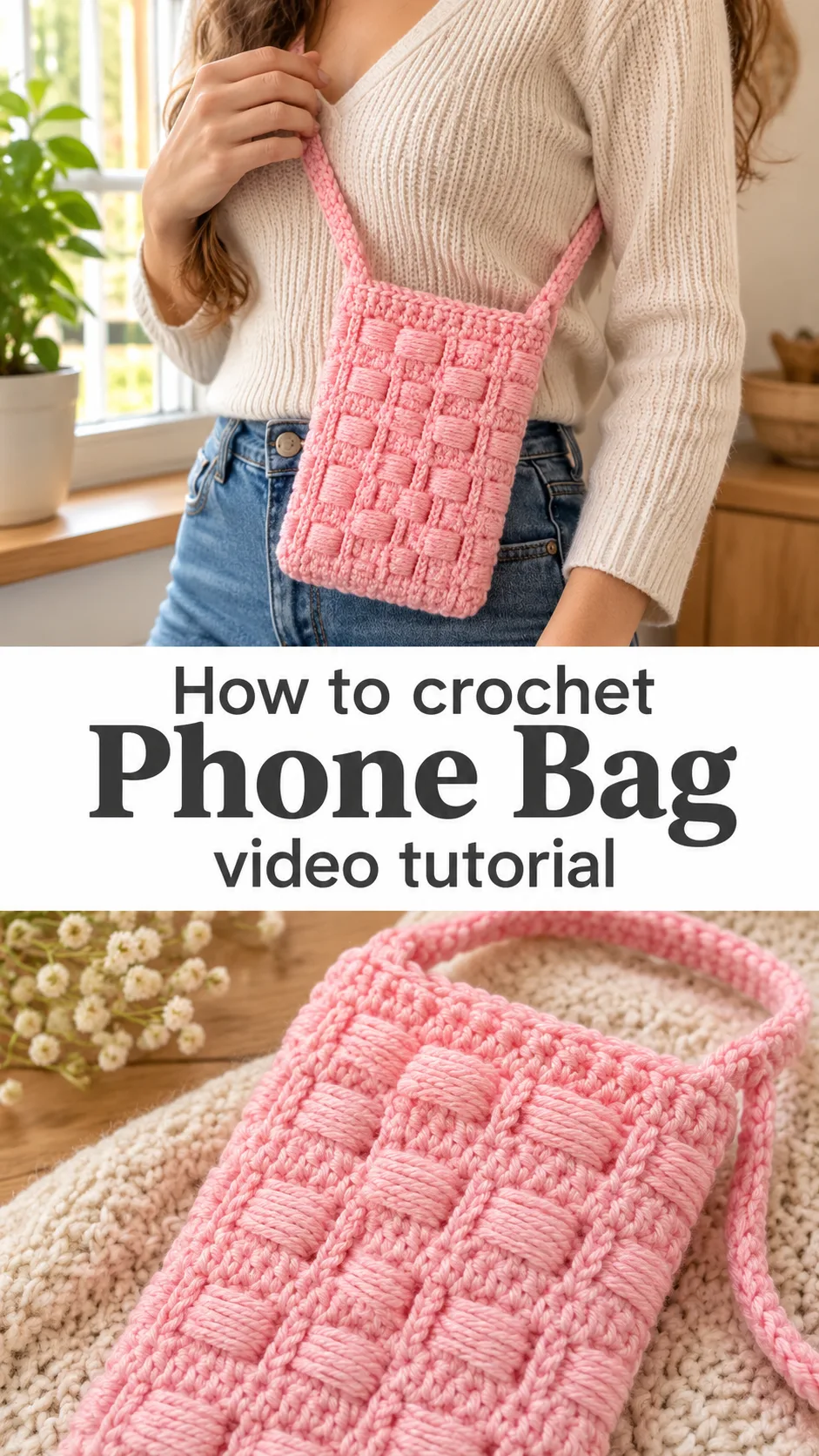
The crochet phone bag in the photos is a slim rectangle worked in a warm coral pink with a firm, textured fabric. Its surface is a grid of raised horizontal blocks, each one made of tightly wrapped bars that sit above a flat, dense background. Between the blocks, narrow chained columns run up the fabric like little ribs, and small windows of open space peek through at the edges of each bar. The edges are finished with a clean row of single crochet. The result looks like basketweave, yet it stays neat and structured. It is the kind of pocket-sized piece you can carry to a café, a market or an evening out.
Because the fabric is thick and the stitch is a repeat, this makes a good first bag project. It also suits anyone who wants a quick gift. Pair it with a plain strap or a wrist loop and it becomes a small statement accessory. Making one teaches you how raised bars are built over a solid base, a skill that carries over to pillows, blankets and pouches.
Phone Bag Related Posts:
- Crochet Net Tote Bag: A Chic Bohemian Essential
- Crochet 3D Leaf Scarf: A Soft and Timeless Wrap
- Crochet Baby Blanket: A Beautiful Heirloom Piece
- Crochet Crossbody Bag: A Blooming Summer Treasure
Materials
For a crochet phone bag like this one, choose a smooth, mid-weight cotton or cotton-blend yarn in a soft colour such as coral or dusty rose, plus a metal hook in the 3 to 4 mm range. A yarn with a little body matters most, because the raised bars need to stand up crisply, and a slippery or very fluffy fibre will blur the pattern. Hook size is the second key choice. Go down half a size from the label suggestion so the fabric is dense enough to protect a phone and keep its shape. You will also need a tapestry needle for weaving in ends and sewing seams, and scissors. For closing the bag, pick a button, a snap, or a zip sized to the opening. If you want an inner lining, a small piece of cotton fabric and matching thread will do. A length of cord or a chain strap is optional but handy.
Understanding the Block Texture
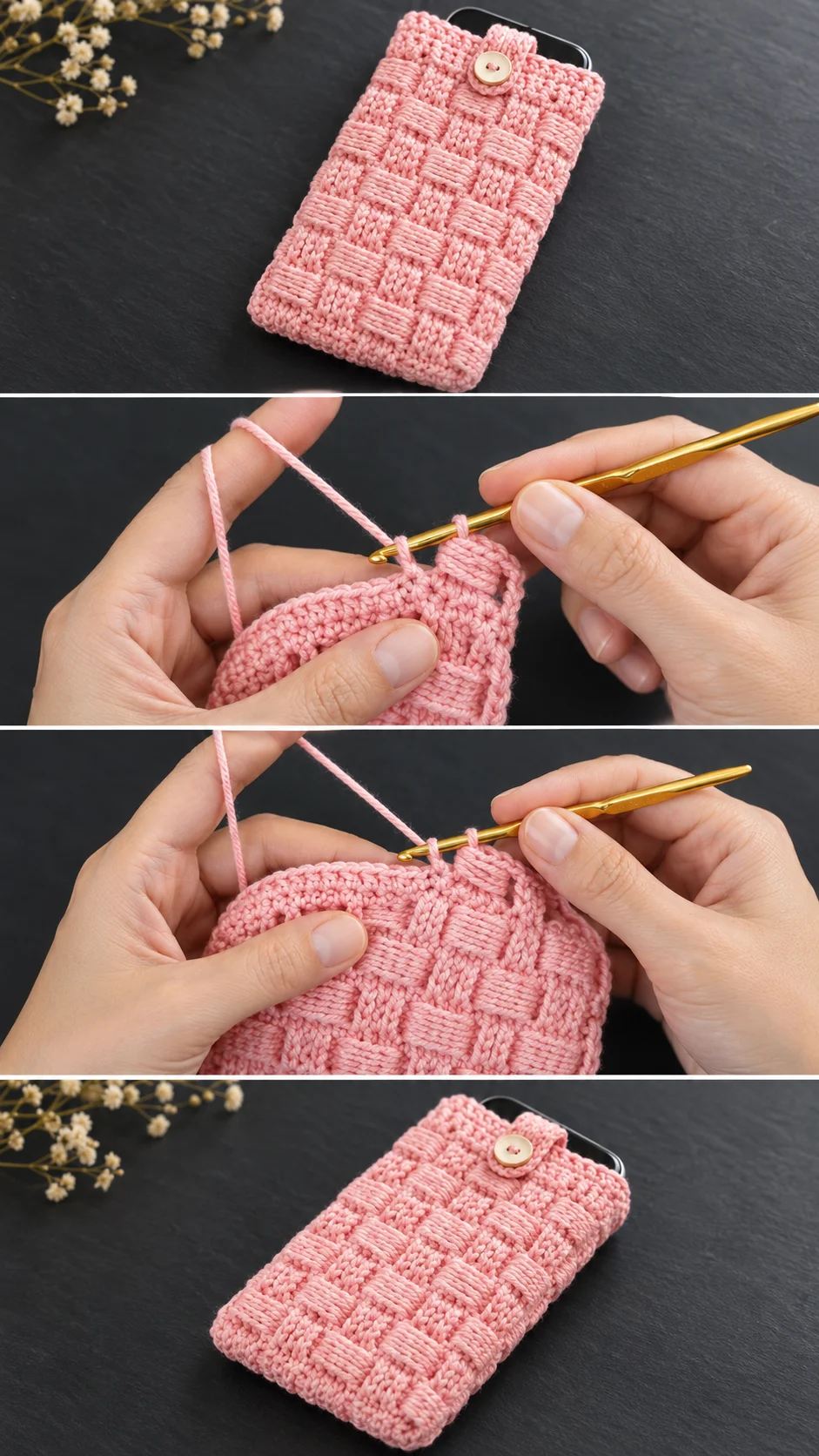
The signature of this bag is the grid of raised blocks. Each block is a small group of long, wrapped loops that lie flat across the surface, and it sits between two chained columns. In the close-up, the bars are worked over the previous row, so they float slightly above the base fabric.
Rows alternate in a way that makes the blocks shift position, which creates the woven, brick-like rhythm you see across the front. The base between them looks like compact single crochet, and that dense background is what makes the bars stand out. Keep this contrast in mind when you choose yarn, because a firm base fabric is the whole reason the blocks read clearly.
The common mistake is pulling the long loops too tight. If the bars are strangled, the fabric puckers and the piece curls. If they are too loose, they sag and look untidy. Aim for relaxed but even loops, and compare each new block to the previous one as you go.
Keeping the Open Windows Neat
Small gaps appear beside each block where the chained columns pass. They are part of the design, and they look best when they are all the same size. If yours start to close up or stretch, check that you are working into the same loops each time, and count the stitches at the end of every row.
Understanding the Structure
This type of bag is usually worked as a flat rectangle, which is then folded and joined. The photos show the piece growing row by row, with a neat flat foundation edge and a solid stitched border along the sides. That points to a flat panel worked back and forth, rather than a tube in the round.
Once the panel is long enough, you fold it so the bottom becomes the base and the top forms the opening. Seams are then sewn or crocheted along the sides. Planning the length is the practical part. Measure your phone, then add room for the thickness of the fabric and a little ease so the phone slips in without a struggle.
If the finished panel turns out too small, add a few rows before folding rather than ripping back, since the stitch repeat is easy to extend. If it is too big, a snug lining or a button flap can take up the slack. Watching the video will show you how the rows are turned and where the pattern repeats begin.
Best Yarns for a Sturdy Little Bag
Yarn choice changes the personality of this bag more than any other decision. Mercerized cotton gives crisp bars with a slight sheen, and it handles daily rubbing well. A cotton and acrylic blend is a little softer and more forgiving, and it springs back after being squeezed in a pocket. Both options keep the raised blocks defined.
Avoid brushed or mohair-style yarns for this project. Their fuzz hides the wrapped bars and turns the clear grid into a haze. A very stretchy wool can also sag around the phone over time, which loosens the shape.
For colour, the coral pink in the photos is lovely because it lets the shadows between the blocks do the work. Other good choices are oatmeal, sage green, dusty blue and soft mustard. Dark colours look elegant but hide the texture, so use a mid or light tone if you want the pattern to be the star.
Straps, Closures and Lining
Think about how you want to carry it. A crossbody strap turns the bag into a hands-free accessory, a wrist loop keeps it light, and a chain gives a more polished look. A crocheted cord in the same yarn is the simplest option and matches the fabric exactly.
For the closure, a button with a chain loop is quick and forgiving. A snap is discreet, and a small zip gives the best security, though it takes patience to sew in straight. Pick the closure that suits how often you open the bag.
A lining is worth the effort if the bag will carry keys or cards as well as a phone. The open windows in the fabric can let small items catch, and a thin cotton lining stops that while protecting the screen. If the fabric is stiff enough already, skip it and keep the bag light.
How to Style a Crochet Phone Bag
In the photos, the bag is shown flat in a soft coral pink, which makes it a cheerful accent against neutral outfits. Wear it crossbody over a white shirt and blue jeans for a relaxed daytime look.
For summer, pair it with a linen dress and sandals. The raised texture adds interest without competing with a plain fabric. In the evening, a darker colour with a chain strap works with a simple black outfit.
It also makes a thoughtful gift. Make it in a favourite colour, tuck a small present inside, and the bag becomes part of the present. Because it is quick to make, you can stitch several in different shades for friends.
Tips for a Neat Finish
Weave in ends along the dense base stitches, never through the raised bars, so the pattern stays clean. If the edges ripple, your edging stitches are too loose, so rework the border with a smaller hook. If the bag curls at the top, add one extra row of single crochet around the opening to steady it.
Before sewing the seams, steam the panel lightly or pat it flat with a damp cloth to even out the stitches. Do not press hard on the blocks, or you will flatten the texture. Sew the sides with a matching yarn and small, even stitches so the seam disappears.
When you follow the video tutorial, pause at the point where the long loops are formed and replay it until your hand position feels natural. Work a small swatch first if the technique is new. It costs a few minutes and saves a bag.
A Small Handmade Treasure
This crochet phone bag is a compact, textured accessory that rewards a little care. Its raised block grid, firm base and tidy edges make it look much more complicated than the repeat really is.
Three things decide how it turns out: a smooth, medium-weight yarn, a slightly smaller hook for density, and even tension on the wrapped bars. Add a secure closure and a strap you like to carry, and the bag is done.
Make one, then make another.
Video tutorial for this crochet phone bag by Chompu Handicrafts, linked below.
VIDEO
Follow us on Pinterest and subscribe to the Newsletter so you don’t miss a thing!
Tutorial and photos of this phone bag by: Chompu Handicrafts.