
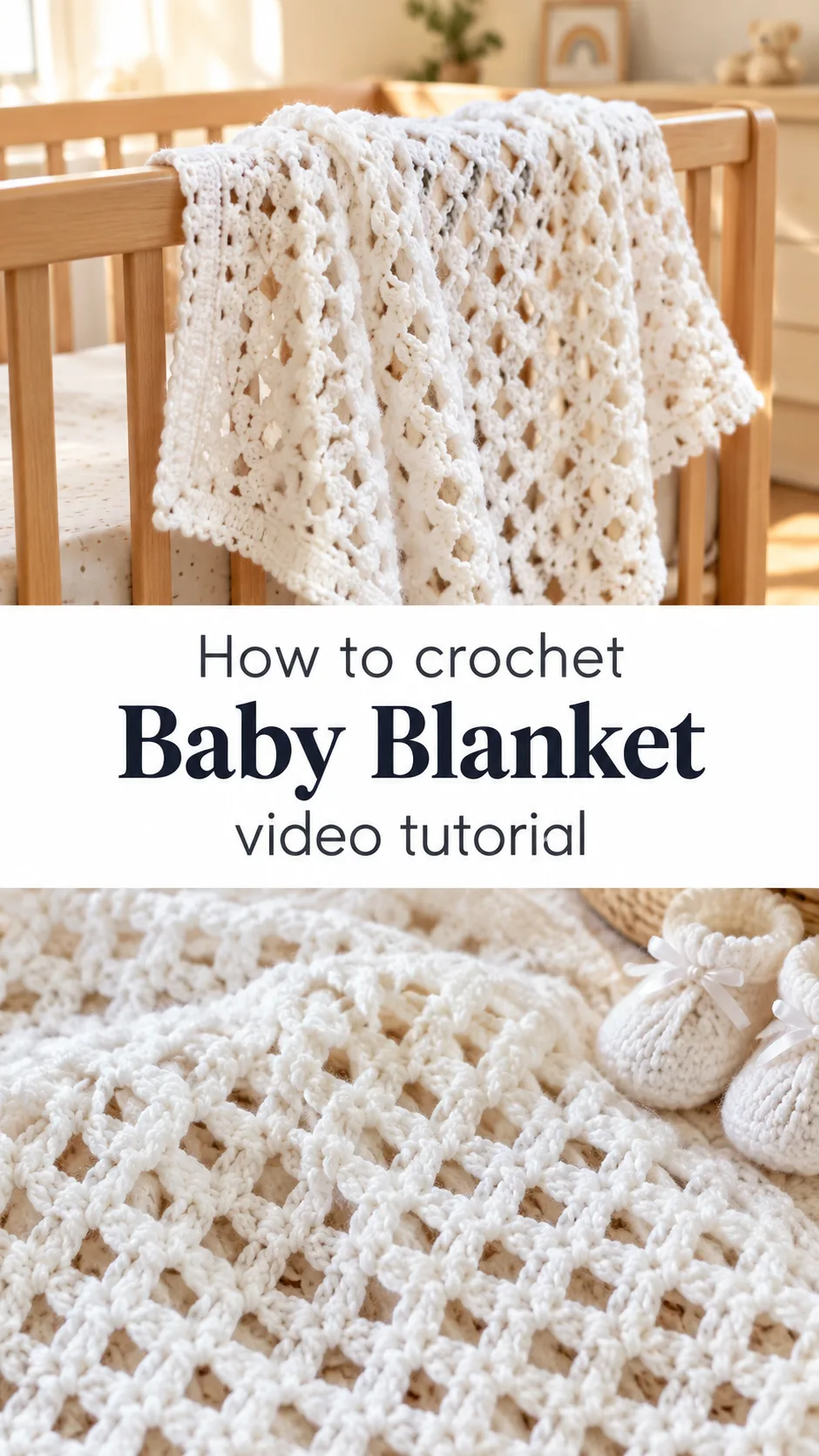
A crochet baby blanket in soft white, worked in an open, lacy stitch with a gently scalloped edge, feels light in the hands and looks lovely draped over a crib rail or a nursery chair.
The Crochet Baby Blanket
This crochet baby blanket is worked in pure white yarn in a mesh of small open diamonds, held together by neat clusters of tall stitches. The fabric is airy rather than dense, so it drapes softly and weighs almost nothing. A scalloped border along the top gives the edge a gentle wave. White keeps the look clean and calm. It suits almost any nursery palette. The pattern repeats in tidy bands, which makes the work rhythmic and easy to settle into. Small stitches and generous gaps give it a lace-like quality without the fuss of true lace. It is the kind of piece that gets used daily and kept for years. Think pram rides, car seat covers, tummy time and quiet afternoons in a rocking chair.
It also works well as a gift. New parents tend to remember a handmade blanket long after the store-bought presents fade. For you, it builds comfort with chain spaces and clustered stitches, and it rewards patience with a result that looks far more complicated than it is. It could even become a christening blanket.
Baby Blanket Related Posts:
- Crochet Halter Top: A Chic and Feminine Statement
- Crochet Yarn Eater Stitches: A Bold Creative Guide
- Crochet Rectangle Table Runner: A Chic Handmade Accent
- Crochet T-Yarn Bag: A Bold and Chic Accessory
Materials
A crochet baby blanket needs very little, but the choices matter. Pick a soft, smooth yarn in white or off-white, preferably a cotton blend or a baby-safe acrylic labelled machine washable. The yarn in the photos looks smooth, slightly sheened and mid-weight, and that smoothness helps the clusters stay crisp and the open spaces stay clear. Pair it with a hook near the size recommended on the label, perhaps a touch larger if you want the mesh to drape more. The hook in the tutorial has a gold aluminium shaft and a comfortable handle, and a slick metal hook lets the yarn glide through the tall stitches. You will also want a yarn needle for weaving in ends and a pair of sharp scissors. Buy a little more yarn than you think you need. White shows dye-lot differences, so it is wise to purchase all the skeins at once.
Understanding the Stitch Pattern
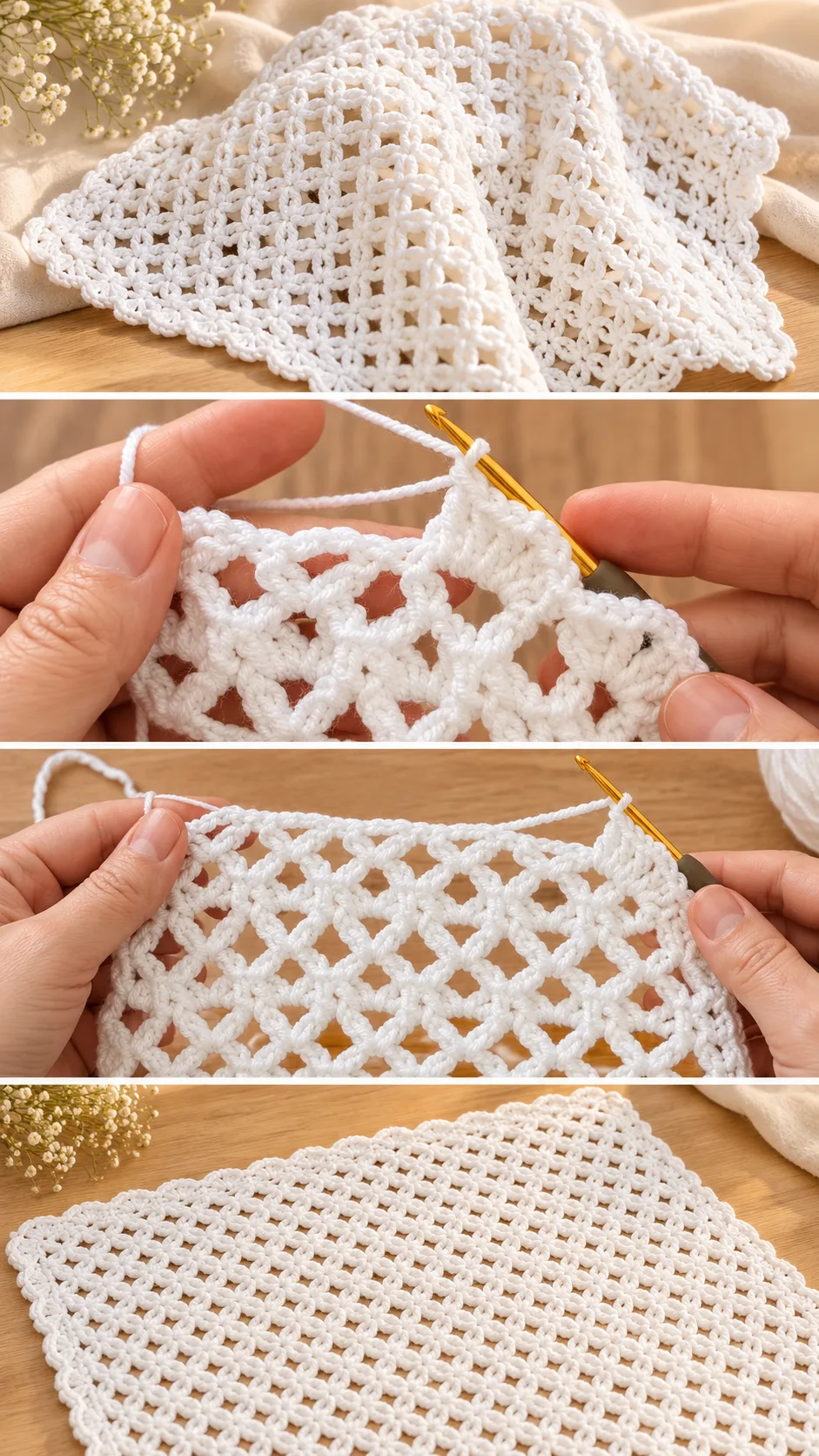
The fabric is built from rows of tall stitches grouped into small clusters, with chain spaces between them. Those chains create the open diamond holes you can see through the fabric.
Each row sits on the one below so the clusters land over the gaps, which produces a staggered, honeycomb-like look. That offset is the heart of the pattern. If a cluster lands in the wrong space, the diamonds begin to lean and the lace effect is lost.
The clusters look slightly raised against the airy background, giving the surface a gentle texture. It reads as soft relief rather than bulk, so the blanket stays supple.
Count your clusters at the end of every row for the first few repeats. If the count is off, the fault is almost always a skipped or doubled space at an edge, and it is far easier to fix after one row than after ten.
Learning the Repeat
Once the rhythm clicks, the repeat becomes nearly automatic. Pause the video where the hand shows the first cluster being worked into the chain space, and replay it slowly.
Notice how the loops are pulled up and closed together. A loose finish makes the clusters flop open, while a snug one keeps them upright and neat.
Choosing the Best Yarn for a Soft Blanket
Yarn decides how this blanket feels against skin. A mercerised or soft cotton gives a cool, matte-to-silky finish and shows the stitch definition beautifully, though it is heavier and has less stretch. A baby acrylic is lighter and springier, and it survives frequent washing, which matters with newborns. A bamboo or cotton-acrylic blend sits between the two and drapes well.
Avoid anything fuzzy, hairy or loosely spun. Mohair-type yarns hide the open holes and can shed fibres near a baby’s face. Wool is warm and lovely, but many parents prefer fibres they can toss in the machine.
Check the weight too. A fine yarn makes a delicate, see-through blanket that suits summer. A thicker one fills in the diamonds and turns the piece into a cosy winter wrap. If you change yarn weight, expect the finished size to change as well, so make a small swatch first.
Edges and Scalloped Border
The top edge of the blanket finishes in a soft scallop, made from a row of fuller, rounder clusters that curve outward. It frames the openwork and gives the piece a finished, boutique look. A plain straight edge would feel unfinished against such a lacy body.
Work the border with the same yarn so the scallops blend into the fabric. If you want contrast, a pale pastel in the same fibre could outline the waves, though white on white keeps the focus on texture.
Keep the edges straight as you go. Each row begins and ends with a turning chain, and if that chain is too tight the sides pinch in, while a loose one makes them flare. Aim for a turning chain that matches the height of the stitches beside it.
If the edges ripple anyway, check your tension. Stitches worked tighter at the start of the row than at the end are the usual cause. Relax your grip and the sides will settle.
Planning Size and Yardage
Baby blankets come in several sizes. A pram or car seat blanket is small and easy to carry, a crib blanket is larger, and a lap blanket for the nursery chair is larger still. Decide where it will live before you start, because the stitch repeat grows in steps and it is easiest to stop at the end of a full band.
Because the stitch is open, it uses less yarn than a solid fabric of the same size, but exact amounts depend on yarn weight and hook. Make a swatch of a few repeats, measure it, and work out how many repeats you need. Then buy extra yarn for the border.
If you start to run short, stop at the end of a row rather than mid-row. Finishing one skein cleanly and joining the next at an edge keeps the join invisible.
How to Style and Use the Blanket
In the photos the blanket is white and bright, with an almost wedding-lace feel, so it looks best against light wood, pale linen and soft neutrals. Fold it over the side of a crib or lay it across the foot of a bed.
It also works outside the nursery. Use it as a stroller cover on a breezy day, a light layer in the car seat, or a photo prop for newborn pictures. The open weave lets air through, so it suits mild weather better than deep winter.
For gifting, roll it loosely and tie it with a ribbon, or tuck it into a basket with a pair of tiny booties. A handwritten care label tied on a card makes the gift feel complete.
Tips for a Neat Finish
Weave in every end with a yarn needle, running it through several stitches in two directions so nothing works loose in the wash. With open lace, hide tails inside the clusters rather than along the holes, where they would show.
Block the finished blanket. Pin it flat, mist it lightly or wet it gently, and let it dry. Blocking opens the diamonds, evens out the clusters and relaxes the scallops. If the fabric feels stiff after crocheting, a gentle wash and flat drying will soften it.
If a row came out tight and puckered, check whether you were pulling the yarn too hard at the cluster closure. If it is only slightly uneven, blocking will usually correct it. If the whole piece is too narrow, add repeats or a round of border rather than ripping everything back.
Caring for Your Blanket
Wash it gently, preferably in a mesh bag on a delicate cycle or by hand, with a mild detergent. Open stitches can catch on zippers and buttons, so keep it away from rough fabrics in the machine.
Dry it flat on a towel and reshape it with your hands. Hanging a wet blanket pulls the stitches long, and high heat can damage some acrylics. Store it folded in a breathable cotton bag away from sunlight, which can yellow white yarn over time.
Following the Tutorial
Watch the whole video once before you pick up the hook. On the second pass, work alongside it and pause whenever the creator inserts the hook into a chain space, since that placement is what keeps the diamonds lined up.
Pay close attention to how the first row is set up and how the row ends turn. Replay those moments until they feel familiar. A good order of work is a short swatch, then the full blanket, then the border.
A Gentle Handmade Heirloom
This crochet baby blanket is a soft white wrap of open diamonds, gentle clusters and a scalloped edge. It is simple enough to enjoy making and pretty enough to become a keepsake.
Four things decide how it turns out: a smooth, washable yarn, steady tension at the edges, a careful count of clusters, and a good blocking at the end. Get those right and the lace shows itself.
Soft hands, soft yarn, soft start.
Video tutorial by Crochet Workshop. Watch the full crochet baby blanket tutorial below.
[Video tutorial]
Follow us on Pinterest and subscribe to the Newsletter so you don’t miss a thing!
Tutorial and photos of this baby blanket by: Crochet workshop.