
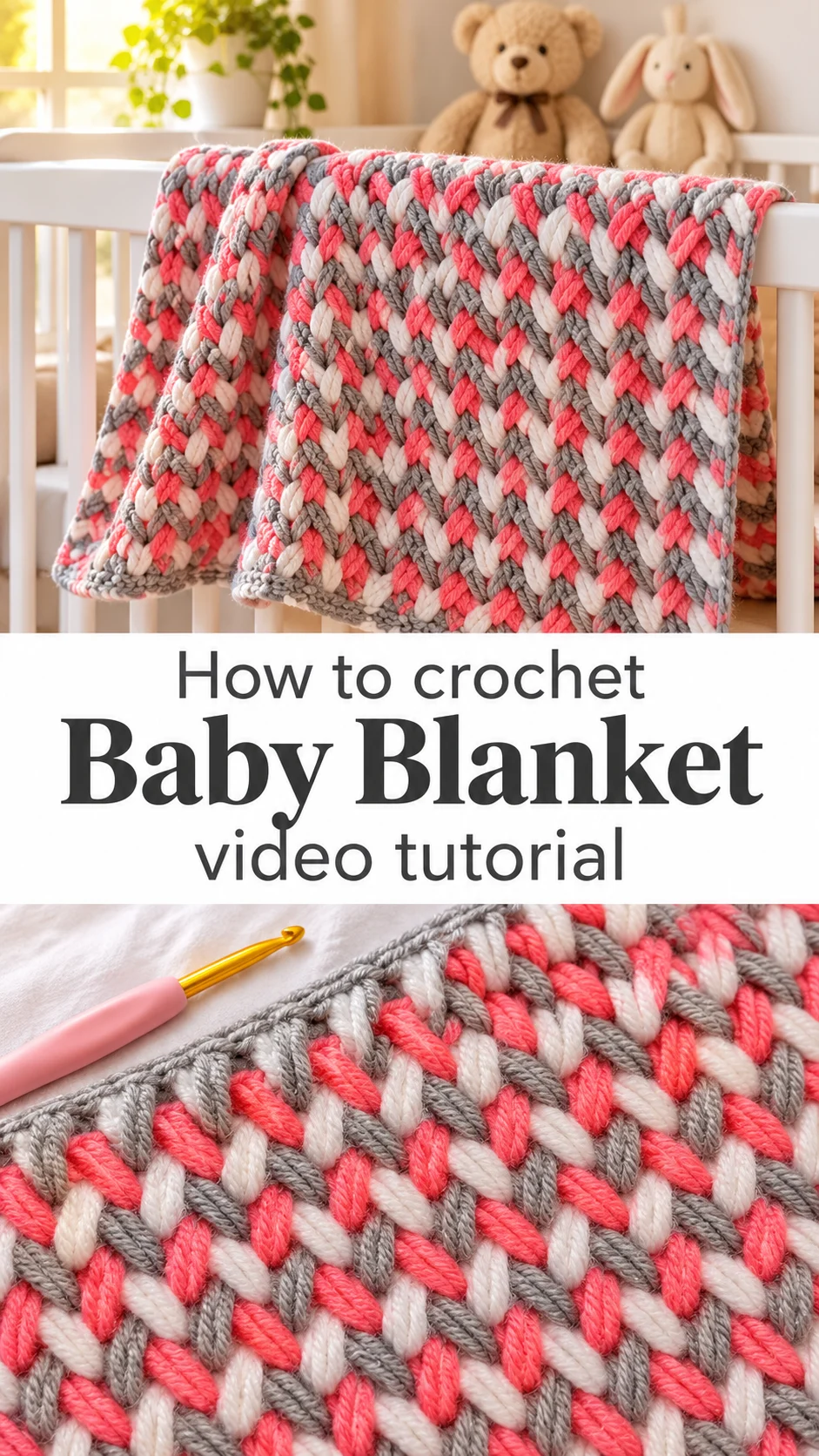
A crochet baby blanket in a woven braid pattern feels like a small piece of heirloom craft, with plump diagonal ridges in coral pink, soft grey and white that look plaited by hand.
The Crochet Baby Blanket
This crochet baby blanket is built from a stitch that imitates weaving. Rows of raised, leaf-shaped stitches lean to the right and left in turn, so the fabric reads as a braid running across the whole surface. Three colours take turns: coral pink, light grey and soft white. They cross each other in a steady diagonal rhythm that looks far more complicated than it is. The fabric is thick and cushiony, with real depth, which makes it feel substantial in the hands. A clean white edge frames the top, and a grey border sits along the sides. This blanket suits a pram, a cot, a nursery chair or a quiet afternoon nap. It is the kind of gift that gets kept long after the baby has grown.
Colour does a lot of the work here. Pink, grey and white are gentle without being sugary, and they sit comfortably in almost any nursery. The blanket also folds well and travels easily. It is a good choice for a baby shower, a christening or a first birthday. For the maker, it builds skill in colour changes and in keeping tension even.
Baby Blanket Related Posts:
- Crochet Sunflower Bouquet: A Bright and Cheerful Bloom
- Crochet Lace Scarf: A Delicate and Timeless Accessory
- Crochet Daisy Granny Bag: A Charming Handmade Tote
- Crochet Seashell Bag: A Breezy Coastal Treasure
Materials
A crochet baby blanket like this needs a soft, smooth, machine-washable yarn in three colours: a coral pink, a mid grey and a warm white. The yarn in the photos looks like a plain, tightly plied acrylic or acrylic blend with a matte finish, and that is a sensible choice, because crisp plies keep the raised stitches clearly defined. Pair it with a hook in the 4 to 5 mm range, roughly the size a medium-weight yarn label suggests, and use a hook with a comfortable handle, since the long rows and repeated tall stitches can tire the hand. You will also need scissors, a yarn needle for weaving in ends, and stitch markers to keep the edges honest. Buy all three colours in the same brand and weight, and make sure the dye lot matches within each colour. A baby blanket needs a lot of yarn, so it is better to buy a little extra than to run out of white halfway through the border.
Understanding the Braided Stitch
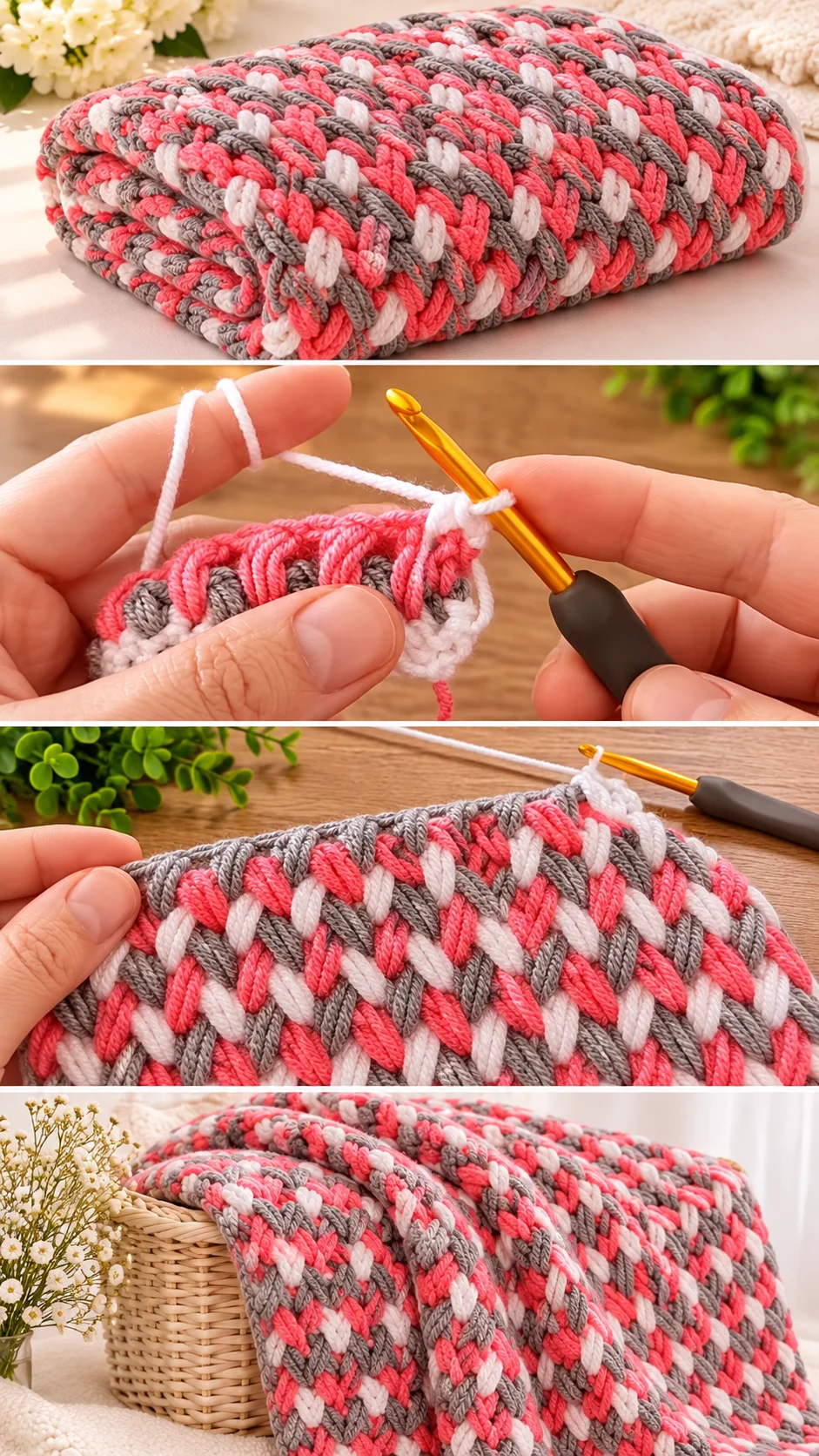
The texture is the heart of this project. Each raised stitch looks like a small, plump leaf, and the leaves lean in alternating directions across the rows. That alternation creates the braided effect.
The stitches look like they are worked in a tall, elongated style, wrapped over the hook and drawn up to give height and body. Because the pink, grey and white stitches sit side by side and each colour reappears on a regular beat, the eye follows the diagonals and sees a woven ribbon.
The video shows the hook movement for a single repeat. Pause there and copy it slowly several times. Once your hands learn the motion, the rest of the blanket is the same movement repeated.
If the leaves look flat and sleepy instead of plump, your stitches are probably being pulled too tight at the top. Loosen your grip slightly and let each stitch stand tall before moving on.
Choosing the Best Yarn for Softness and Wear
Yarn choice decides whether this blanket feels luxurious or scratchy. The fabric is dense, so a heavy or hairy yarn would make it stiff and warm to the point of discomfort.
A smooth acrylic or acrylic-cotton blend gives the closest result to the photos. It keeps the leaf shapes crisp, tolerates frequent washing and dries quickly. A soft cotton works too, but it will drape heavier and can stretch under its own weight when the blanket is lifted.
A fuzzy or brushed yarn is the one to avoid. It blurs the stitch definition, so the braid disappears into a haze. It also sheds fibres, which is a poor idea near a baby’s face.
Check the label for machine-washable wording. A blanket for a baby will be washed far more than any other project you make, and a yarn that felts or fades will let you down quickly.
Planning Colour and Size
The coral, grey and white combination is the most natural way to show off the braid. Keep the contrast between the three colours clear. Grey and white sit close in value, so make sure the grey is a true mid-tone and not a pale one, or the weave will look washed out.
For other palettes, try mint, cream and sand for a soft neutral look, or dusty blue, grey and white for a calmer, cooler feel. Three colours of similar brightness can look muddy, so choose one that leads and two that support.
Size depends on use. A pram or car-seat blanket is small and quick, while a cot blanket needs much more yarn. Because the fabric is thick, it uses more yarn per square inch than a simple stitch would, so work out your total before buying. Make a small swatch, measure it, and multiply up.
If your swatch comes out smaller or larger than you planned, change the hook size before you commit to the whole blanket. It is far easier to adjust at the beginning than to rip out rows later.
Edges and Border: The Detail That Frames the Weave
The edges give this blanket its finished look. The top edge in the photos is a neat row of white stitches that sits flat and even, and the side shows a grey border that matches the braid colours. That choice stops the pattern from simply ending and makes it look intentional.
Edges on a stitch this tall tend to wobble. Count your stitches at the end of every few rows, and use a marker at each edge so you always know where the first and last stitch sit. If the sides start to pull in, you are probably skipping the last stitch of a row. If they flare out, you may be adding an extra one.
A simple border in one colour is enough. White gives a crisp, clean line that matches the top edge, while grey softens the look and hides marks better. Whichever you choose, work the border with a hook the same size as the main fabric, so the blanket does not ripple or cup.
How to Style a Crochet Baby Blanket
The most obvious home for this blanket is the nursery. Drape it over the back of a rocking chair, fold it at the foot of the cot, or lay it across a changing table where the colours stay in view. The coral stripes pick up pink accents, while the grey ties in with wooden furniture and white walls.
It also works outside the nursery. Use it as a pram cover on a cool morning, a play mat on the floor, or a photo prop for newborn pictures. Fold it in thirds and the braid shows clearly even in a small space.
As a gift, roll it and tie it with a ribbon, or place it in a basket with a few small toys. The heavy, cushiony fabric makes it feel like a gift that was made with time, and that is exactly what it is.
Keeping It Safe for a Baby
Use the blanket for supervised play, car rides and stroller walks rather than in an unattended cot. Weave in every end firmly, and check the stitches from time to time for loose loops that small fingers could catch.
Tips for a Neat Finish
Tension is everything with a stitch like this. If some leaves look fat and others thin, you are changing your grip along the row. Rest your hands, hold the yarn the same way each time, and stop when you feel tired.
If the fabric feels too stiff, go up half a hook size. If it feels loose and floppy, go down. Test on your swatch, not on the blanket.
When you change colour, carry the new yarn up neatly and avoid long loose strands behind the work. Weave in each end along the same colour, so the tail disappears into matching stitches. A tail woven through a contrasting colour shows through on a pale fabric.
Block the finished piece lightly. Pin it to size, mist it with water, and leave it to dry. That evens the leaves, flattens any wavy edges and gives the white border its crisp line.
Caring for Your Blanket
Wash on a gentle cycle in cool water with a mild detergent, because heat can roughen acrylic fibres and dull the colours. Skip fabric softener, which coats the yarn and reduces its natural softness. Dry flat or on a low heat setting, and reshape the edges while it is damp. Store it folded in a breathable bag or basket, away from direct sunlight, which can fade the coral pink faster than the grey or white.
Following the Tutorial
The video is the pattern, so watch it once all the way through before picking up the hook. Then return to the opening rows and pause at the foundation, where the stitch is introduced. Watch where the hook enters and how the yarn is wrapped, and replay that moment until it feels natural. When the tutorial moves on to the colour changes, pause again and note when the new colour joins in. Work a small swatch first, check it against the photos, and only then start the blanket.
A Soft Handmade Keepsake
This crochet baby blanket is a braided, cushiony piece in coral pink, grey and white that looks complex but rests on a single repeated stitch. Four things decide how it turns out: a smooth, washable yarn, even tension, tidy edges and a matching border. Get those right and the weave will do the rest.
Soft to hold, easy to wash and handsome on any cot. A small gift that stays.
Video tutorial by Knitting Workshop, who shows the braided stitch step by step in the video below.
Follow us on Pinterest and subscribe to the Newsletter so you don’t miss a thing!
Tutorial and photos of this baby blanket by: Crochet workshop.