
Crochet Filet Net Lace is openwork made visible, a grid of air and thread that holds more light than fabric has any right to. It carries the feeling of a Sunday morning, of linen curtains lifting in a warm breeze, of something kept and passed down with care.
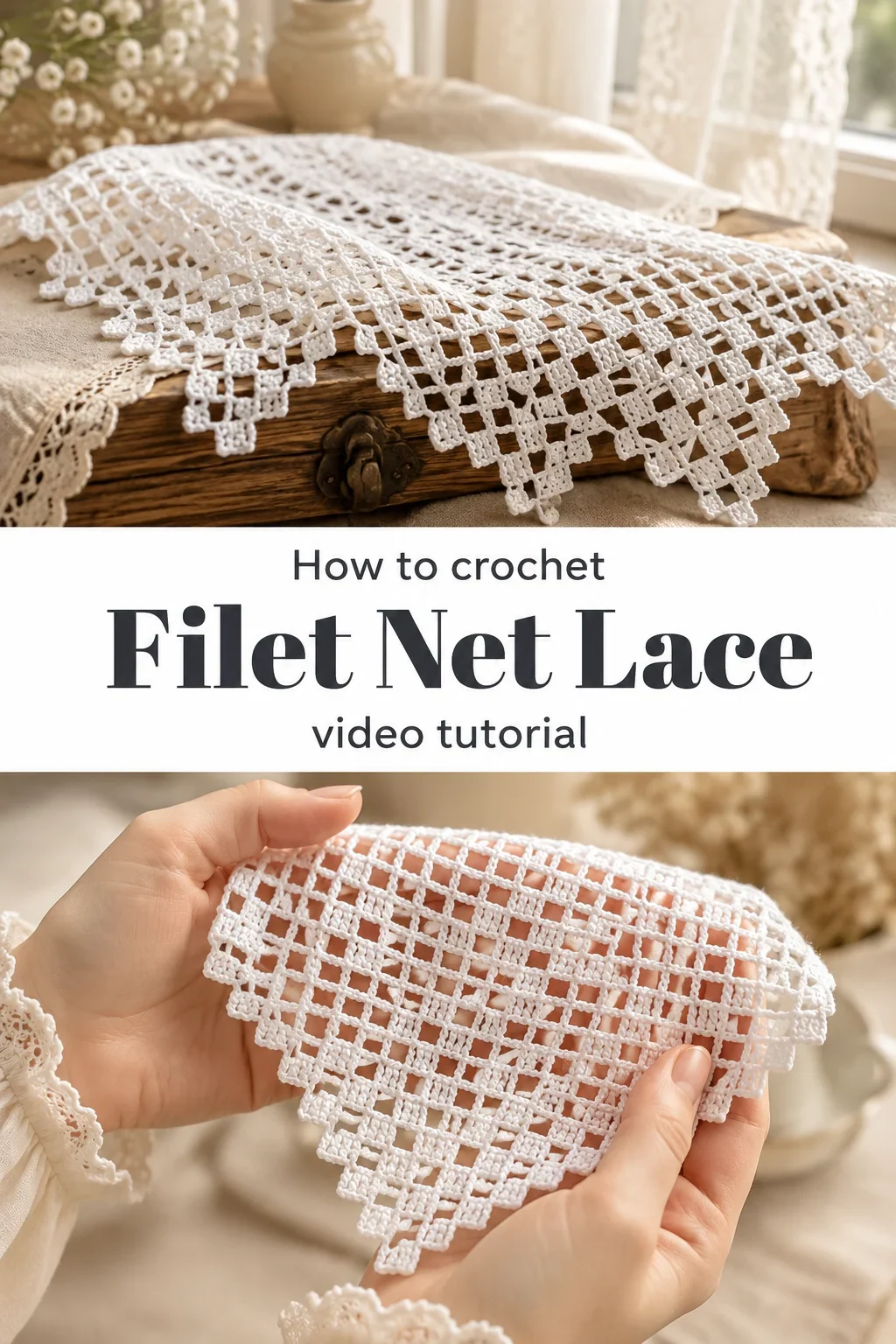
The Filet Net Lace
Crochet Filet Net Lace is one of those rare techniques that looks impossibly intricate from a distance yet reveals itself, up close, to be built from the most honest and repeating geometry. The open mesh squares cascade in a scalloped hem, each point dropping just a little lower than the last, giving the finished piece a soft wave that feels both architectural and romantic. It suits the maker who loves quiet work, who finds satisfaction in a pattern that builds itself row by row into something airy yet structured. Whether you are edging a pillowcase, finishing a blouse hem, or making a standalone trim for a tablecloth, this lace speaks in a whisper of elegance that never overpowers.
Net Lace Related Posts:
- Crochet Granny Square: A Timeless Classic Design
- Crochet Basket Weave Phone Bag: A Chic Everyday Essential
- Crochet Heart Granny Square Bag: A Sweet Romantic Tote
- Crochet Magic Ring: A Simple and Timeless Technique
White is the classic choice here, and the images from the Knitting Love tutorial show exactly why: the bright cotton catches light inside every open square and makes the whole piece glow. But soft ecru, pale sage, or a barely-there blush would carry just as much beauty, especially stitched along the hem of a summer dress. The versatility of Crochet Filet Net Lace means it moves easily from heirloom table linens to contemporary fashion edging without losing a single gram of its charm.
Materials and Tools
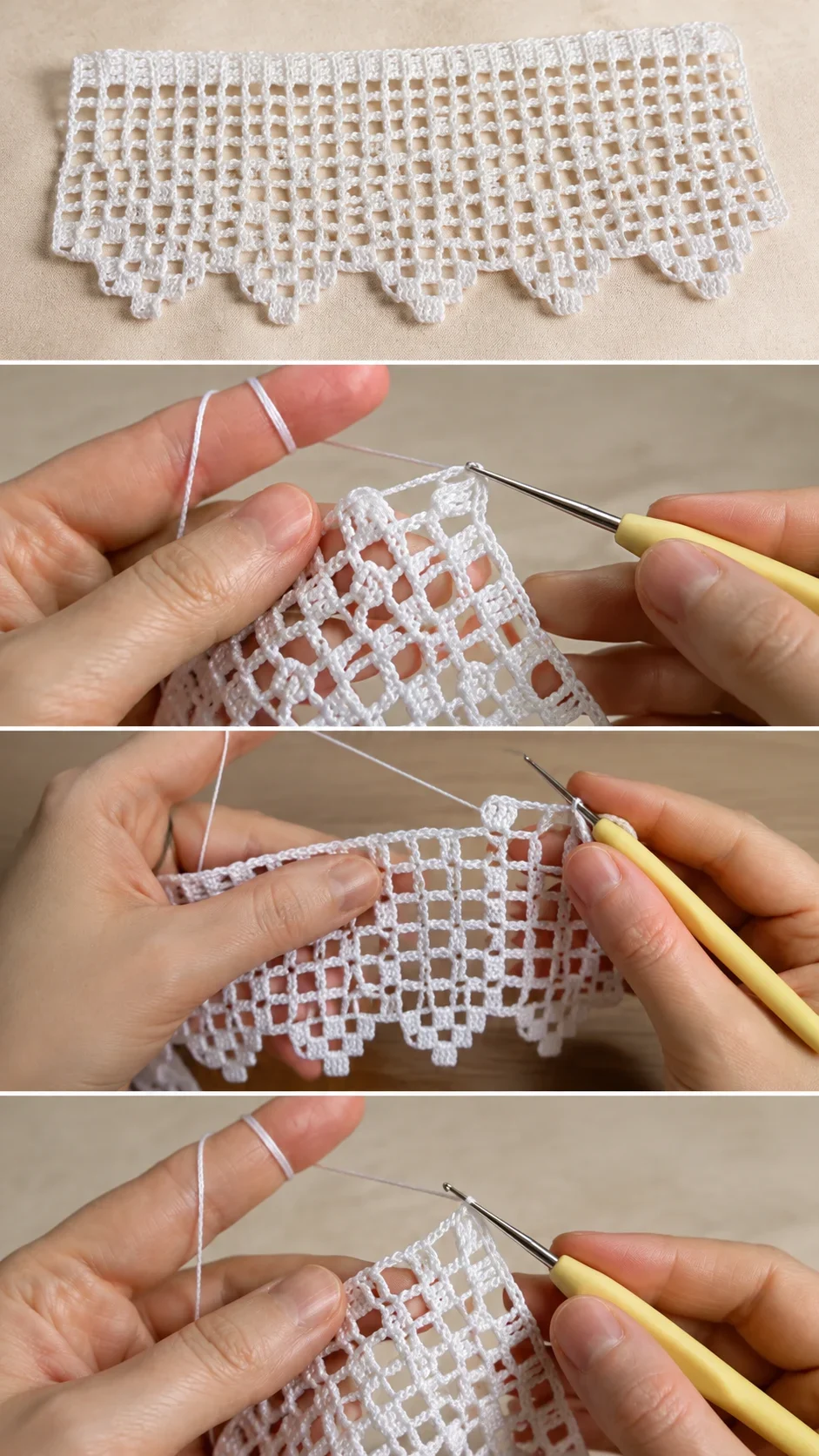
For a lace this fine and open, you want a thread or yarn that has enough body to hold its shape without stiffness, and a smooth, tightly spun cotton in fingering weight or size 10 crochet thread is the most faithful choice. The piece shown in the tutorial is worked in a bright white cotton that photographs as crisp and clean, confirming that a mercerized cotton thread gives the clearest stitch definition in filet work. Pair your thread with a 1.5mm to 2mm steel crochet hook for traditional thread, or step up to a 2.5mm hook if you prefer a slightly more relaxed drape with a fine fingering weight yarn. A small stitch marker placed at the beginning of each row will save you from losing count in the mesh, and it is the kind of tiny tool that quietly saves a whole afternoon of work.
Stitch by Stitch
Crochet Filet Net Lace relies on a small, confident family of stitches that work together to build the open mesh grid.
BULLET:CH (Chain) The foundation of every filet mesh space, chains create the open squares and form the turning structure at the start of each row.
BULLET:DC (Double Crochet) The vertical posts of the grid, double crochets form the solid corners that give each open square its defined shape.
BULLET:SC (Single Crochet) Used selectively along the scalloped edge to anchor the pointed hem and keep the decorative border neat and stable.
BULLET:SP (Space) The open chain space between double crochets is the heart of Crochet Filet Net Lace, and learning to work into it consistently is the key to an even, balanced mesh.
There is a meditative rhythm to filet work once the pattern settles into your hands, a count-and-breathe quality that makes an hour at the hook feel shorter than it is.
Construction
The piece is worked flat in rows, building upward from a foundation chain that determines the final width of your lace strip. Each row adds another layer of mesh squares, and the scalloped lower edge is shaped by gradually decreasing the number of squares worked in each pointed section, giving that beautiful stepped hem visible in the finished piece. Because the structure is horizontal and repetitive, this is genuinely beginner-friendly once the mesh logic clicks, and most makers find their confidence growing quickly after the first few rows. To customise, simply add or subtract full mesh squares at each scallop point to make the teeth of the edge deeper or shallower, which changes the whole character of the lace without changing a single stitch type.
Wearing Your Filet Net Lace
Sewn along the hem of a white linen skirt, this lace becomes the kind of detail that people notice and ask about on warm evenings. It works equally well tacked along the cuffs of a loose cotton blouse, or used as a facing strip along the neckline of a simple shift dress, giving ready-to-wear a handmade soul. Finishing this piece means finishing something that will be worn and remembered, not just admired in a project pile.
Washing and Blocking Your Filet Net Lace
Cotton lace responds beautifully to wet blocking, and taking the time to do it properly is what transforms a finished strip into something that looks truly considered and deliberate. Hand wash gently in cool water with a mild soap, press out the excess water without wringing, and then pin the lace flat to a blocking mat, stretching each scallop point to its full depth before leaving it to dry completely. Once blocked, the mesh squares open up and align in a way that no amount of careful crocheting alone can achieve, and the difference is immediately visible. Store your finished lace flat or rolled loosely in acid-free tissue to keep the cotton bright and the structure intact between uses.
Every length of Crochet Filet Net Lace you make is a small, quiet act of keeping something beautiful alive in a world that rarely slows down enough to notice thread. If this pattern calls to you, the full video tutorial from Knitting Love shows every step in real time, so follow along and let your hands learn the rest. Save this to your Pinterest boards so you can find it again when the right project finally asks for it.
Follow us on Pinterest and subscribe to the Newsletter so you don’t miss a thing!
Tutorial and photos of this filet net lace by: Knitting Love 💗.