
A crochet fillet table runner is built from an open lattice of flower-cluster motifs separated by airy square spaces, creating a fabric that is lace-like in feel yet grounded enough to hold its shape across a full table length. This single pattern unlocks possibilities far beyond the dining room, from dresser scarves and altar cloths to window valances and delicate shelf liners.
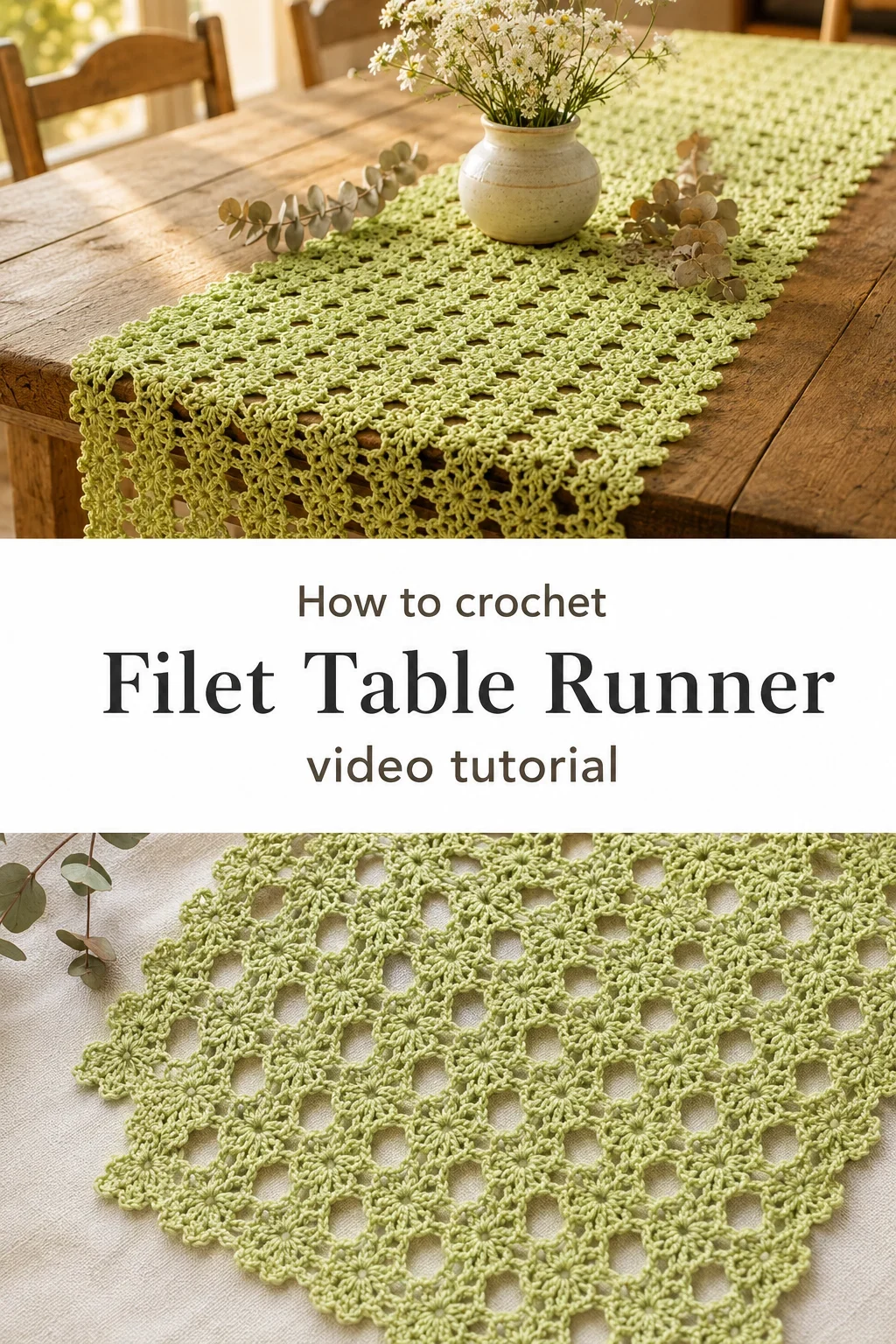
The Fillet Table Runner
A crochet fillet table runner carries that particular quality of handmade work that feels both quietly confident and genuinely beautiful, the kind of piece that makes a plain wooden table look as though it has always had something worth celebrating on it. The repeating flower clusters sit inside an open grid, giving the fabric an airy yet structured quality that lets the surface beneath breathe through it. This is a piece for anyone who loves the look of heirloom lace but wants a pattern with a meditative rhythm rather than a demanding stitch count. It suits the seasoned maker looking for a satisfying weekend project and the intermediate crocheter ready to move beyond solid fabric into something with real visual presence.
Table Runner Related Posts:
- Crochet Ripple Baby Blanket: A Sweet and Timeless Treasure
- Crochet Rustic Star Blanket: A Timeless Cozy Essential
- Crochet Wooden Handle Bag: A Chic Timeless Accessory
- Crochet Shell Stitch Baby Blanket: A Sweet Cherished Wrap
Lime and sage greens, as seen in the reference images, give this runner a fresh, botanical character that works beautifully on natural wood, white linen, or even a dark slate table. If you prefer something more classic, ecru or warm ivory thread will lean into the heirloom feeling immediately, while a dusty blush or soft terracotta would turn the same pattern into a modern statement. The piece is versatile enough to shift between seasons simply by changing the color of the yarn you reach for.
Materials and Tools
For a crochet fillet table runner with crisp stitch definition and the kind of durability that survives regular use, a size 10 crochet cotton thread or a fine fingering weight cotton yarn is ideal, and the reference images show exactly how beautifully that fiber weight resolves the open grid squares and flower clusters. A 1.5mm to 2mm steel crochet hook works well with size 10 thread, while a 2.75mm to 3mm aluminum hook pairs nicely with a light fingering weight cotton for a slightly softer drape. Mercerized cotton is strongly recommended here because it adds a subtle sheen that makes the lace pattern catch light in the most satisfying way, and it blocks out to a smooth, even finish. A set of rust-proof blocking pins and a foam mat will become your best finishing tools when it is time to open up all those beautiful open squares to their full dimension.
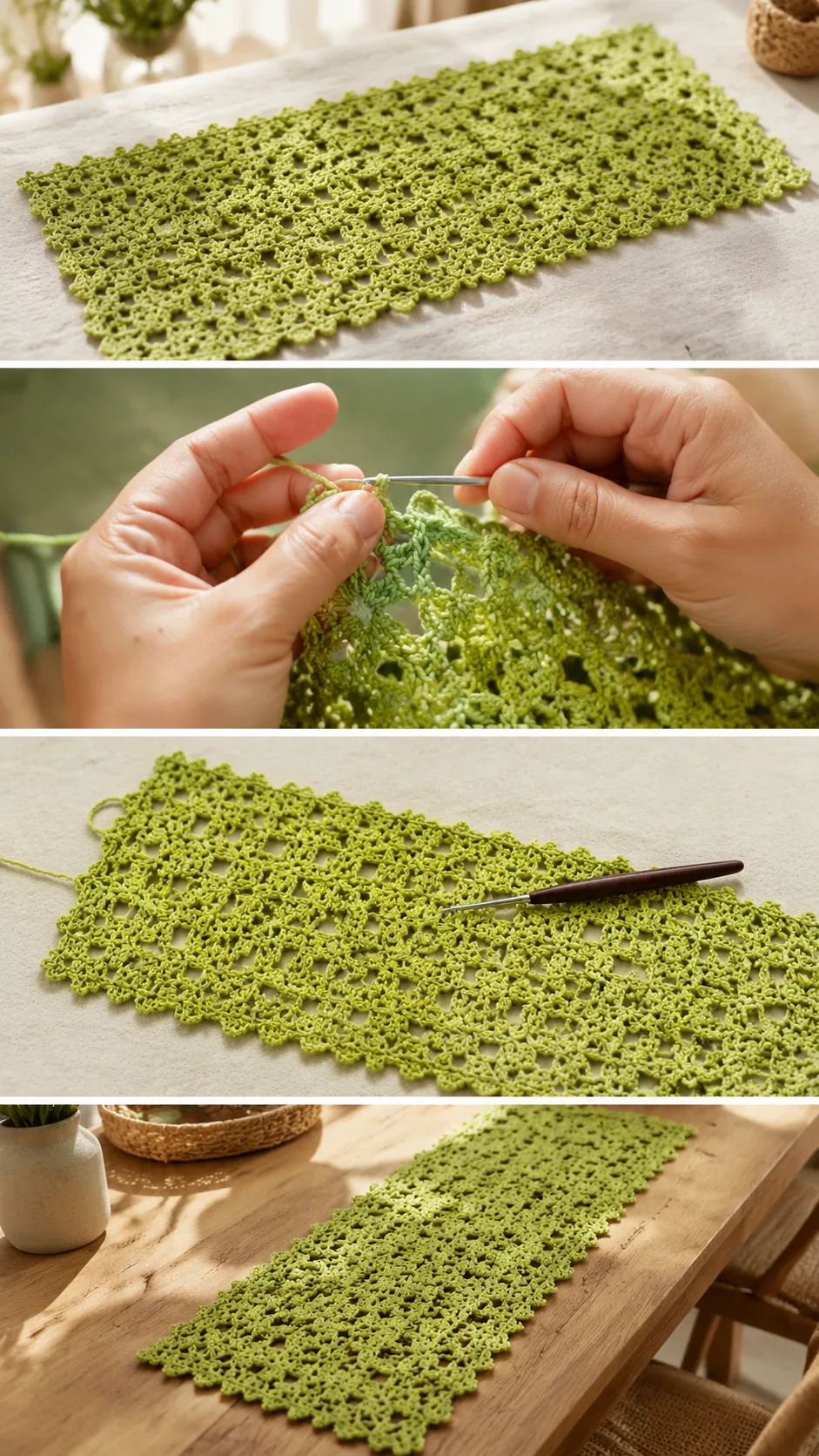
Stitch by Stitch
This pattern draws on a small, focused vocabulary of stitches that combine into something far more intricate than they individually suggest.
BULLET:CH (Chain) The foundation of the entire grid structure, used to form the open spaces between flower clusters and to begin each new row.
BULLET:SC (Single Crochet) Used at key joining points within the motif to close and anchor each flower cluster neatly into place.
BULLET:DC (Double Crochet) The primary building stitch, worked in groups to form the petal-like elements of each flower cluster within the grid.
BULLET:YO (Yarn Over) A constant motion throughout this pattern, used in every DC and in the joining steps that pull the flower clusters into their finished shape.
Once your hands know where each YO and DC falls within the repeat, the pattern settles into a genuinely meditative rhythm, the kind where you can feel the fabric growing under your fingertips without looking down at every stitch.
Construction
The crochet fillet table runner is worked flat in rows, building upward from a long foundation chain that determines the finished width of your piece, which makes it extremely easy to customize simply by adjusting your starting chain in multiples of the pattern repeat. Each row introduces another line of flower clusters sitting above the open grid squares of the previous row, creating that staggered, diagonal visual flow you can see so clearly in the close-up reference images. The full step-by-step pattern is taught in the video tutorial linked with this post, where each row is demonstrated clearly so you can follow along at your own pace. To make a narrower version for a dresser scarf or a longer version for a banquet table, you simply scale the starting chain and add or remove rows accordingly.
Wearing Your Fillet Table Runner
Lay your finished crochet fillet table runner down the center of a farmhouse dining table with a cluster of candles and some dried botanicals, and it immediately becomes the quiet anchor of the whole setting. Folded lengthwise, it also makes a graceful dresser scarf under a mirror, a shelf liner inside a glass-front cabinet, or a delicate backdrop for a bedside vignette. Finishing this piece means you have something genuinely useful and genuinely beautiful at the same time, which is a rare and satisfying combination.
Washing and Caring for Your Fillet Table Runner
Because mercerized cotton is such a hardworking fiber, your finished crochet fillet table runner can be hand washed gently in cool water with a mild soap, then rolled in a clean towel to remove excess moisture before blocking. Blocking is not optional with lace work like this: pinning the runner out flat to its full dimensions while damp is what transforms the open grid squares from slightly uneven to perfectly crisp and geometric. Once dry, store it flat or rolled loosely around a cardboard tube to prevent fold lines from pressing into the lace over time. With this level of care, a cotton lace runner made from quality thread will remain beautiful through years of regular use.
Every time you work a flower cluster into that open grid, you are practicing a kind of patience and attention that shows in the finished fabric in ways that simply cannot be replicated any other way. Pin your finished crochet fillet table runner to Pinterest and share it with the tag so the community can see what you made.
Follow us on Pinterest and subscribe to the Newsletter so you don’t miss a thing!
Tutorial and photos of this fillet table runner by: The Art Zone.