
A crochet granny square is the humble motif that never goes out of style, and this diagonal-striped version in teal, butter yellow and cream shows how much a simple stitch can do with clever colour placement.
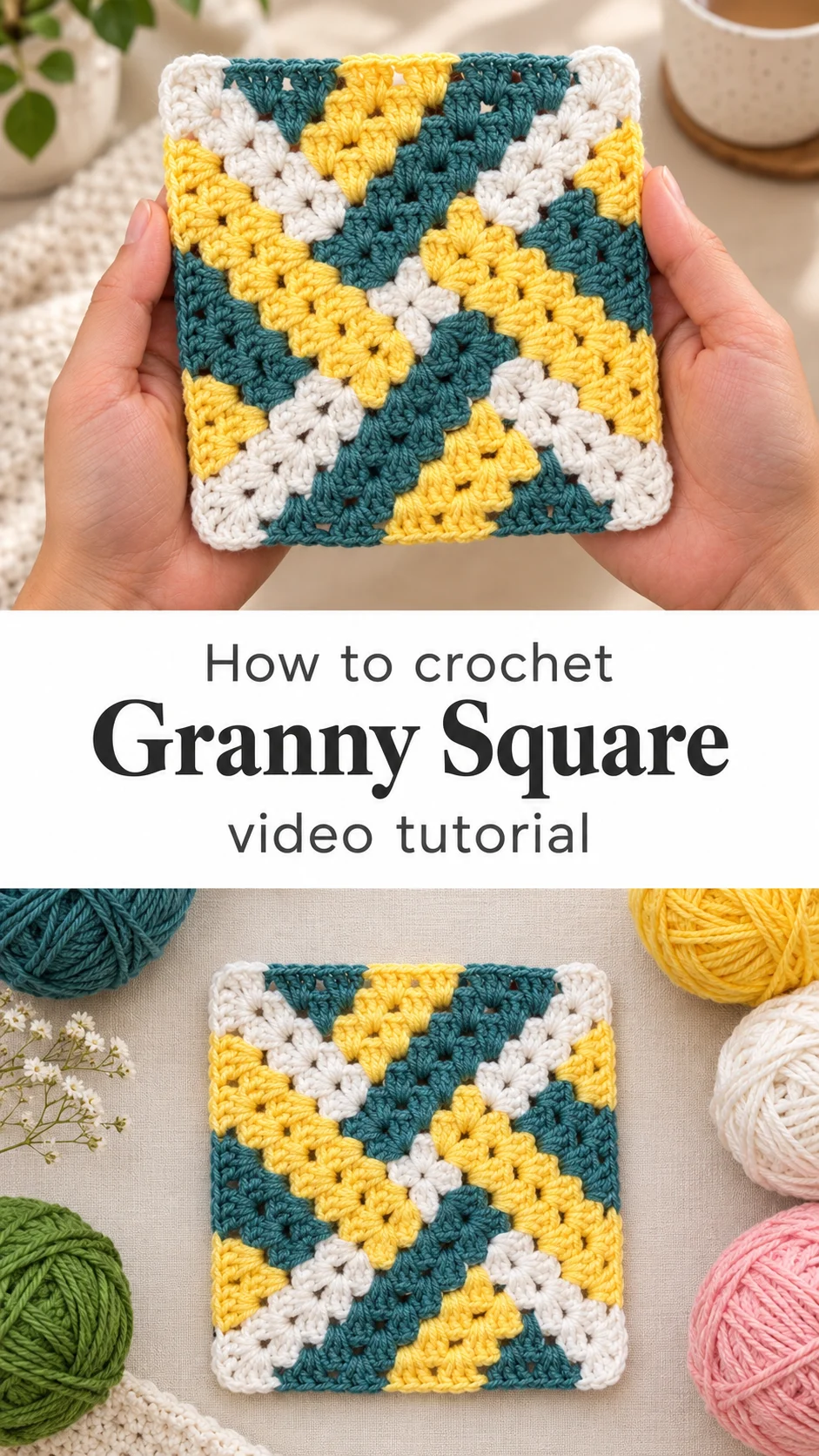
The Crochet Granny Square
This crochet granny square is worked in soft clusters of three double crochet stitches, the classic granny building block, but the stripes run on the diagonal instead of in rings. Cream sits at the corners and at the very heart of the square. Between them, bands of deep teal and sunny yellow ripple outward in steps, so the square reads almost like a woven ribbon. The fabric is slightly open, with small windows between the clusters, and the yarn looks smooth and matte, with a cotton-like softness. The edges are straight and the corners are crisp, which makes it easy to join. You can stop at one square for a coaster or keep going until you have a blanket. It suits kitchens, nurseries and cosy sofas alike.
One square is a pleasant evening’s project. A dozen become a cushion cover, and a few dozen turn into a throw. The motif also teaches colour changes, tidy corners and even tension, which carry over to almost every other crochet project. Few small makes give you as much for so little yarn.
Granny Square Related Posts:
- Crochet Granny Square Blanket: A Timeless Handmade Classic
- Crochet V Puff Stitch: A Textured and Timeless Treasure
- Crochet Wrap Shawl: A Timeless and Graceful Layer
- Crochet Lace Trim: A Delicate and Timeless Detail
Materials
For this crochet granny square you need smooth, light worsted or DK weight yarn in three colours, ideally a cotton or cotton blend with a matte finish. Cotton keeps the cluster stitches defined and holds a flat, square shape, while fuzzy acrylic can blur the little gaps that give the fabric its charm. The colours in the example are a dusty teal, a warm lemon yellow and a creamy off-white, and that mix works because the teal is dark enough to frame the lighter two. A hook in the 3.5 to 4.5 mm range is a sensible starting point, but let the yarn label and your own tension decide. Add a yarn needle for weaving in ends and a pair of sharp scissors. If you plan to join several squares, buy a little extra of the cream, since it forms the corners and the joins.
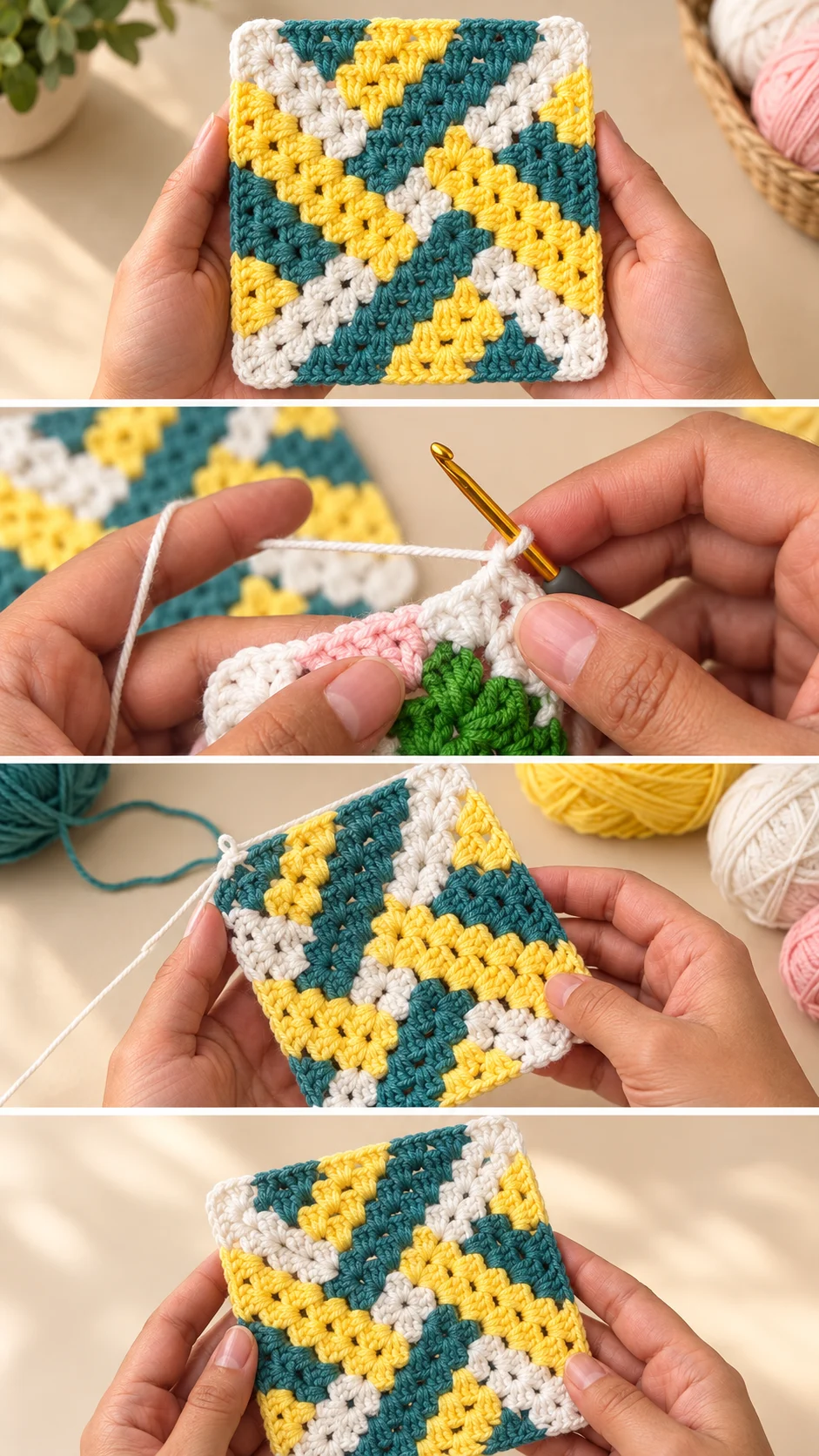
Understanding the Diagonal Construction
Look at how the colour moves and you can guess how the square is made. The stripes climb from one corner to the opposite one, and the centre cream cluster sits right on the diagonal. That points to a corner-to-corner method, where the square grows from a single starting cluster, widens to the middle, then narrows again to the far corner.
Each row adds one more block of clusters, then the count falls once you pass the halfway line. Because every row is a new colour band, the stripes form themselves without any tricky intarsia.
The video shows the increase and decrease rows clearly, so pause there and watch how the hook enters the chain spaces. Getting that entry right keeps the sides straight.
Keeping the Corners Sharp
The cream corners in the finished square are neat and slightly rounded, with no pulling. That comes from working the first and last clusters of each row into the same spot every time, rather than skipping into the gap beside it. If a corner starts to curl inward, you have probably tightened the turning chain. Loosen it slightly on the next row.
Choosing the Best Colours and Yarn for a Granny Square
Three colours is the sweet spot for a diagonal design. One light, one mid-tone and one dark give clear steps between bands. The teal, yellow and cream here do exactly that, and each stripe stays readable even from across a room.
For a nursery, try blush, sage and oatmeal. For a bolder cushion, pair navy, mustard and ivory. Avoid three colours of similar depth, because the diagonal will melt into a blur.
Fibre matters as much as colour. Cotton gives crisp stitches and washes well, so it suits coasters and dishcloths. Soft acrylic is gentler on a baby blanket and is easier to care for. Wool blends bring warmth but can feel heavy once many squares are joined.
If the finished square feels stiff, your hook is probably too small for the yarn. Go up half a size and the clusters will relax.
Stitch Texture and Skill Level
The texture comes from clusters of double crochet separated by chain spaces, which gives a slightly raised, openwork feel. It is not dense like single crochet, so the fabric drapes a little and lets light through the gaps.
This is a beginner-friendly project for anyone who can chain, double crochet and change colours. The part that takes patience is keeping the cluster count right as the rows lengthen, since a skipped cluster tilts the diagonal.
If your square looks lopsided, count the clusters on each row before moving on. Fixing it one row back costs minutes, while fixing it at the end costs the whole square.
How to Style a Crochet Granny Square
On its own, this square makes a handsome coaster or trivet, especially in cotton. The cream border sets off a mug nicely, and the colours suit a kitchen with warm wood tones.
Sew four to six squares together and you have a small pillow cover. Twelve squares in a three-by-four grid make a lap blanket, and the stripes can line up to create larger zigzags across the join.
You can also stitch squares into a market bag, a tote or a patchwork vest. Mixing this teal-and-yellow version with a pink, green and cream cousin, like the second square, gives a cheerful scrappy look that still feels planned.
Tips for a Neat Finish
Weave in every tail along the clusters of the same colour, not across contrasting bands, so no dark yarn shadows through the cream. Change colours at the end of a row, and carry the new yarn through the turning chain for a clean transition.
Blocking makes a visible difference. Pin the square flat, mist it lightly with water and let it dry. The edges straighten and the clusters settle into an even grid. Cotton responds especially well.
When joining several squares, use the cream for the seams. It blends into the corners and keeps the edges looking intentional. If the joined piece ripples, your seam is too tight, so loosen the stitches or slip stitch through the back loops only.
Caring for Your Granny Square
Cotton squares can go in a gentle machine wash, but cold water protects the colours, especially the teal and the yellow. Dry them flat so the clusters keep their shape, since a hot dryer can shrink cotton and warp the edges.
Acrylic versions are more forgiving and handle a warm cycle. Wool blends need hand washing. Store finished pieces folded, never hung, so the open stitches do not stretch under their own weight.
A Cheerful Handmade Classic
The crochet granny square proves that a small, familiar motif can still look fresh. Here, diagonal stripes in teal, yellow and cream turn the old favourite into something lively and modern.
Three things decide how well it turns out: a smooth yarn with good stitch definition, even tension through the increase and decrease rows, and a light block at the end. Get those right and every square matches the last.
Pick your colours, press play and enjoy the rhythm of the clusters.
Video tutorial by Knitting time, who shows how to crochet this granny square step by step. Watch the crochet granny square tutorial on their channel.
Video Tutorial
Watch the video below, and pause at the colour changes to see exactly how each new band begins.
Follow us on Pinterest and subscribe to the Newsletter so you don’t miss a thing!
Tutorial and photos of this granny square by: Knitting time🧶by Dina.