
When your coffee table feels like it’s missing something with soul, a Crochet Granny Table Runner is the answer you’ve been reaching for. In this article, you’ll discover the materials, stitches, and styling ideas to bring this warm, lace-kissed piece into your home.
The Granny Table Runner
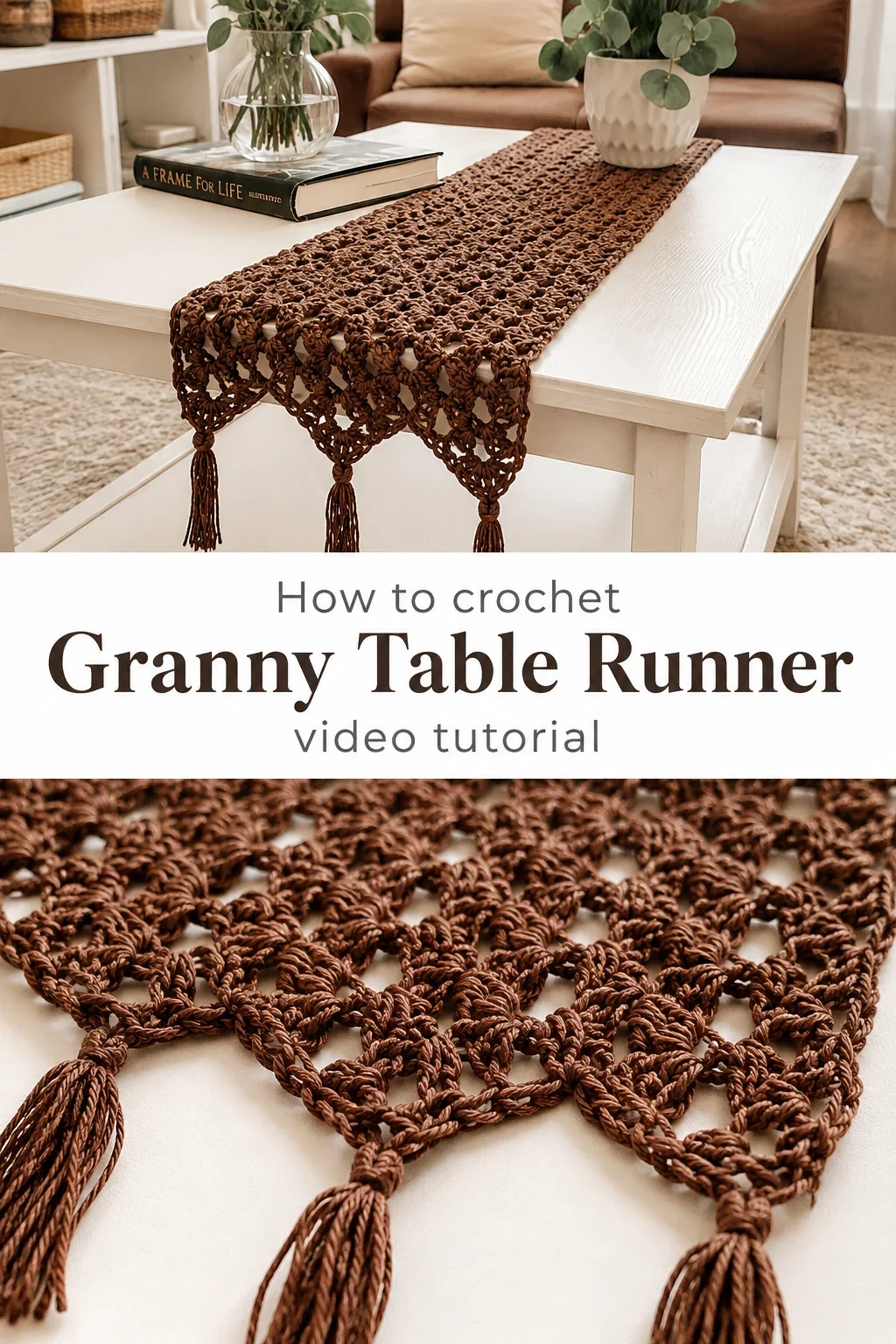
A Crochet Granny Table Runner carries the kind of quiet beauty that makes a room feel intentionally loved rather than simply decorated. It is airy yet structured, with open diamond lattices and clustered granny motifs that catch the light and cast soft shadows across your table surface. The ends finish with loose, knotted fringe that brushes the table edge like something between a vintage doily and a modern boho accent. This piece is for the maker who wants their handmade work to live at the center of daily life, not folded away in a drawer.
Table Runner Related Posts:
- Crochet Lace Doily: A Delicate Timeless Treasure
- Crochet Granny Bandana: A Charming Bohemian Accent
- Crochet Doily Mat: A Vibrant Traditional Treasure
- Crochet Boho Halter Top: A Breezy Summer Essential
Rich chocolate brown, as seen in the reference images, gives this runner a grounded, earthy warmth that pairs effortlessly with white furniture, natural wood, and greenery. You could just as easily work it in cream or dusty sage for a softer, more washed-out palette, or go deep forest green for autumn tablescapes. The beauty of this design is that the color does half the emotional work for you.
Materials and Tools
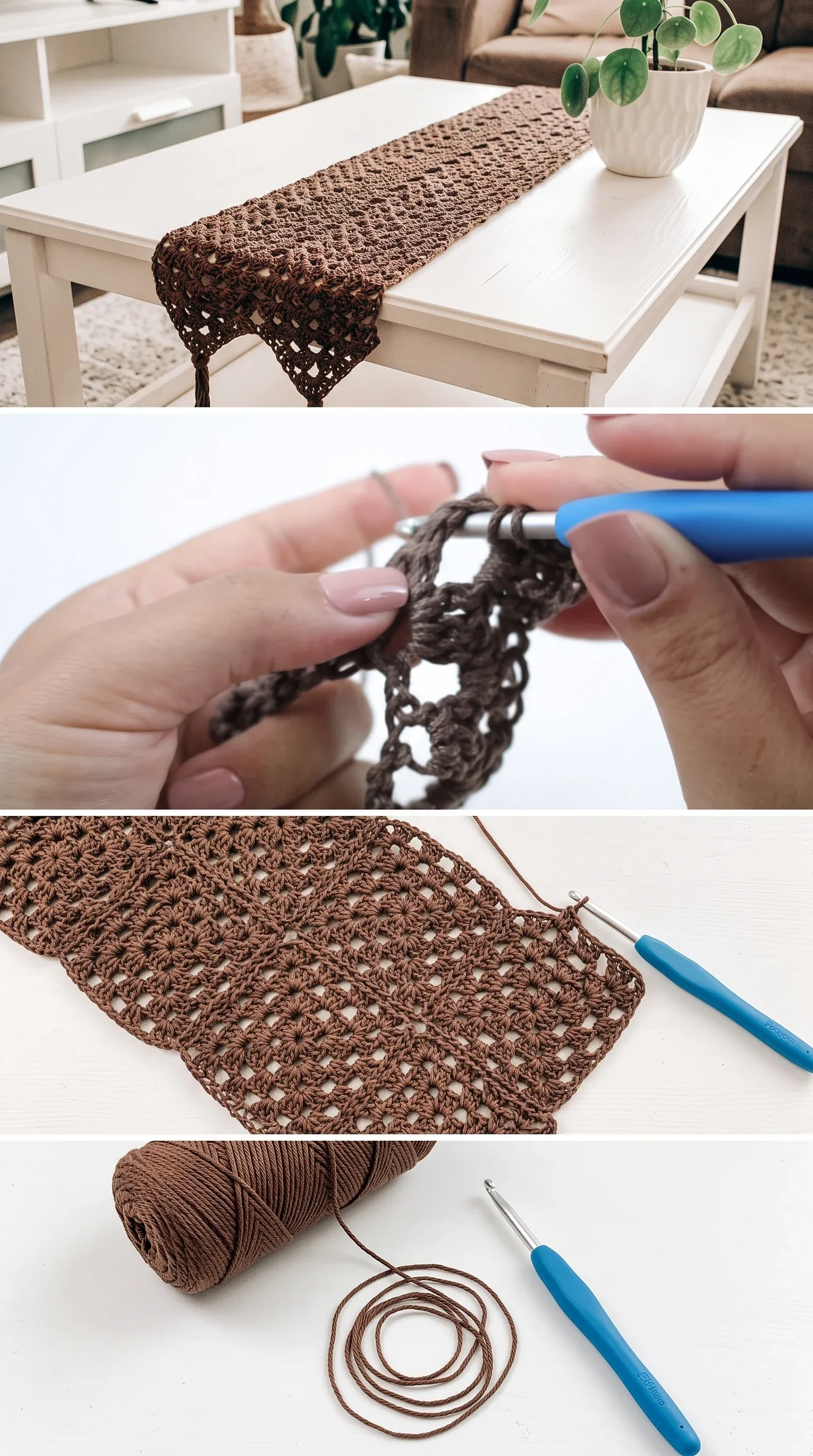
To make your own Crochet Granny Table Runner, you will want a cotton or cotton-blend yarn in a worsted weight, which gives the motifs enough body to hold their shape without becoming stiff or unwieldy. The project is worked with a 5mm crochet hook, which strikes the ideal balance between an open, breathable fabric and a firm stitch definition that keeps the granny clusters looking crisp. Cotton is especially recommended here because it blocks beautifully, lies flat without curling, and ages gracefully with use and washing. A yarn needle for weaving in ends and a pair of sharp scissors round out everything you need to sit down and begin.
Stitch by Stitch
This runner draws on a handful of classic crochet stitches that build on one another to create its signature lace-meets-granny texture.
BULLET:CH (Chain) The foundation of the entire runner, used to start and to create the open mesh spaces between motif clusters.
BULLET:SC (Single Crochet) Used sparingly to anchor sections and create clean, tight joins between granny elements.
BULLET:DC (Double Crochet) The workhorse stitch of the granny clusters, worked in groups of three to build those familiar, satisfying puff shapes.
BULLET:CH-3 Space (Chain-3 Space) The airy gap between DC clusters that gives the runner its open, lattice-like quality and lets the table surface show through beautifully.
Once your hands find the meditative rhythm of cluster, chain, turn, cluster, the rows begin to feel less like counting and more like breathing. Many crocheters describe granny stitch work as the kind of making you can settle into on a quiet afternoon without losing yourself to anxiety over complexity.
Construction
The Crochet Granny Table Runner is worked flat in rows, building length panel by panel from one short end to the other, which makes it straightforward to size up or down simply by adding or subtracting foundation chains. The granny cluster pattern repeats consistently across each row, so once you have completed your first two rows, the logic of the fabric becomes instinctive. Beginners will find the repetition reassuring, while intermediate makers can focus on tension consistency and crisp stitch definition. To customize the width, you simply adjust your starting chain in multiples of the repeat, and the fringe is added last by cutting lengths of yarn and looping them through the end stitches with a simple lark’s head knot.
Wearing Your Granny Table Runner
Lay your finished runner across a white coffee table with a potted Pilea and a stack of art books beside it, and the whole room shifts into something considered and personal. It also works beautifully on a dining sideboard, a console table in an entryway, or even draped across a bedroom dresser for a soft, lived-in look. The moment you place it, you will want to cast on another.
Keeping Your Granny Table Runner Looking Its Best
Because this runner is worked in cotton, it responds wonderfully to wet blocking: simply soak it in cool water, gently press out the excess moisture in a clean towel, and pin it flat to your measurements until it dries completely. This step is what transforms the fabric from slightly ruffled post-crochet fabric into the smooth, open, polished piece you see in the images. For regular cleaning, machine wash on a gentle cool cycle or hand wash with a mild detergent, then reshape and air dry flat to preserve the fringe. Store it folded loosely or rolled to avoid permanent crease lines in the cotton fibers.
You made something real, something that will be touched and seen every single day, and that is not a small thing. Save this article to your Pinterest boards and share your finished Crochet Granny Table Runner using the hashtag so the community can admire what your hands have made.
Follow us on Pinterest and subscribe to the Newsletter so you don’t miss a thing!
Tutorial and photos of this granny table runner by: CJ Design.