A crochet reversible cardigan wraps you in two looks at once, with a mottled blue-violet fabric on one side and a soft dusty rose border that frames everything like a ribbon.
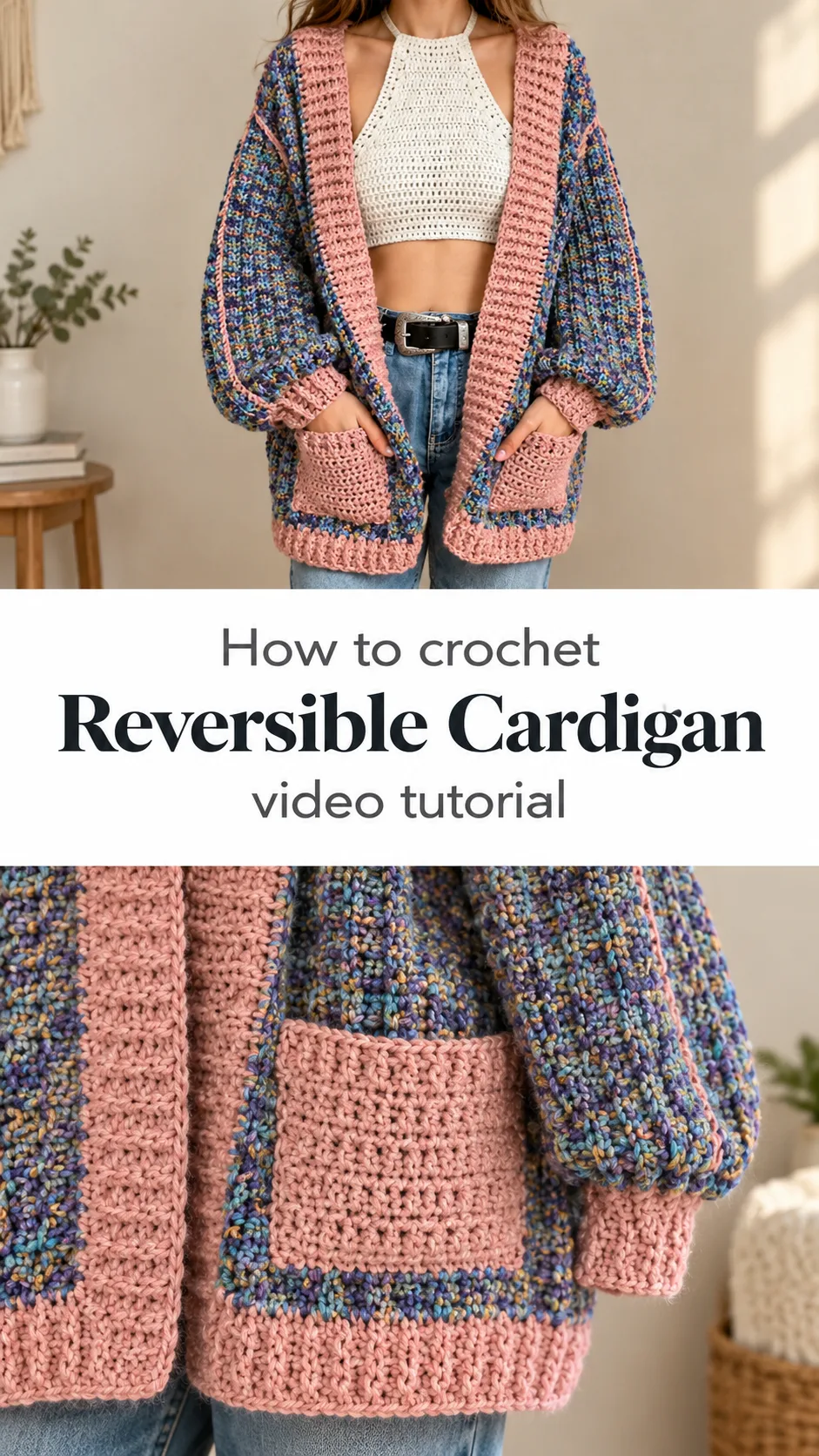
The Crochet Reversible Cardigan
This crochet reversible cardigan is an oversized, open-front layer built from ribbed-looking fabric. The body is worked in a speckled yarn that blends periwinkle, deep violet, teal and touches of mustard. Everything is outlined in dusty rose: the wide front bands, the deep hem rib, the cuffs and the patch pockets. The sleeves are full and gathered at the wrist, so the silhouette feels relaxed and slightly rounded. Because the rose edging runs along the seams and borders, the piece reads as deliberately two-toned from every angle. It sits well over a cropped halter, a plain tee or a slip dress. Wear it open, as it appears with high-waisted jeans and a western belt, and the front bands fall in two long, clean lines.
The appeal is flexibility. The same cardigan can look soft and artsy with the speckled panels leading, or sharply framed when the rose borders catch the eye. It also makes a thoughtful gift, since an open front forgives small differences in size. As a project, it teaches ribbed texture, edging and pocket attachment in one garment. A cozy layer, then, with real structure behind it.
Reversible Cardigan Related Posts:
- Crochet Table Runner: A Fresh and Timeless Accent
- Crochet Lace Runner: A Delicate Decorative Treasure
- Crochet Wooden Handle Bag: A Chic Timeless Accessory
- Crochet Star Stitch Mini Bag: A Chic Everyday Essential
Materials
For a crochet reversible cardigan like this, choose a medium-weight yarn in two colours: a variegated or space-dyed skein for the body and a solid dusty rose for the borders, cuffs and pockets. A soft acrylic-wool blend or a smooth cotton blend works well because the ribbed fabric needs some give but should not stretch out of shape under its own weight. Pick a hook that makes a fabric with gentle drape rather than stiffness; a mid-size hook, often around 5 to 6 mm for this yarn weight, is a sensible starting point, but let your swatch decide. Keep a yarn needle for weaving ends and a pair of scissors nearby. Stitch markers help when you join pieces and pick up stitches along the front edges. The variegated yarn matters most here, because its colour changes create the woven look. Avoid very fuzzy yarns, which would hide the ribbed stitch definition that gives the cardigan its character.
Shape and Construction
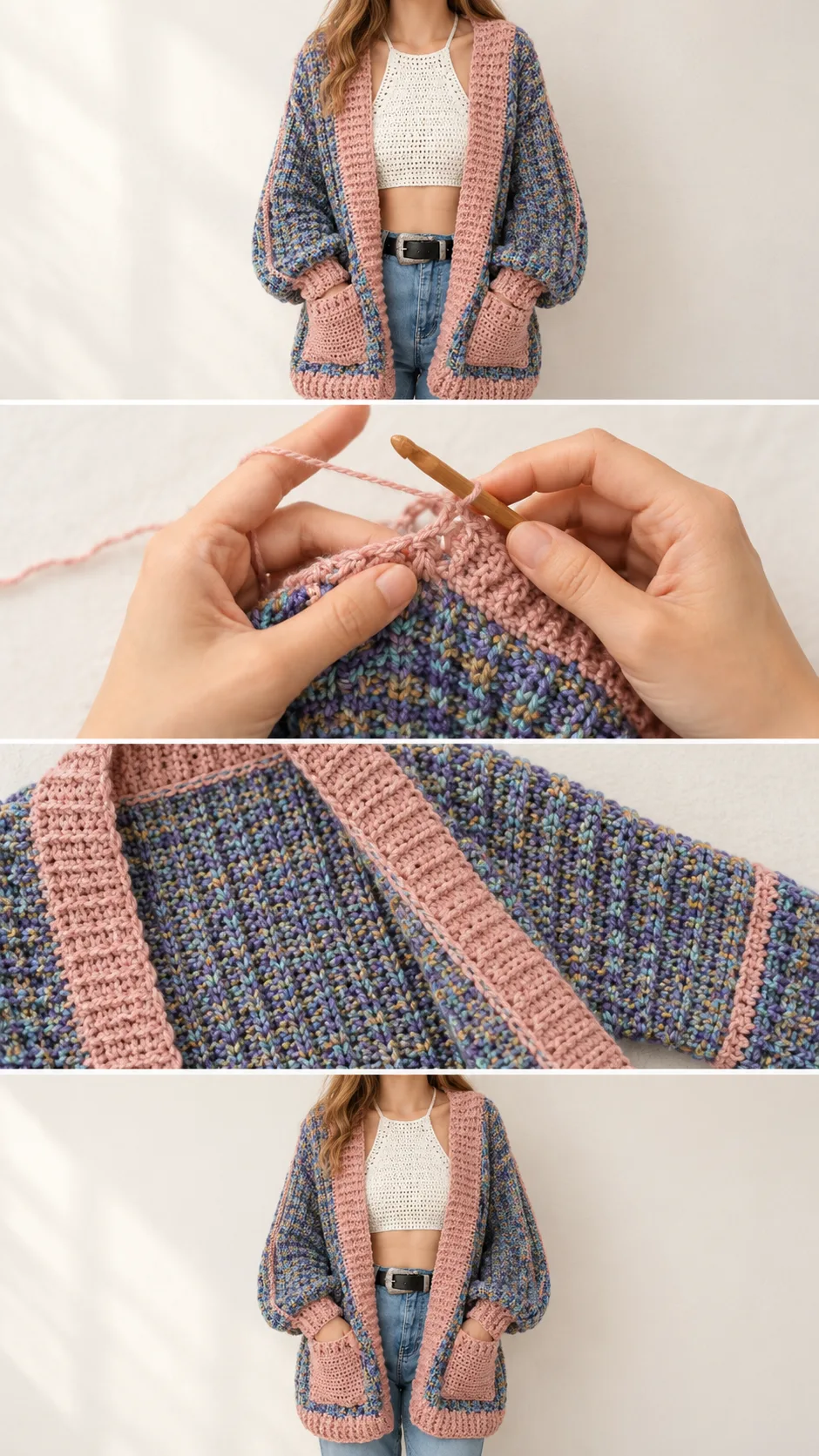
The cardigan appears to be assembled from a few simple parts: a body worked in vertical ribbed fabric, two full sleeves, front bands, a hem rib and two pockets. The visible lines of rose chain running down the sleeves and along the body suggest the pieces are joined with a contrasting seam. That seam doubles as decoration.
The ribs run vertically, which draws the eye downward and keeps the oversized shape from looking boxy. Sleeves flare out above the cuff and are pulled in by a snug rose band, creating a soft balloon effect. Check that part in the video: watch where the sleeve meets the cuff, and pause to see how the fabric gathers.
Dropped shoulders appear to give the roomy fit, so the armhole is straight rather than shaped. That makes the construction friendlier than a set-in sleeve. If the body starts curving inward as you work, your tension is tightening; loosen your grip or move up a hook size.
Ribbed Texture and Stitch Character
The body fabric has a distinct vertical ridge pattern, resembling knitted ribbing. It is dense enough to feel warm yet flexible enough to drape. This type of texture is typically made by working into a single loop of the stitches, which pulls the fabric into ridges and gives it stretch across the width.
The trade-off is that ribbed crochet eats yarn and can grow with wear. If the fabric feels thick and stiff, your hook is probably too small. If it looks loose and sloppy, go down half a size. A swatch washed and dried before you commit shows how it will behave.
The variegated yarn adds visual movement, so the ribs look slightly woven in tones of teal, lilac and gold. Plain stitches work best for showing off this effect. Any added pattern would compete with the colour.
Edging and Pockets: The Detail That Frames the Piece
The dusty rose borders are the signature of this cardigan. The front bands are wide and ribbed, and they fall straight down from the neckline to the hem, giving the open front a scarf-like frame. A deep rib at the bottom edge echoes them.
The patch pockets are made in the same rose, but in a flatter, denser stitch than the ribbed bands. They sit low on each front, at a height where hands naturally land. Their solid colour makes them stand out against the speckled body, so place them carefully. Pin them in position, try the cardigan on, and adjust before you sew.
Pick up stitches evenly along the front edges so the bands do not ripple. If an edge flares outward, you have picked up too many stitches; if it pulls the body inward, too few. Fix it by undoing the band and redistributing the pickup, which is dull but worthwhile.
Choosing Yarn and Colours
Softness against the skin matters in a garment you will wear open and over thin tops. A merino-acrylic blend gives warmth without bulk, while a cotton blend is better for milder weather but less elastic. Pure cotton can sag in a large piece like this, so a fibre with some spring is safer.
The photographed palette pairs a cool, multi-tone speckle with a warm dusty rose. To echo it, look for a variegated yarn with two or three main hues and a calm, muted solid that matches one of them. A sage and oatmeal combination feels earthy; charcoal speckle with mustard borders feels bolder.
Avoid a variegated yarn with very high contrast, since it can look chaotic across large panels. Test by winding a bit around a card to see how the colours stack.
How to Style a Crochet Reversible Cardigan
The photos show it open over a white crochet halter with high-waisted blue jeans and a silver-buckled black belt. The cropped top lets the rose bands run uninterrupted, and the belt sits just where the cardigan hangs open.
For a softer look, pair it with a long cotton skirt and a plain white tee, leaving the front hanging. For cooler days, layer it over a fine turtleneck and straight trousers. Hands in the pockets give an easy, casual stance.
Because the piece is so colourful, keep the rest of the outfit simple: whites, denim, and soft neutrals let the border colour stand out. Metallic jewellery in silver echoes the belt buckle seen in the photos.
Tips for a Neat Finish
Weave in ends along the ribs rather than across them, so they disappear into the fabric. Variegated yarn tends to hide tails, but rose tails show against the speckled body, so thread them through rose stitches whenever possible.
Block lightly. Pin the pieces to size, mist them, and let them dry flat. This evens out the ribs and relaxes the edges before you seam. If the bands still curl, steam them gently from a distance.
When joining pieces, match the rib lines across the seam so they flow instead of colliding. If a sleeve seam looks puckered, you may be pulling the seaming yarn too tight; undo it and work it looser.
Wash by hand in cool water and dry flat, because a heavy ribbed garment hung wet will stretch downward. Fold it for storage instead of hanging it.
A Cozy Handmade Layer
This crochet reversible cardigan is a roomy, ribbed layer framed in dusty rose. Its success depends on four things: a yarn with spring, tension that keeps the ribs even, evenly picked-up front bands, and pockets placed where your hands fall.
Take the sleeves and edgings slowly, and replay the video whenever the joins look unclear.
Soft, bold and ready for every season.
Video tutorial by TCDDIY. Follow the full step-by-step crochet reversible cardigan tutorial in the video below.
VIDEO
Follow us on Pinterest and subscribe to the Newsletter so you don’t miss a thing!
Tutorial and photos of this reversible cardigan by: TCDDIY.