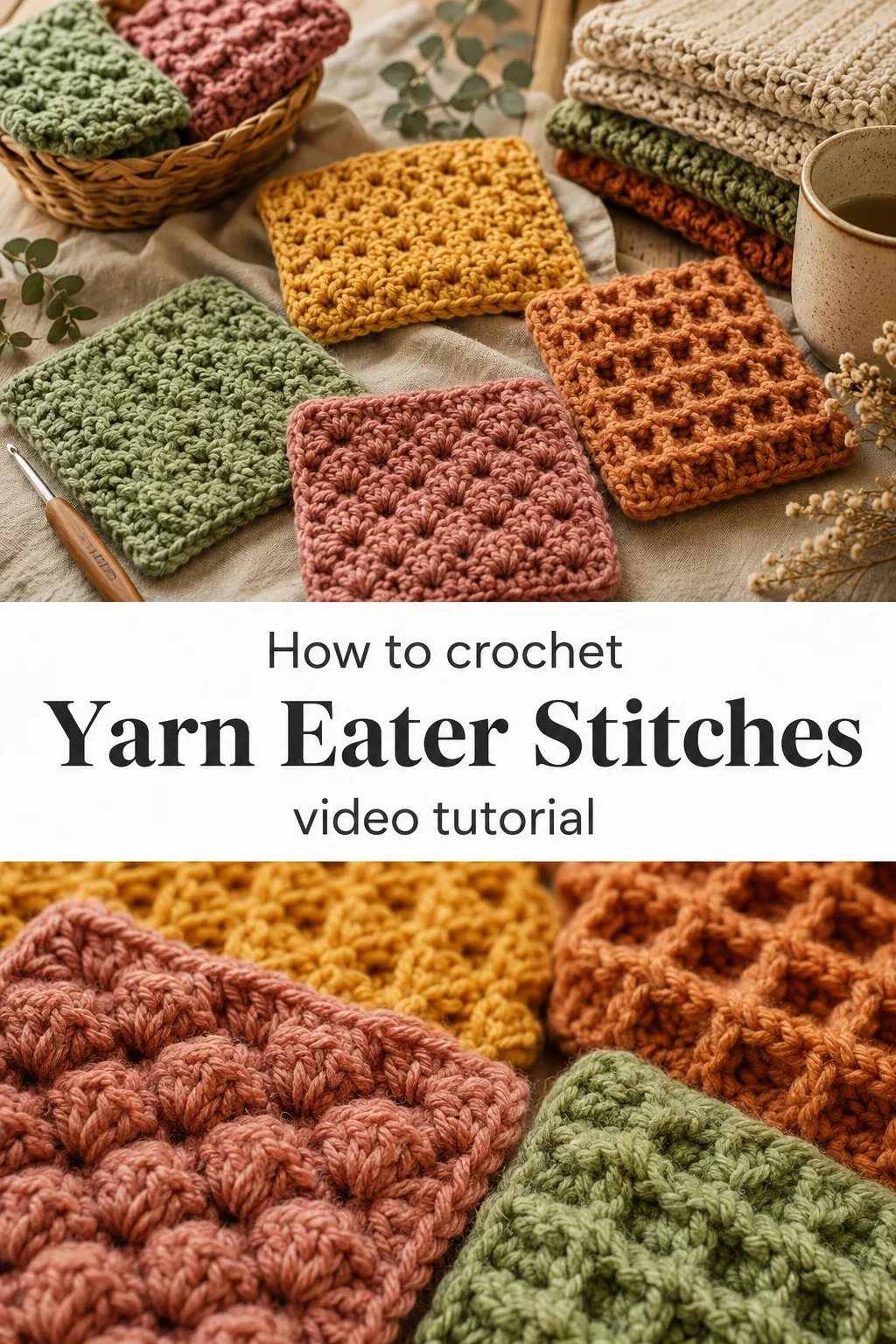
Today’s guide is all about Crochet Yarn Eater Stitches, those gloriously dense, dimensional textures that drink up your yarn skein in the most satisfying way, leaving behind swatches thick enough to hold their own shape and warm enough to feel like a second skin. Pull up your 5mm hook and your favorite worsted weight, because your hands are going to want to start immediately.
The Yarn Eater Stitches
Crochet Yarn Eater Stitches are the ones that make your yarn disappear fast and your fabric feel substantial, almost architectural, in the best possible way. Think of the waffle stitch with its deep grid of raised squares, or the moss stitch with its quiet, interlocking rhythm that builds into something almost woven-looking. These are stitches with presence, stitches you can feel through a blanket corner or across a thick dishcloth. They are made for makers who love texture, who want their work to say something before anyone even picks it up.
Eater Stitches Related Posts:
- Crochet Floral Table Runner: An Elegant Home Accent
- Crochet Lace Design: A Timeless Handmade Treasure
- Crochet Daisy Tote Bag: A Charming Everyday Essential
- Crochet Lace Cardigan: A Delicate and Feminine Layer
For color palette, these stitches are most alive in warm terracottas, sage greens, and deep mustard yellows, tones that let the dimensional texture cast tiny shadows and really show off what the stitch is doing. A single bold color like the orange waffle swatch in the Naztazia tutorial makes every ridge pop with clarity. But these stitches are equally beautiful in soft naturals if you want something quieter and more timeless.
Materials and Tools
For most Crochet Yarn Eater Stitches, a worsted weight cotton or cotton-blend yarn is the ideal choice, giving you that crisp stitch definition without any fuzzy interference. Cotton holds its structure through repeated washing, which matters especially if you are making dishcloths or market bags where the texture needs to stay intact. A 5mm crochet hook works beautifully with standard worsted weight, giving you a fabric that is firm but not stiff. Keep a yarn scale nearby as you work, because these stitches genuinely do consume more yarn than their simpler cousins, and knowing your gram count helps you plan your yardage without running short.
Stitch by Stitch
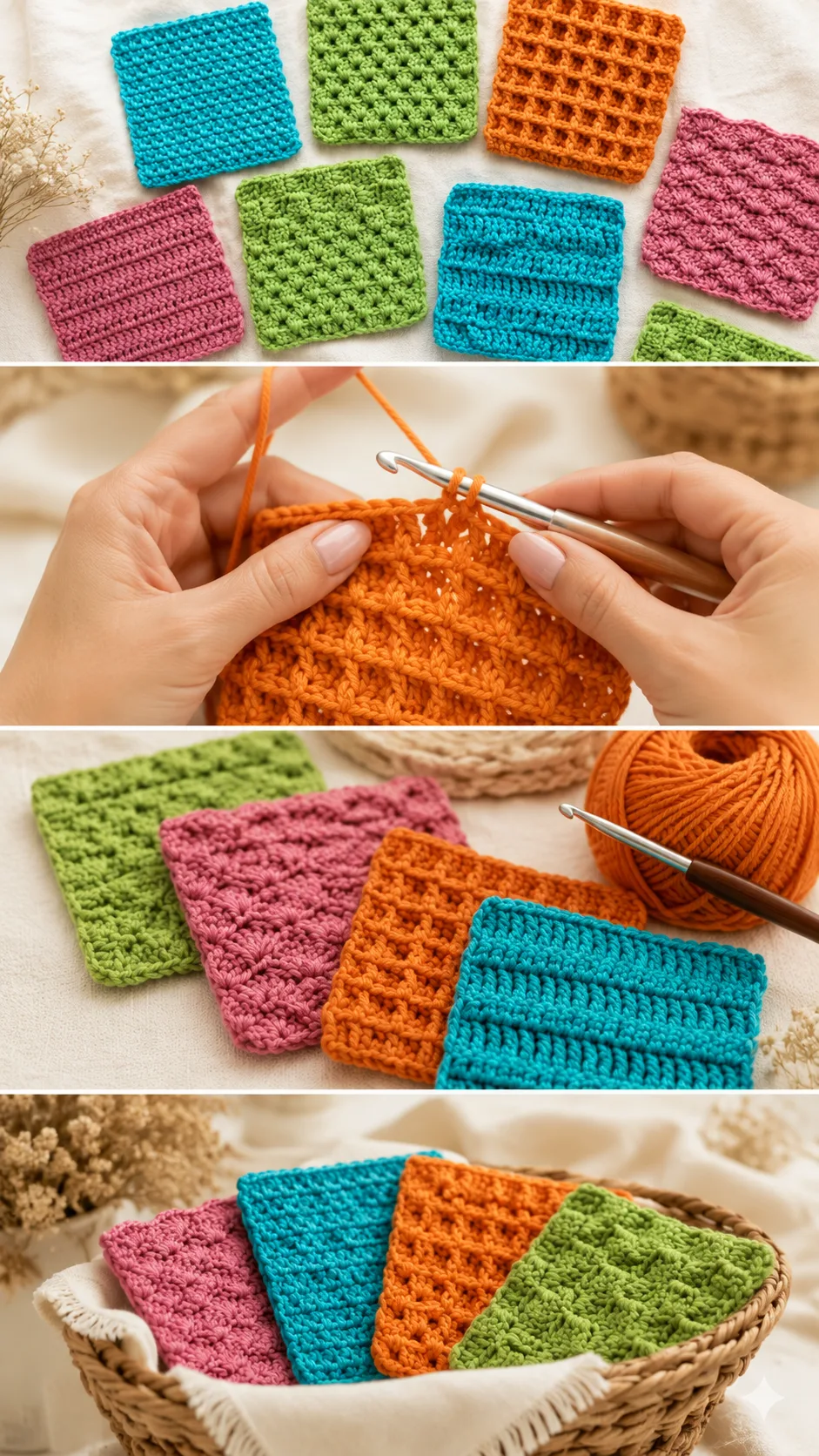
These are the core stitches you will encounter when exploring Crochet Yarn Eater Stitches.
BULLET:SC (Single Crochet) The foundational stitch that appears in many yarn-hungry patterns as the structural backbone holding denser textures together.
BULLET:DC (Double Crochet) A taller stitch that, when worked in clusters or crossed configurations, creates those satisfying raised ridges responsible for serious yarn consumption.
BULLET:FPdc (Front Post Double Crochet) Worked around the post of the stitch below rather than through the top loops, this is the stitch that gives waffle and basket weave patterns their unmistakable three-dimensional grid.
BULLET:BPdc (Back Post Double Crochet) The counterpart to FPdc, alternating between front and back post stitches is what creates the woven, tactile surface that makes these fabrics so irresistible to touch.
Once you find the rhythm of alternating post stitches, the work becomes almost meditative, your hands knowing exactly where to go before your eyes even check the row.
Construction
Most swatches and projects using Crochet Yarn Eater Stitches are worked flat in rows, which makes them wonderfully beginner-accessible even when the stitch pattern looks complex from a distance. You begin with a foundation chain, then build your texture row by row, with each pass adding another layer of that signature relief. The Naztazia video tutorial walks through the full construction clearly, showing exactly how each stitch sits and why certain combinations eat yarn faster than others. If you want to customize your project, simply adjust your starting chain in multiples suited to your chosen stitch repeat, and your swatch scales up into a blanket or down into a coaster without any structural changes needed.
Wearing Your Yarn Eater Stitches
A thick waffle-stitch square made with cotton worsted becomes an exfoliating bath cloth that feels spa-quality against skin, while the same stitch worked larger in a soft acrylic blend becomes a lap blanket that drapes across a reading chair like it was always meant to live there. The moss stitch, with its tighter interlocked structure, makes exceptional pot holders and tote bag panels that hold their shape under weight. Finishing even one small project in these textures gives you that particular satisfaction of holding something that clearly took skill and intention to make.
Washing and Storing Your Textured Swatches and Projects
Cotton yarn projects made with Crochet Yarn Eater Stitches respond beautifully to a gentle machine wash on a cool cycle, though hand washing in cool water with a mild soap preserves the stitch definition longest. After washing, lay your piece flat to dry rather than hanging it, since the weight of water in a dense fabric can pull the stitches out of shape over time. Light blocking with a spray bottle and pinning to a foam mat will sharpen every ridge and square if you want a more polished, even finish. Store finished pieces folded loosely rather than tightly rolled to keep the raised texture from being compressed over long periods.
Every swatch you make in these textures is proof that your hands know how to build something beautiful and lasting from a single strand of fiber. Pin this guide to your crochet inspiration board and share your finished swatches in the comments so the whole community can see your gorgeous, yarn-hungry work.
Follow us on Pinterest and subscribe to the Newsletter so you don’t miss a thing!
Tutorial and photos of this yarn eater stitches by: naztazia.