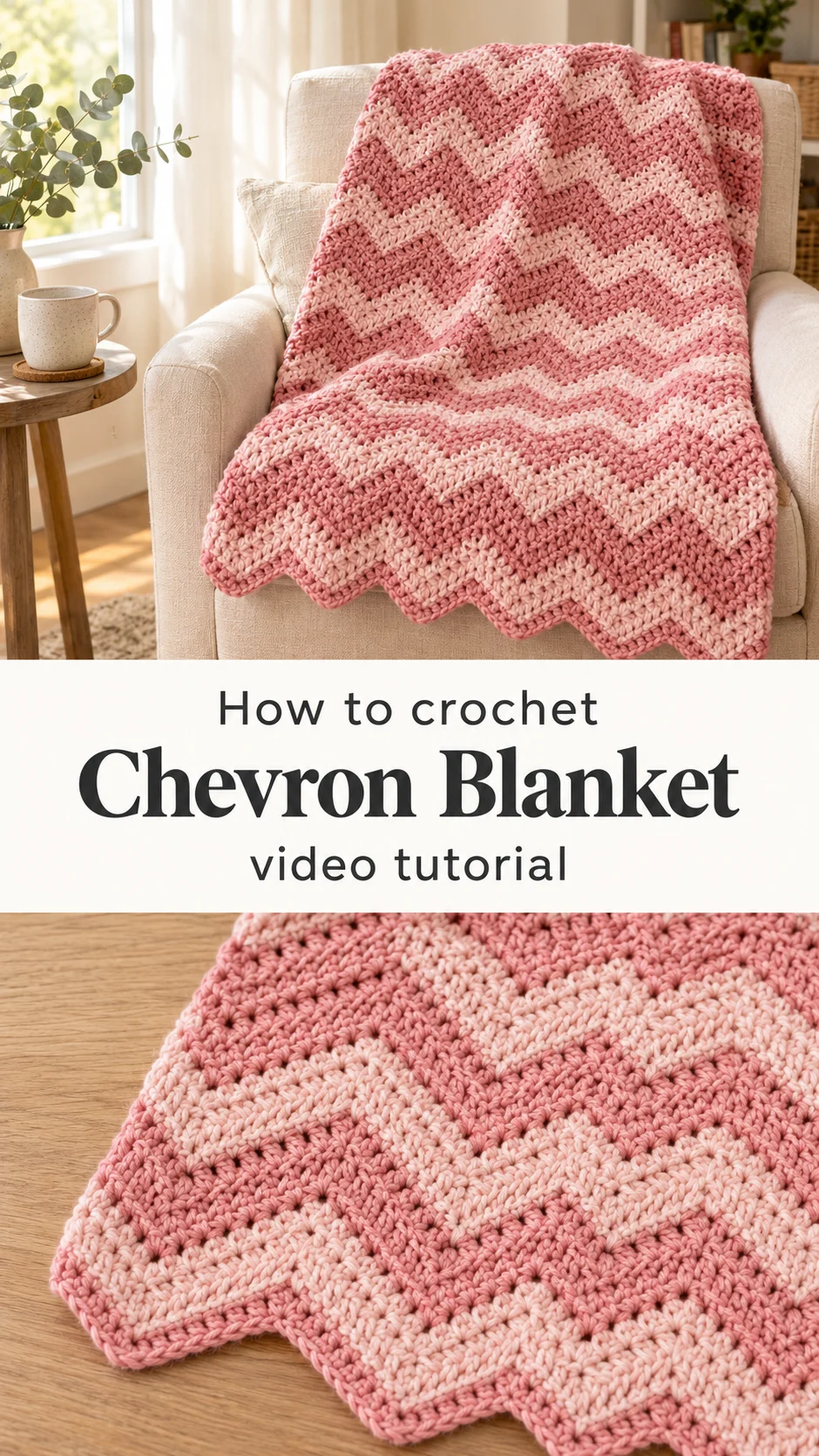
A crochet chevron blanket turns simple rows of double crochet into soft, rolling waves of dusty rose that look as good folded over a sofa arm as they do spread across a bed.
The Crochet Chevron Blanket
The crochet chevron blanket is one of the most loved stripes in all of handmade home décor. Its wavy line comes from a repeating rhythm of increases and decreases, which pushes the fabric up into peaks and down into valleys. The version here is worked in a muted dusty rose, and the colour lets the pattern speak for itself. Small gaps sit at the base of each valley and at the tip of each peak, giving the fabric a gentle, airy texture without making it loose. The stitches are tall and upright, so the rows read as tidy columns. Edges follow the zigzag rather than being trimmed straight. It is a blanket for the sofa, the nursery, the foot of a bed or a cold reading corner.
The chevron also grows quickly, because tall stitches cover ground fast. That makes it a friendly project for anyone who wants a big result without months of work. It is a good gift for a new home or a new baby, and a satisfying way to practise keeping increases and decreases consistent. Even tension is the skill it rewards most.
Chevron Blanket Related Posts:
- Crochet Pocket Cardigan: A Chic and Timeless Wrap
- Crochet Net Tote Bag: A Chic and Airy Summer Essential
- Crochet Sunflower Bloom: A Bright and Cheerful Accent
- Crochet Honeycomb Scarf: A Delicate Timeless Treasure
Materials
For a crochet chevron blanket you need a smooth, soft yarn, a comfortable hook and a pair of scissors, and not much else. The pink yarn in the photos looks like a mercerised or lightly twisted cotton with a matte finish and clear stitch definition, so a cotton or cotton blend in a light worsted or DK weight is a safe choice. A hook between 4 and 5 mm usually suits that range, but let the yarn label and your own swatch decide. Cotton is worth choosing because it keeps the peaks crisp and does not fuzz over time, though it has little stretch and can tire the hands on a large project. A blend with a little acrylic or wool is kinder to the wrists and still holds the zigzag. Add a yarn needle for weaving in ends, and buy all the yarn for the blanket at once, checking that the dye lot number matches on every skein.
Understanding the Chevron Structure
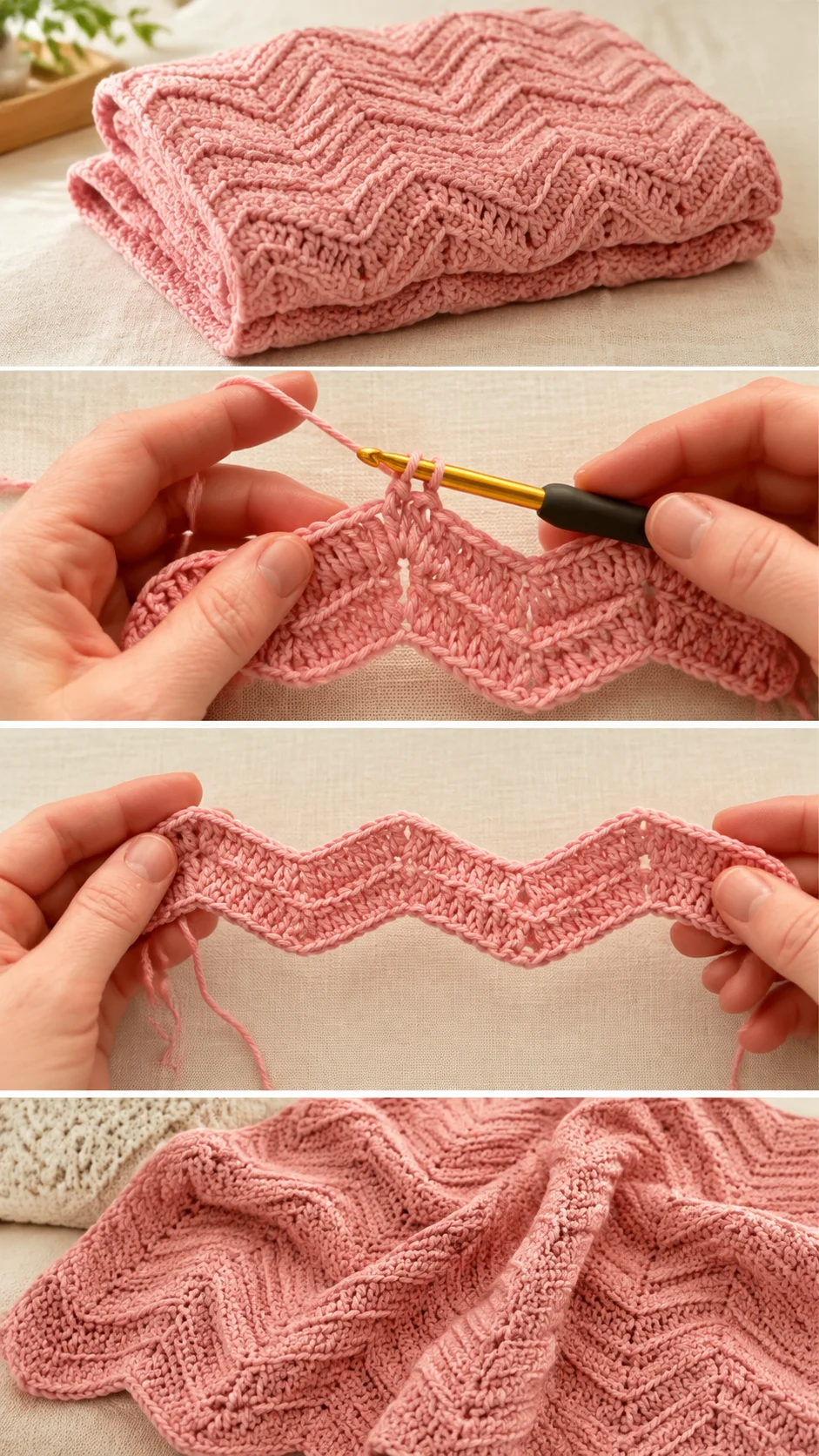
A chevron is worked flat, one long row at a time, and each row is turned at the end so the blanket grows upward from a foundation chain. The wave comes from extra stitches worked into the same spot at the peaks and stitches skipped or joined together in the valleys. The two balance each other, which is why the total width stays constant while the line moves up and down.
Look closely at the fabric and you can see where the work happens. At the top of each peak the stitches fan outward from a shared point. In each valley they lean in toward each other and close the gap. The small holes that appear at those points are part of the design, not mistakes.
Because the pattern repeats across the row, the foundation chain must be a multiple of the repeat plus any extra stitches for the edges. The video tutorial gives that number. Watch how the creator counts and marks the chain, and pause when she explains the starting stitches, since an error there shows up in every row that follows.
The blanket is built from the bottom up in a single piece, with no seams and no joining. Colour changes, if you add stripes, happen at the end of a row. That simplicity is why the structure suits long projects.
The Stitch Repeat: Where the Waves Come From
Rows of double crochet form most of this fabric. The stitches are tall and slightly textured, with visible posts that line up neatly beneath one another. Where the pattern shifts direction, you will see the increase group and the decrease group sitting at opposite ends of each wave. Learn to recognise both and you will always know where you are in a row.
The most common mistake is missing a stitch in a valley. When that happens, the next peak leans sideways and the wave begins to drift. If you spot a drifting line within a few rows, count the stitches along the row below and pull back to the error. It is much quicker than hoping it will correct itself.
The opposite problem is working into the wrong stitch at a peak, which leaves the zigzag looking flat. If the points seem rounded instead of crisp, check that you are working the full number of stitches into the peak space. Tug the fabric gently sideways after every few rows. A correct chevron opens into clear waves, and a faulty one stays bunched.
Turning chains also matter. Keep them loose enough that the first stitch of each row stands the same height as the others. A tight turning chain pinches the edge and makes the sides of the blanket pull inward.
Keeping Tension Even
Tension is the quiet hero of a chevron. Because the pattern relies on matching stitch heights, a tight row beside a loose row creates a ripple that no blocking will hide. Try to hold the yarn the same way for every row, and take breaks so your grip does not tighten as you tire. If your blanket starts to narrow, switch to a hook half a size larger for a few rows and check again.
Choosing the Best Yarn for a Crochet Chevron Blanket
Cotton gives the cleanest result. The pink blanket has the matte, slightly crisp look of cotton, with each stitch standing apart and the gaps staying open. It is cool to the touch, which makes it ideal for spring and summer throws and for warm climates. Washing softens it with every cycle.
A wool blend or soft acrylic is the warmer choice. It stretches a little more, which relaxes the zigzag and gives a snugger blanket. Pick a smooth, plied yarn so the stitch definition survives. Fuzzy or heavily brushed yarns hide the peaks and valleys, and the small gaps disappear.
Avoid very thin yarns unless you are prepared for a long project. A fine yarn makes the chevron look elegant but multiplies the number of rows needed to reach blanket size. Also avoid slippery, glossy fibres that slide off the hook and loosen the stitches.
For a baby blanket, choose a machine-washable yarn that is labelled soft against the skin. Cotton blends are a sensible middle ground because they are gentle, durable and survive frequent laundering.
Colour Planning and Stripes
The single dusty rose in the photos shows how well a chevron stands alone. One colour lets the shadows in the valleys create the pattern, and the result is calm and modern. It suits neutral rooms, wooden furniture and linen bedding.
Stripes are the other classic route, and chevron is the stitch pattern that made them famous. Two rows of each colour gives a delicate ripple, while wider bands make a bolder statement. Try rose with cream and a soft grey for a quiet palette, or deeper tones such as teal, mustard and navy for a lively throw.
When changing colour, finish the last stitch of the row with the new yarn and carry on. Leave a tail of about six inches so you can weave it in later. If the stripes are only a couple of rows tall, carrying the unused yarn up the side can save weaving, but keep it loose to avoid puckering.
Lay your chosen skeins side by side in natural light before you commit. Colours that look harmonious in the shop can clash once worked into a pattern that moves.
Edges and Straightening the Sides
A chevron blanket has a zigzag top and bottom edge unless you fill them in, and that wavy line is part of its charm. The photos show the ends left in their natural waves, and the effect is relaxed and handmade. If you prefer a straight edge, you can fill the valleys with short rows of half-height stitches, though that adds work.
The side edges deserve attention. Every row begins and ends with a turning chain, and an uneven count there makes the sides wobble. Count the stitches at the end of each row until the habit forms. If the sides slope inward, you are probably skipping the last stitch. If they flare, you are probably adding one.
A simple border finishes the blanket and tames small irregularities. One round of single crochet around the whole shape, with three stitches at each outer point, keeps the corners neat. Do not pull the border tight, or the blanket will cup and refuse to lie flat.
Blocking helps most of all. Wet a cotton blanket lightly, pin out the peaks so they match, and let it dry flat. The points sharpen and the whole piece relaxes into its final shape.
How to Style a Crochet Chevron Blanket
Start with the look in the photos. A soft pink chevron draped loosely over the arm of a sofa catches light on its waves and brings colour into a neutral room. Let one corner trail so the zigzag shows.
On a bed, fold it across the foot over a white duvet. The rose tone works well with cream, sage green and warm wood. In a nursery, it can serve as a pram cover, a cot throw or a floor mat for tummy time under supervision.
Outdoors, a cotton chevron makes a pleasant picnic layer or a wrap for cool evenings on the patio. Roll it into a basket by the door for guests who feel the chill. It also makes a thoughtful housewarming gift when paired with a candle and a tin of tea.
Tips for a Neat Finish
Weave in ends along the zigzag of stitches rather than straight across, so they hide inside the wave and do not show on the other side. Split the tails and weave them in opposite directions for extra security. Cotton is slippery, so leave at least a few inches.
If the finished blanket feels stiff, a gentle wash and a tumble on low heat usually relaxes cotton. If it feels too loose, a slightly smaller hook on the next project will tighten the fabric, though you cannot fix it after the fact. A swatch of two peaks and two valleys, made before you start, answers both questions.
Follow the video closely and pause at each increase and decrease. Watch how the creator positions the hook at the top of the peak, and replay that moment until your hands copy it without thinking. Work in good light, because the small gaps are easy to miss in dim rooms.
A Cosy Handmade Heirloom
The crochet chevron blanket proves that a simple stitch, repeated with care, can look timeless. Its waves come from patient counting and steady tension. Choose a smooth yarn that keeps the points crisp, keep your stitch count honest at every peak and valley, and block the finished piece so the pattern settles.
Do those things and the blanket will be soft, sturdy and welcome in any room.
Make it once, and it may become the pattern you return to every winter.
Video tutorial for this crochet chevron blanket by the original creator; follow the link below to watch it on her channel.
VIDEO
Follow us on Pinterest and subscribe to the Newsletter so you don’t miss a thing!
Tutorial and photos of this chevron blanket by: Daisy Cottage Designs.