
A crochet tote bag with a creamy open-weave body and a sunny mustard base feels like a small piece of summer you can carry on your shoulder, light to hold and sturdy enough for daily life.
The Crochet Tote Bag
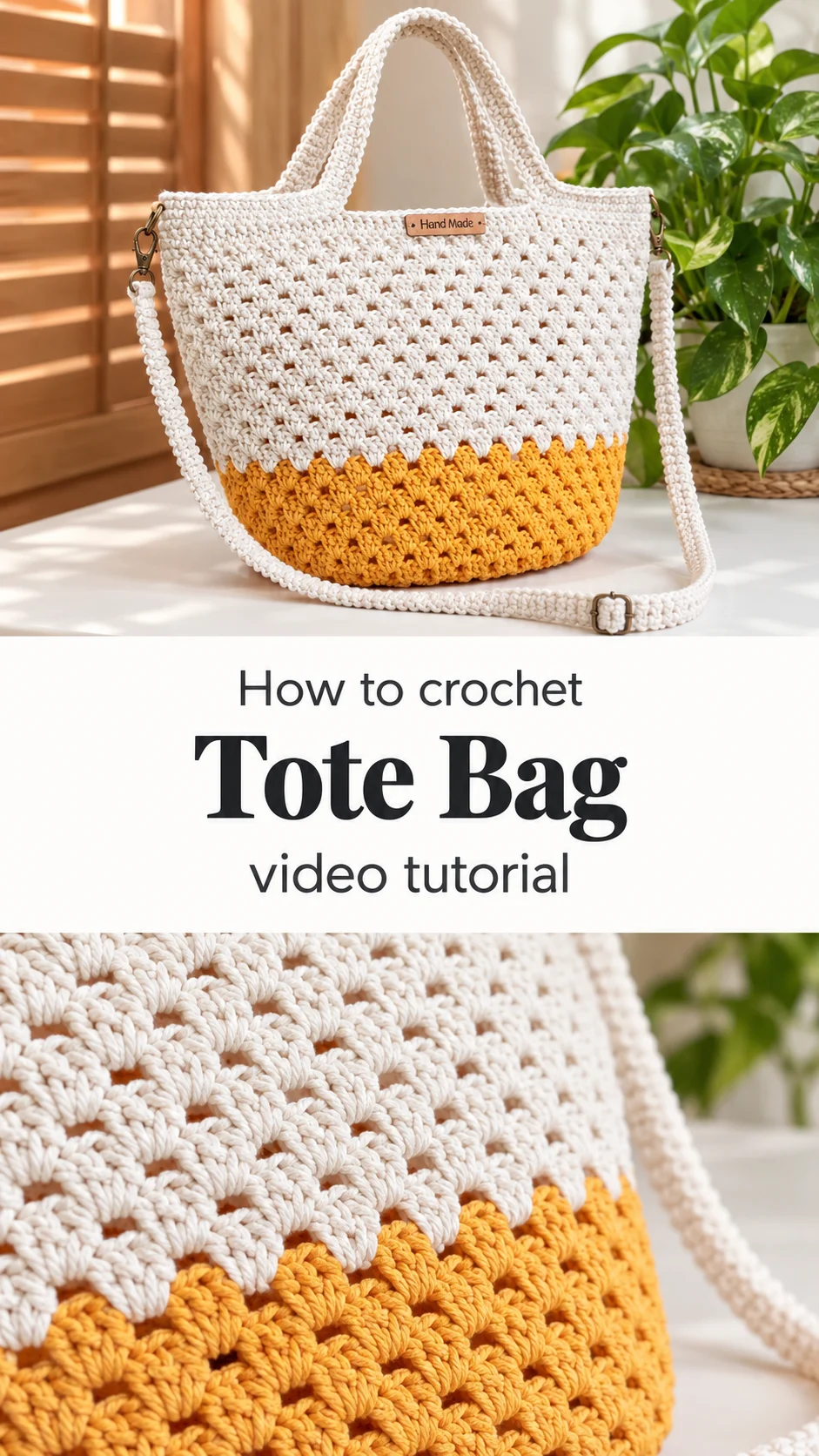
This crochet tote bag is built like a bucket with a gentle curve. A solid, deep mustard-yellow base rises into a cream upper section worked in an airy granny-cluster fabric. The two colours meet along a zigzag edge, a small detail that gives the whole bag a playful, sawtooth finish. Two short cream handles sit at the top, and a long, slim cord strap clips on with bronze swivel hooks so the bag can switch between hand carry and crossbody. A small wooden “Hand Made” tag sits at the front. The yarn looks like a smooth, matte cotton cord, and the stitches are tight enough to hold a rounded shape. It suits market runs, café afternoons and weekend trips.
Part of the charm is how the bag changes its mood with the strap. Clip the long cord on and it becomes a hands-free crossbody for travel days. Unclip it and the short handles turn it into a neat tote. It also makes a thoughtful gift, because the colour pairing is cheerful without being loud. As a project, it teaches how to shape a base, switch colours cleanly and attach hardware. Small skills, big payoff.
Tote Bag Related Posts:
- Crochet Turtleneck Sweater: A Warm and Chic Essential
- Crochet Shell Stitch: A Timeless and Elegant Classic
- Crochet Cherry Phone Pouch: A Sweet Everyday Accessory
- Crochet Doily Mat: A Vibrant Traditional Treasure
Materials
For a crochet tote bag like this one, choose a mercerized or tightly twisted cotton yarn in two colours: a warm cream for the upper body, handles and strap, and a rich mustard for the base. Cotton gives the stitches definition and holds the shape without the stretch that wool or acrylic would add. A hook one half size smaller than the yarn label suggests keeps the fabric firm, which matters for a bag that has to carry weight. You will also need two swivel clasps in antique bronze, two D-rings or sturdy loops to anchor them, a wooden or faux-leather “Hand Made” tag, a yarn needle and stitch markers. A fabric lining is optional, but it is worth considering if you plan to carry small items that could slip through the open cluster stitches.
Understanding the Structure
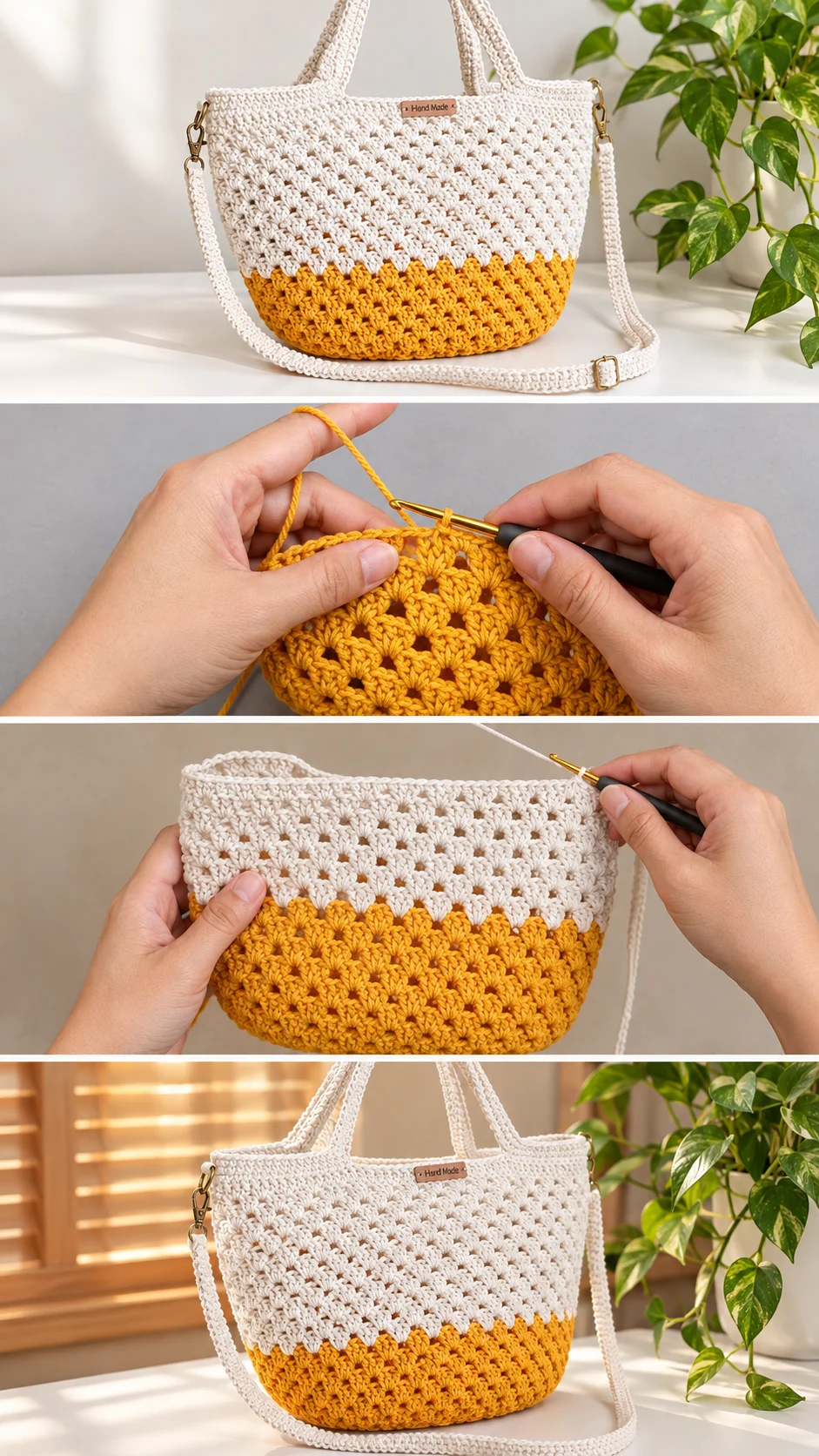
The bag looks like it is worked in the round from the bottom up, which is the usual route for a bucket shape. The base begins as a flat circle or oval, then the sides rise and widen slightly toward the top. That gentle outward slope gives the bag its tote silhouette and a roomy opening.
The mustard section forms the bottom third. Once it reaches the right height, the cream yarn takes over and carries the bag to the rim. The handles then grow directly from the top edge as two narrow bands, and the strap is made separately as a long, slim cord.
Think of the bag as four parts: base, body, handles and strap. Keeping them in that order in your mind makes the tutorial much easier to follow. The base decides the footprint, the body decides the shape, and the handles and strap decide how comfortable it is to carry.
The shaping happens at the base and in the first rows of the sides. If the base is flat and even, the walls will stand up straight. If it ripples, the bag will lean, so check it against a table surface before you move on.
Best Stitches for Strength
The fabric is a granny-style cluster stitch, with groups of stitches sitting in small chain spaces. This stitch gives the cream section its lacy look while still being structured, because every cluster anchors into the row below. It uses less yarn than solid crochet and keeps the bag light.
The mustard base looks denser, with the clusters packed more closely. That density is a smart choice. The bottom of a bag takes the most weight and friction, so a tighter fabric there prevents stretching and protects your belongings from slipping through.
If your fabric feels floppy, drop down a hook size and work the clusters a little tighter. If it feels stiff and hard to bend, go up half a size. Cotton relaxes with use, so aim for slightly firmer than you think you need.
The Zigzag Colour Change
The most eye-catching detail is the sawtooth line where mustard meets cream. It looks intentional and crisp, which comes from changing colour at the start of a round and working the first cream round into the last mustard round with care. Pull the new colour through cleanly, then check that the points line up evenly around the bag.
The common mistake is carrying a loose tail or leaving a visible gap at the join. Weave the tails in right away, along the colour line, so they disappear into the fabric. If the zigzag looks uneven, undo the round and re-read the stitch placement before moving on. One careless round shows from across the room.
Handles, Strap and Hardware
The short handles are narrow, firm and slightly curved, and they join the rim in a smooth arc. Their stiffness is key. A handle that is too soft will stretch under load, so work them tightly and consider doubling the thickness if you plan to carry heavy items.
The long strap looks like a tight, rope-like cord with a raised edge. It clips onto bronze swivel hooks attached to small rings on each side of the bag. Swivel clasps are a good choice because they let the strap turn without twisting, and they make it easy to remove for a different look.
Reinforce the anchor points. Stitch around each ring several times with the yarn, passing through multiple rows so the stress spreads across the fabric. A ring attached to one lonely stitch will eventually pull through, especially with a full bag.
The “Hand Made” tag sits at the front, centred just below the rim. Sew it on with small, even stitches in matching yarn or thread, and check the placement before you commit. A tag that sits crooked tends to catch the eye more than the stitches around it.
Choosing Yarn and Colours
Cotton cord or a sturdy worsted-weight cotton is the safest choice, because it gives crisp stitches and holds a shape. A cotton and acrylic blend works too and resists stretching a little better, but it feels less natural against the hand. Avoid soft, fuzzy yarns. They hide the cluster texture and make the bag slump.
The cream and mustard in the photos are a classic pairing: warm, sunny and easy to match with clothes. Other combinations that suit this layout include sage green with oatmeal, dusty rose with ivory, or navy with sand. Pick a darker colour for the base, since it hides scuffs and dirt better than a pale one.
Buy enough yarn of each colour from the same dye lot. Cotton shades can vary noticeably between batches, and a mismatch is easy to spot on a colour-blocked bag.
How to Style a Crochet Tote Bag
The bag appears in a bright, simple setting, and that suits it. It looks natural with linen shirts, light denim and summer dresses in white or earthy tones. The mustard base echoes warm accessories such as tan sandals or a gold watch.
Worn crossbody, it works for travel days, museum visits and weekend markets. Carried by the short handles, it becomes a relaxed daytime bag for lunch with friends. It also pairs well with a plain striped tee and wide-leg trousers, where the open texture adds interest to an otherwise simple outfit.
Because the upper fabric is open, think about what goes inside. A small pouch for keys, phone and cards keeps items from peeking through or slipping out. A coloured scarf folded inside can even show through the clusters as a deliberate flash of colour.
Tips for a Neat Finish
Weave in every end along the colour line and through several stitches, then trim close. If the base cups inward or the rim flares, the fabric is probably uneven in tension. Re-work a round or two, or steam the piece gently over a rounded form to relax it.
If the handles stretch after the first outing, they were worked too loosely. Rework them tighter, or stitch a narrow strip of cotton webbing along the inside for support. If the strap twists, check that the clasps are free to rotate and that the rings sit flat against the bag.
Cotton bags can be washed gently by hand in cool water, then reshaped and dried flat or stuffed with a towel to hold the form. Avoid wringing, which distorts the clusters. Keep the bag away from direct sun for long periods, because the mustard dye can fade.
A Handmade Bag for Every Day
This crochet tote bag combines an open cluster fabric, a solid mustard base, a crisp zigzag colour change and a strap that lets it travel in two ways. It is light, roomy and cheerful.
Four things decide whether it turns out well: a firm tension, a clean colour join, strong anchoring for the rings, and handles worked tightly enough to hold their shape. Get those right and the bag will serve you for years.
Pick your two colours and enjoy the making.
Video tutorial for this crochet tote bag by the original creator. Watch it closely, and pause at the colour change and the strap attachment to see exactly how each step is done.
Follow us on Pinterest and subscribe to the Newsletter so you don’t miss a thing!
Tutorial and photos of this tote bag by: ViVi Berry Crochet.