
A crochet lace shawl in bright turquoise, scattered with open six-petal flowers on a ground of soft scallops, drapes like air yet holds its shape. It is the kind of piece that looks complicated and works up in calm, repeating rows.
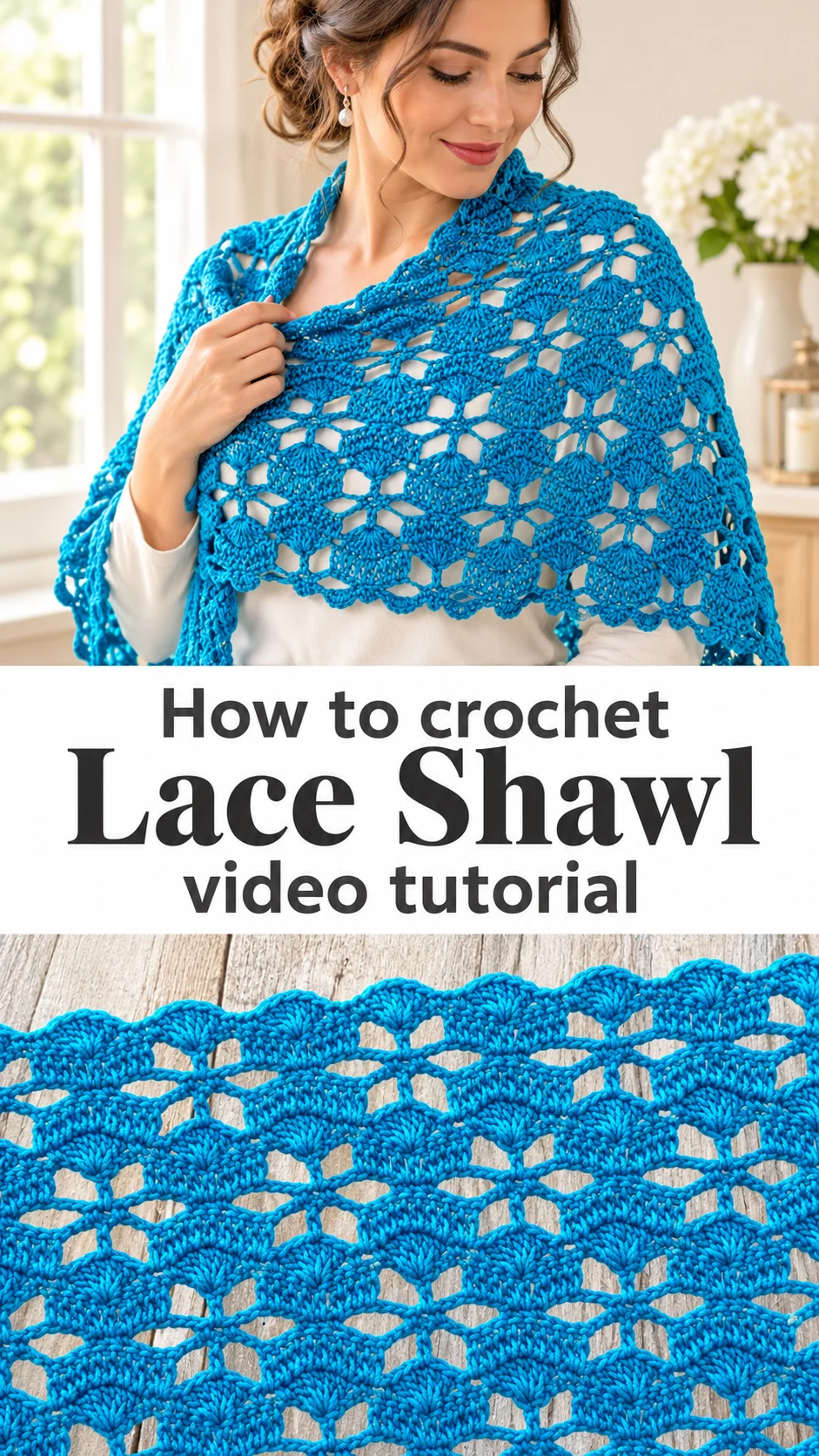
The Crochet Lace Shawl
This crochet lace shawl is built from two ideas that sit happily together. Dense bands of fan-shaped shells form gentle waves, and between them runs a row of open flowers, each with six airy petals around a small woven centre. The contrast is the whole charm. Solid stitches give the fabric weight and body, while the openings let light and skin show through. The top edge finishes in a soft scalloped border that echoes the waves below. In the saturated turquoise shown, the lace reads bold and modern rather than frilly. Wear it over the shoulders on a cool evening, wrap it around a summer dress, or drape it across a chair back as a piece of handmade decor.
The rhythm of the stitch repeat also makes it forgiving. Once the flower row and the shell row are familiar, the rest is steady, relaxed work. It suits a maker who wants a project that is rewarding without being fussy. It also makes a lovely gift, since the colour can be changed to suit anyone.
Lace Shawl Related Posts:
- Crochet Lace Swatch: A Delicate and Timeless Treasure
- Crochet Granny Square Handbag: A Charming Vintage Accent
- Crochet Bear Bag: A Cute and Whimsical Accessory
- Crochet Amber Pocket Scarf: A Warm and Cozy Wrap
Materials
For this crochet lace shawl, choose a smooth, fine yarn with a little sheen, such as mercerized cotton or a cotton blend in a sport or light fingering weight. The stitches in the finished fabric are small and crisp, which points to a thin yarn worked with a small hook, roughly 2.5 to 3.5 mm. Smooth cotton keeps the flower outlines sharp and shows each shell clearly, while a fuzzy yarn would blur the open petals and make them look clogged. Pick a hook that gives a fabric you can drape easily rather than one that feels stiff. Pair it with a tapestry needle for weaving in ends, a few pins for blocking, and a flat surface or blocking mats. You will need enough yarn to reach the width you want, so buy an extra skein or two from the same dye lot, since a bright colour like turquoise can shift noticeably between batches.
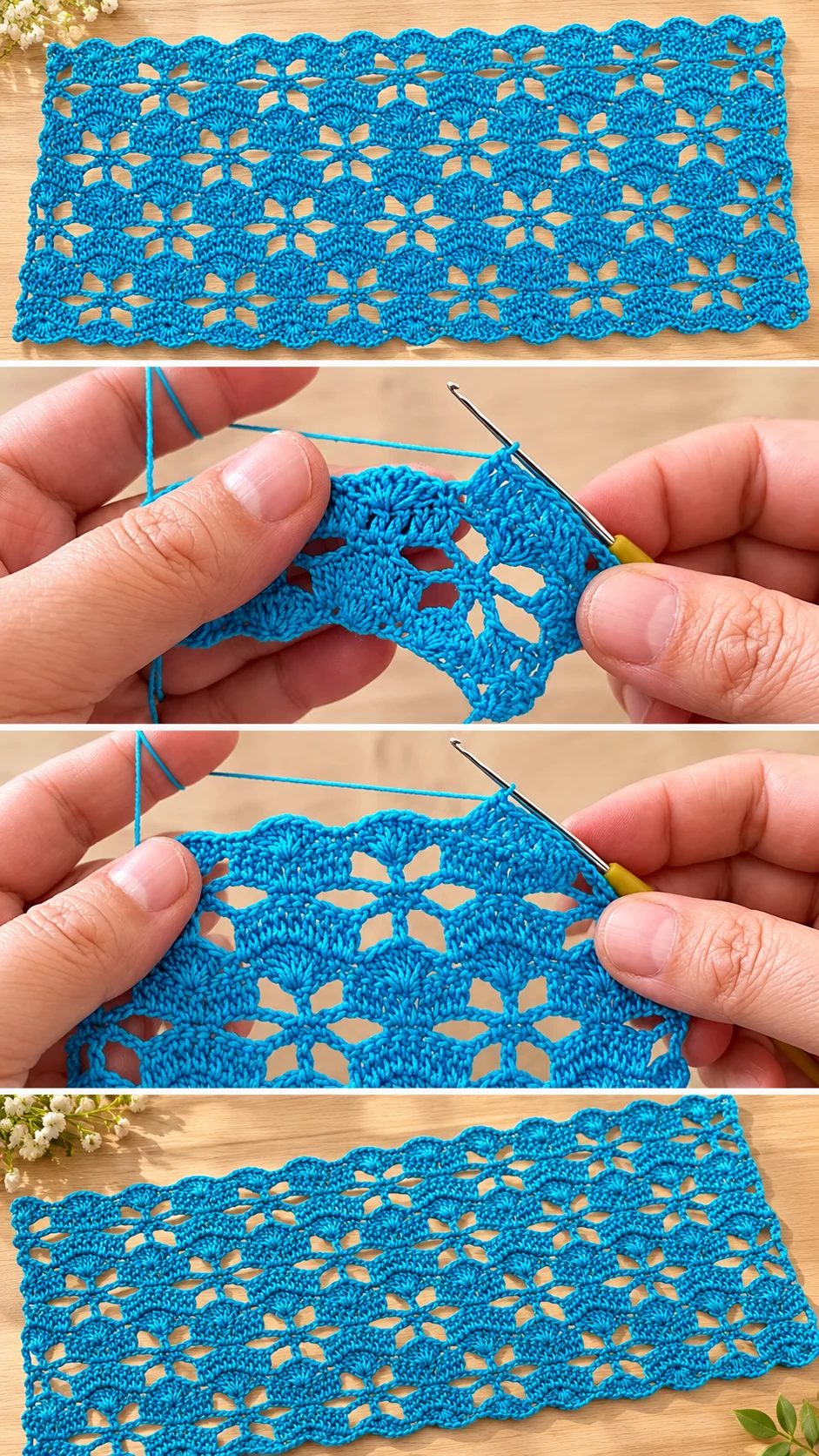
Choosing Yarn for Drape and Colour
Fibre decides how the shawl hangs. Mercerized cotton gives crisp definition and a subtle shine, which suits the clean outlines of the flowers. A cotton and bamboo or viscose blend drapes more fluidly and falls softly from the shoulders, though it can stretch, so keep your tension even. Wool or a wool blend adds warmth and a gentle bounce, but the lace will look softer and less sharply cut.
Avoid heavy or textured yarns. Anything thick fills the petal openings and hides the floral effect that makes this design special. Slubbed or brushed yarns have the same problem.
For colour, the vivid turquoise in the photos is striking against neutrals, black or white. If you prefer something quieter, dusty rose, sage, ivory or soft grey all keep the lace readable. Solid colours show the pattern best, while heavily variegated yarn tends to compete with the openwork.
The Stitch Pattern: Flowers Between Waves
Look closely at how the fabric is organized. Bands of closely worked double crochet are shaped into scallops, and above each scallop sits a small fan of stitches that rises like a shell. The flowers appear in the gap rows, where chains replace solid stitches. Six petals radiate from a central crossing point, and the staggered placement from one flower row to the next gives the lace a pleasing, offset look.
The tutorial shows a count of nine double crochets across a section, which is the solid block that forms each wave. Pause the video at that moment and note where the hook enters and how the group sits against the chains on either side. Replaying that section a few times pays off, because every later row depends on those stitches landing in the right place.
Stitch placement is where most mistakes begin. If a flower looks lopsided or a petal is smaller than its neighbours, a chain or a stitch has probably been skipped or added in the row below. Check the count at the end of each pattern repeat rather than waiting until the end of the row.
Reading Your Work as You Go
Open lace is easy to read. Each flower should look like its neighbours, with matching petals and a tidy centre. If one is off, rip back to the previous repeat and fix it while only a few stitches are involved. Waiting until three rows later makes the repair much longer.
Shape and How the Shawl Grows
The piece in the photos is a wide rectangular panel worked flat, with straight sides and a scalloped upper edge. It appears to be made in rows across the full width, so the length builds up as the shell bands and flower rows stack. That makes it a simple shape to adjust. Add a few more repeats of the pattern across for a wider wrap, or work more rows for a longer one.
The scalloped border at the top looks like part of the stitch pattern, which is a clever detail. It finishes the shawl without a separate edging step. The side edges look neat and straight, so the maker keeps the turning stitches consistent at the start and end of each row.
Plan the size before you start. Measure your shoulders or the length of the chair or table you want to cover, and compare it with a swatch worked across a few repeats. Lace stretches when blocked, so a swatch that seems small can open up considerably. Wash and block the swatch before you decide on the final dimensions.
Skill Level and Techniques
This is an upper-beginner to intermediate project. The stitches involved are chains, double crochet and fan-style shells, with no unusual techniques. The challenge is patience rather than difficulty. Long rows of fine thread can feel repetitive, and the flower row demands attention so the chain spaces stay even.
If your fabric turns out tight and stiff, go up a hook size and try again. If the petals look too large and floppy, drop down half a size. Tension in lace is more important than in solid crochet, because the openings amplify every irregularity. Keep a consistent grip and relax your hand between rows.
Blocking the Lace
Blocking turns a good lace shawl into a beautiful one. Before blocking, the petals may look slightly closed and the scallops can curl. After a soak and a gentle stretch, the flowers open fully and the waves settle into smooth curves.
Soak the finished piece in cool water with a mild wash, press out the water in a towel, and pin it out on a flat surface. Pull gently to open the petals, and pin each scallop point along the top edge so the border lies evenly. Leave it to dry completely before unpinning.
If the shawl is cotton, you can be firm when stretching, since cotton holds its new shape well. If the edges ripple after drying, they were likely stretched unevenly, so re-wet and re-pin with a straight guide such as a measuring tape along the sides.
How to Style a Crochet Lace Shawl
In the photos, the shawl is shown held out flat, with its flowers clearly visible against a pale wooden surface. That flat panel shape can be worn in many ways. Drape it across both shoulders and let the ends fall in front, or fold it into a triangle and pin it at one shoulder with a brooch.
For warm evenings, wear it over a simple linen dress or a white cotton top, where the turquoise stands out. In cooler weather, layer it over a plain sweater so the open flowers show a darker colour beneath. A black fitted dress turns it into a graceful evening wrap.
Away from the wardrobe, it works as a table runner or a throw across the back of a sofa. A neutral colour makes a lovely wedding accessory, and a bright one gives a plain chair a cheerful lift.
Tips Before You Begin
Work a swatch first. It tells you the gauge, the drape and how much the lace will grow after blocking. Keep it as a reference, since lace behaves differently once wet.
Use stitch markers at the start of each pattern repeat. In a long row of identical shells and chains, markers save you from losing your place and make counting quick.
Weave in ends along the solid shell bands rather than through the open flowers. The dense stitches hide the tails, while threads running through an open petal would show. Leave a long tail when you join a new ball, so you can work it in securely.
Finally, use the video as a companion rather than a script. Watch a full pattern repeat before you begin, then pause at each new row type and compare your work to the creator’s, especially where the flower centres cross.
A Light Handmade Heirloom
This crochet lace shawl pairs soft scalloped waves with open six-petal flowers, and the result is a fabric that is both substantial and airy. Whether you wear it or display it, the pattern rewards care.
Four things decide how it turns out: a smooth, fine yarn that keeps the petals crisp, a hook size that gives a drapey fabric, steady tension in the chain spaces, and a proper blocking at the end.
Take your time with the rows, and the flowers will bloom.
Follow us on Pinterest and subscribe to the Newsletter so you don’t miss a thing!
Tutorial and photos of this lace shawl by: Crochet Knitting Therapy .