
A crochet leaf stitch blanket pairs soft puffed clusters with airy mesh, giving a nursery throw that feels cuddly to hold and pretty enough to leave on display.
The Crochet Leaf Stitch Blanket
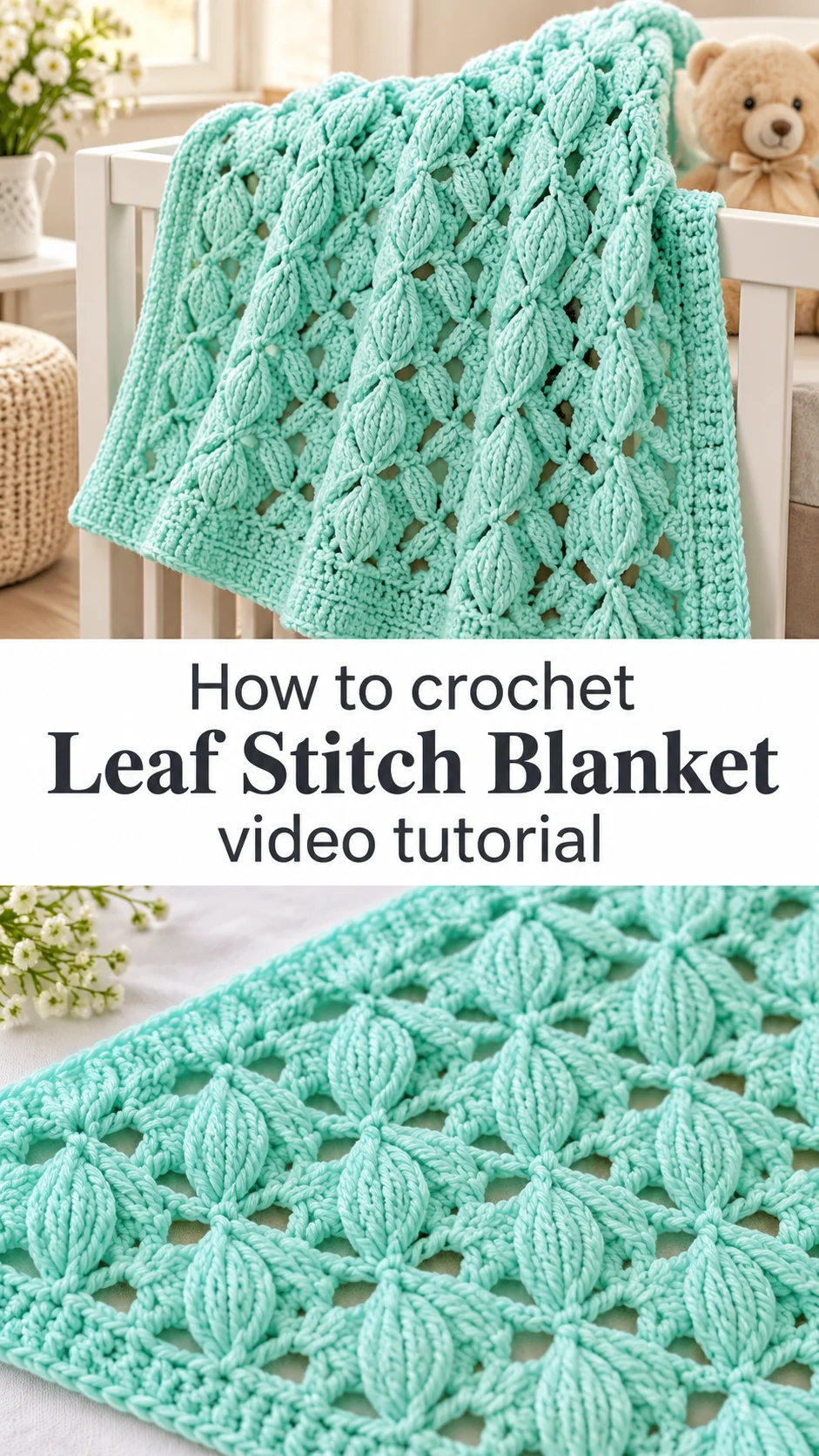
This crochet leaf stitch blanket is built from rows of plump puff clusters that fan outward like small leaves. Each cluster sits above a row of sturdy double crochet, with little open windows left between the leaves. The result is a fabric that looks sculpted yet stays light. The pale aqua yarn in the photos has a soft, matte finish that lets every raised petal catch the light. The clusters are staggered from one band to the next, so the leaves drift diagonally across the surface instead of stacking in columns. That rhythm is what makes the blanket look far more complex than it is. It suits a crib rail, a pram, a rocking chair or the arm of a sofa.
The same stitch pattern can grow as large as you like. Make a small version for a stroller and a generous one for a bed. It also builds a useful skill: learning to work puffs evenly. Once your hands know the motion, the rest is a calm, repeating rhythm.
Stitch Blanket Related Posts:
- Crochet Drawstring Bag: A Chic Handcrafted Essential
- Crochet Knit Vest: A Chic Summer Essential
- Crochet Chain Strap Bag: A Chic and Timeless Accessory
- Crochet Bear Bag: A Cute and Whimsical Accessory
Materials
For a crochet leaf stitch blanket, choose a soft, smooth, light-colored yarn that shows off the puffs. The blanket in the photos looks like a fine to medium acrylic or acrylic blend with a gentle sheen, and that is a sensible choice for a baby item because it washes easily and stays soft. A smooth yarn with a firm twist gives each loop of the puff a clean, defined edge, while a fuzzy yarn blurs the leaves into one lumpy mass. Pair it with a hook one size larger than the yarn label suggests, around 4 to 5 mm for a light worsted, so the puffs have room to stand tall and the fabric drapes instead of stiffening. An ergonomic handle, like the grey one in the photos, helps over long sessions. You will also need a tapestry needle for weaving in ends, scissors, and a few stitch markers to keep the edges honest. Buy all the yarn in one go and check the dye lot, because pale shades show differences between batches.
Understanding the Leaf Stitch Structure
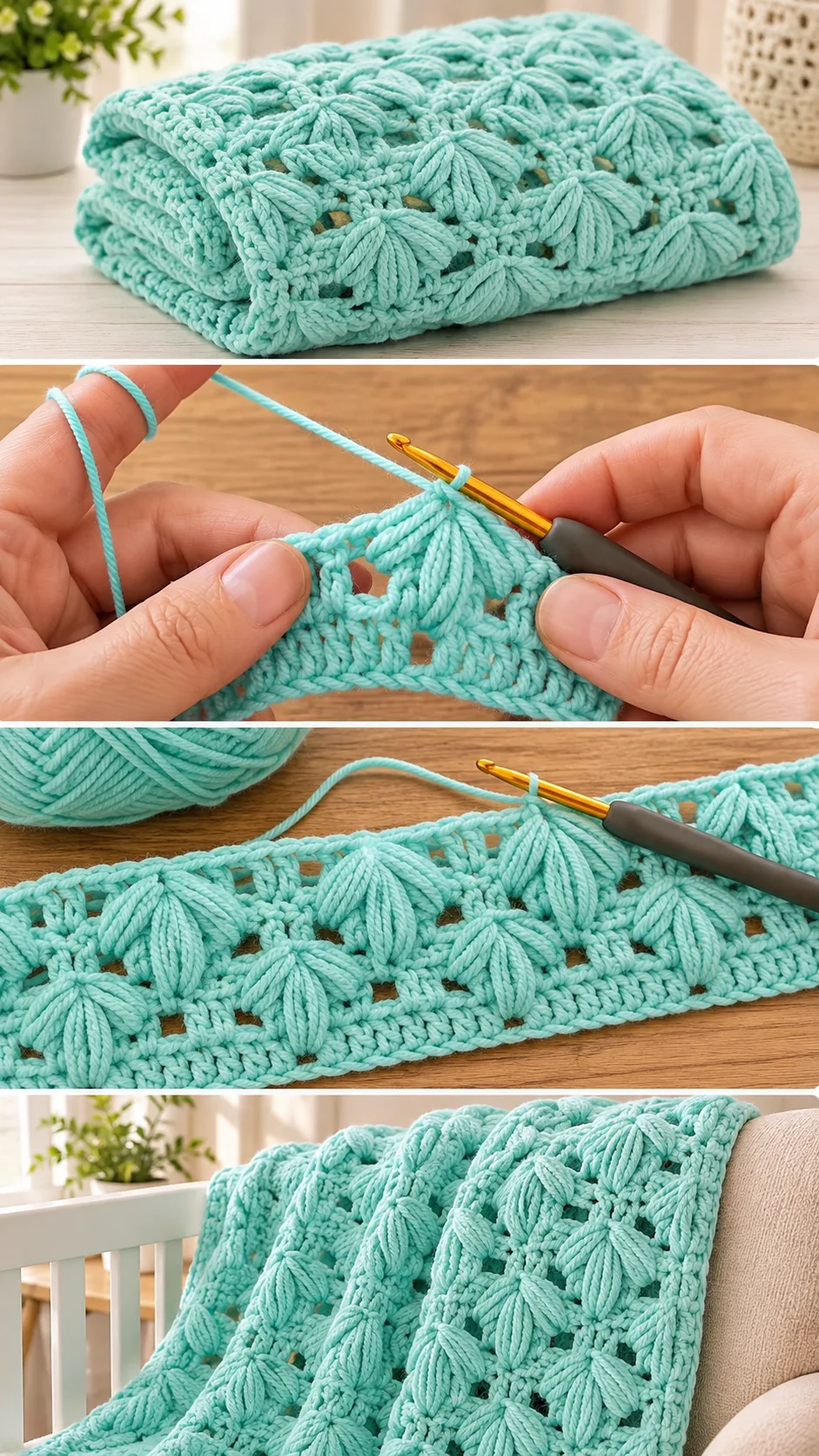
The fabric alternates between two kinds of rows. One band is plain and dense, made of double crochet that gives the blanket its backbone. The next band carries the puff clusters, which are separated by chain spaces that become the small open windows you can see through the fabric.
Each leaf is a group of tall, loosely drawn loops pulled up in one spot and closed together at the top. Because the loops are gathered at the base and spread at the crown, the cluster opens like a little fan. The tension on those loops decides the look. Pull them to the same height each time and the leaves match.
The clusters in every pattern band sit offset from the band below. That offset makes the diagonal drift you see across the finished blanket. Watching the video, pause where the hook enters the stitch just under a cluster in the previous pattern row, because that placement controls the stagger.
The piece is worked flat, back and forth in straight rows, so there is no shaping to track. The only structural decision is the starting chain and how to keep its count consistent with the repeat.
Puff Clusters: The Detail That Defines the Blanket
The puffs are the signature of this design. They are what gives the blanket a relief texture that reads from across a room. Keep every loop on the hook at the same length by lifting each one to the height of the previous loop with a finger or the hook shaft. Uneven loops produce leaves that lean or look ragged.
If your puffs look flat, your loops are too short or your hook is too small for the yarn. Go up half a size and draw the loops higher. If they look loose and floppy, the closing stitch at the top is not snug enough. Pull the final yarn over firmly, but not so tightly that the cluster puckers the row beneath it.
The chain that seals the top of each cluster also matters. A cluster closed with a gentle tug sits upright, while one closed loosely sags into the window beside it. Practice a few clusters on a swatch before starting the blanket proper.
Choosing the Best Yarn for a Baby Blanket
Softness and washability come first. A baby-friendly acrylic or a cotton-acrylic blend gives a gentle hand, holds the puffs upright and survives frequent laundering. Cotton alone is breathable but heavier, and the weight can pull the open windows out of shape over time.
Avoid very fluffy or brushed yarns. They look cosy in the skein, but they hide the leaf definition and can shed fibers. Avoid slippery, very thin yarns as well, since the puffs will collapse instead of standing.
For colour, the aqua in the photos is a calm, gender-neutral choice that makes the shadows between the leaves look deeper. Soft cream, pale butter yellow, dusty sage and light grey would all show the texture well. Very dark shades make the clusters harder to read and the stitches harder to see while you work.
Plan for more yarn than a flat stitch would need. Puffs use extra yarn, so buy a spare skein rather than risk running out near the end.
Keeping Edges Straight and Neat
Pattern stitches with clusters tend to change the width of a row, and the edges often wander. Count your stitches at the end of each plain row. If a row comes up short or long, find the mistake straight away instead of carrying it upward.
If the sides ripple outward, you are likely adding stitches in the turning chain or working the first stitch too loosely. If they pull inward, the last stitch is probably being skipped. Place a marker in the first and last stitch of every row so you always know where they are.
A simple border finishes the piece. The photos show a clean, flat edge along the long side, which suggests a row or two of tight single or double crochet. That firm frame stops the puffs from curling the borders and gives the blanket a tidy outline.
How to Style a Crochet Leaf Stitch Blanket
In the photos the fabric is shown flat and close, which tells you how well it displays: draped over a crib rail or folded at the foot of a bed, the leaves show in rows. Lay it so a patterned band faces up and the diagonal stagger reads clearly.
For a nursery, pair a pale aqua version with white furniture and natural wood. The open windows add a lacy lightness that heavier cable or bobble blankets lack. For a living room, make it in grey or oatmeal and drape it over the back of a sofa as a textured accent.
It also works as a stroller cover, a car-seat blanket in a smaller size, or a welcome gift wrapped in tissue. Because the weave is open, it is better for layering than for deep winter warmth, so tuck a fleece underneath when it is cold.
Tips for a Polished Finish
Weave in ends along the dense double crochet bands, not through the puffs. The solid rows hide tails securely, while the clusters stretch and expose them. Work each tail in two directions for about three inches.
Block the finished piece gently. Pin it to the intended size, mist it with water, and let it dry flat. Blocking relaxes the stitches, evens out the leaves and opens the windows. Skip steam on acrylic, which can flatten the puffs permanently.
Tension drifts when you take breaks. If the fabric looks tighter on one side of the blanket, you probably changed hand position or hook grip between sessions. Work a few rows in a more relaxed grip and check the width against the first rows.
Wash on a gentle cycle, then dry flat or on low heat. Shaking the blanket and patting the puffs back into shape while it is damp keeps the relief crisp.
A Soft Handmade Keepsake
The crochet leaf stitch blanket is a gentle project: a simple pair of repeating rows that produces a richly textured throw. It rewards patience with a surface that looks sculpted and feels soft.
Four things decide how it turns out: a smooth yarn that shows the clusters, a hook large enough to let the puffs stand, even loop height in every leaf, and edges you keep straight from the first row. Get those right and the rest follows.
Pause often in the video as the puffs are formed, then match your own hand to it.
Make it once and it becomes a keepsake.
Video tutorial by Knitting Workshop, who teaches this crochet leaf stitch blanket pattern step by step.
Follow us on Pinterest and subscribe to the Newsletter so you don’t miss a thing!
Tutorial and photos of this leaf stitch blanket by: Crochet workshop.