
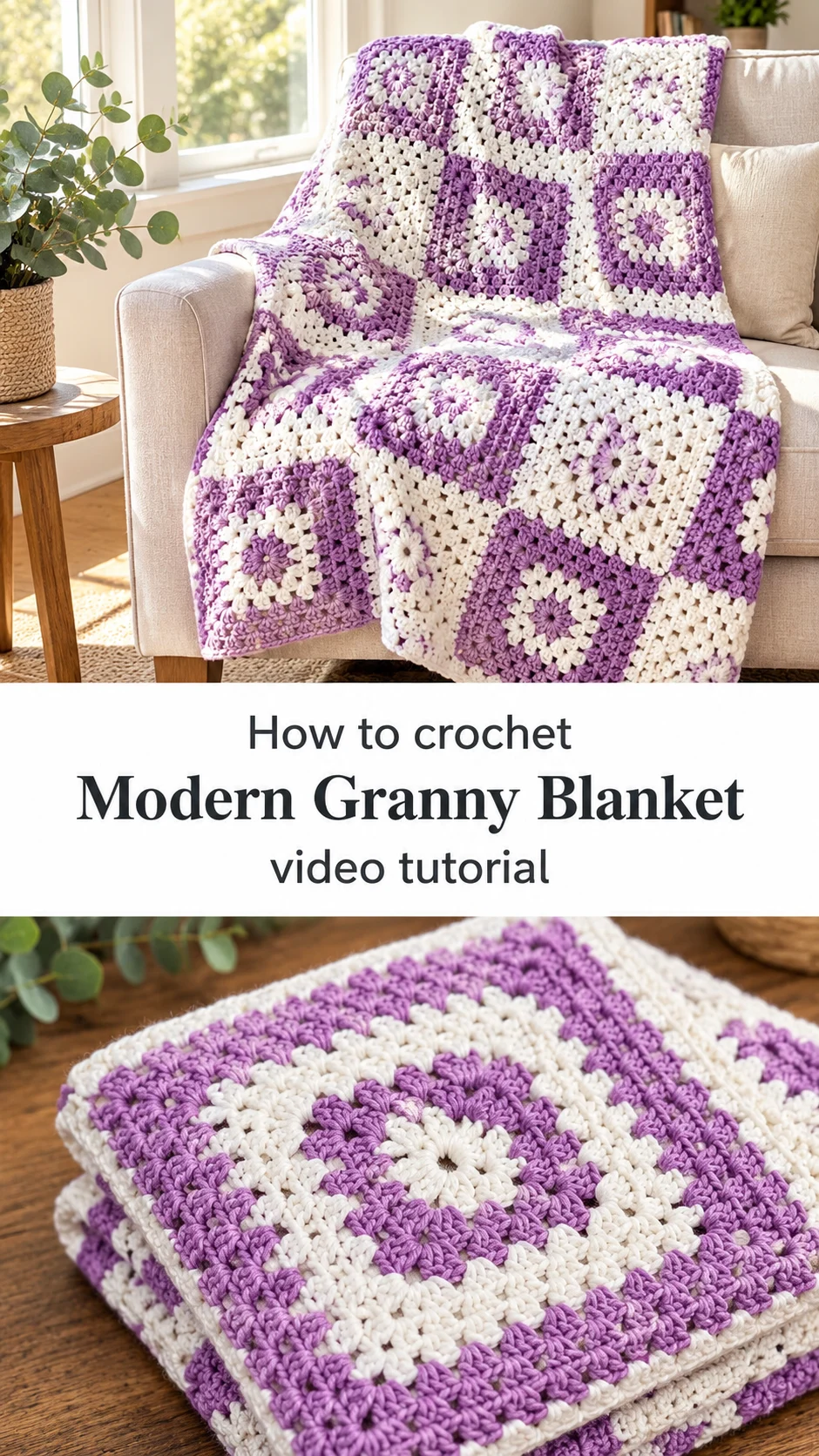
A crochet modern granny blanket turns the humble granny square into something quietly graphic, with soft lilac arcs curling across a creamy white ground. It is a project that rewards patience with a fabric you will want to touch every time you walk past it.
The Crochet Modern Granny Blanket
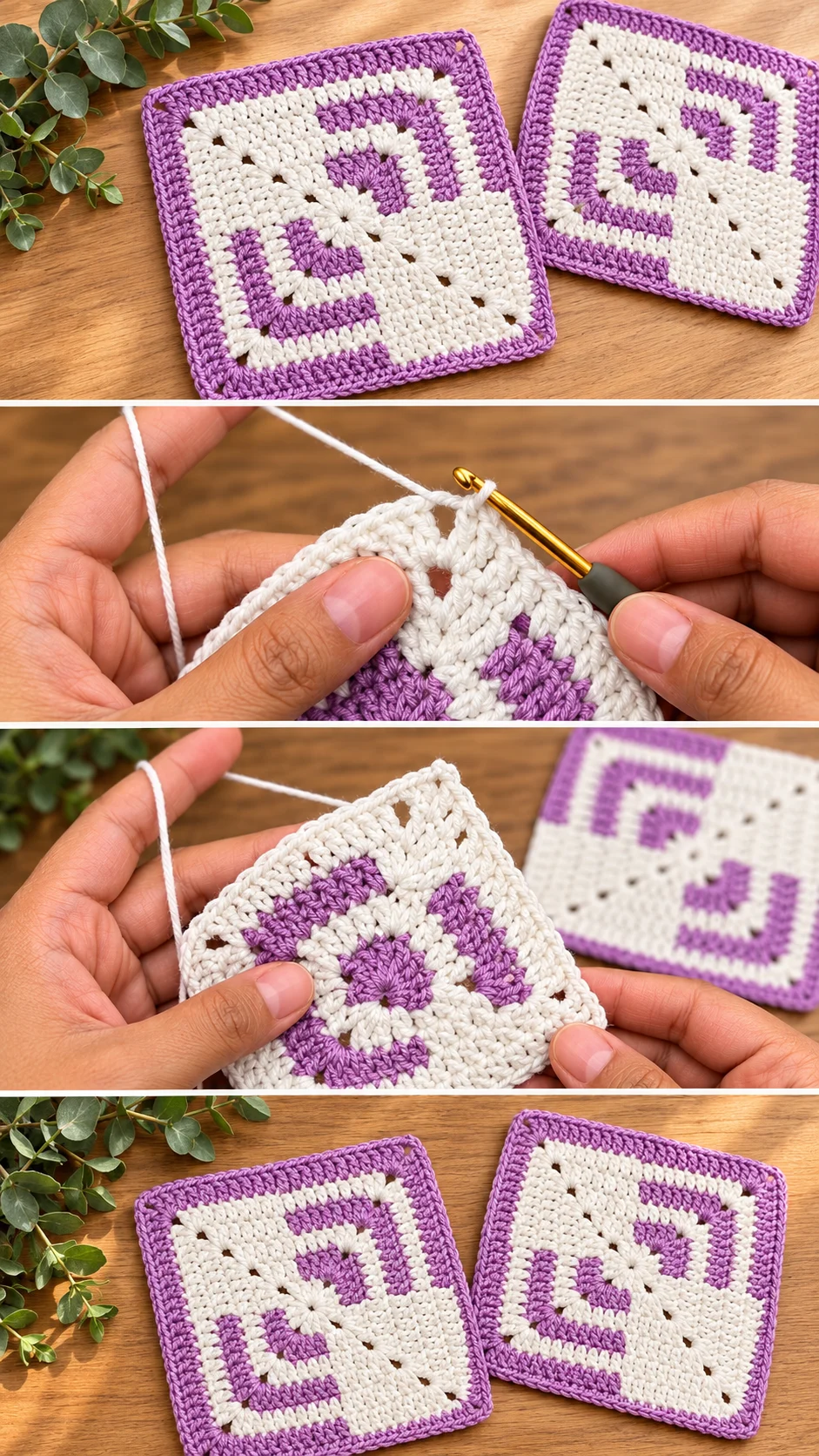
The crochet modern granny blanket is built from square motifs that look familiar at first glance and surprising at the second. Each square has a cream ground with a radiating, starburst centre, and lilac stitches bend around it in nested L-shaped bands. Two corners carry the colour, while the other two stay plain. That simple choice makes the squares feel like part of a puzzle. Turn them in different directions and the arcs chase each other across the blanket. The stitches look dense, tidy and slightly raised, so the fabric has body without being stiff. A solid lilac border finishes each square with a crisp frame. It suits a sofa throw, a baby blanket, or a pile of coasters for practice.
Think of it as a classic with a twist. The shapes are traditional, but the colour placement is clean and contemporary. One square makes a coaster. Twenty make a throw. It also makes a gentle lesson in colour changes for anyone ready to move past plain stripes.
Granny Blanket Related Posts:
- Crochet Lace Doily: A Delicate Decorative Accent
- Crochet Chunky Shoulder Bag: A Chic Summer Essential
- Crochet Hexagon Shoulder Bag: A Chic Seasonal Staple
- Crochet Owl Pocket: A Whimsical Forest Charm
Materials
For a crochet modern granny blanket you need two yarn colours: a soft cream or off-white and a medium lilac, both in the same weight and fibre so the squares behave alike. The yarn in the photos looks smooth and matte with a slight softness, which suggests a cotton or cotton-blend in a light worsted or DK weight. A hook of 3.5 to 4.5 mm is a sensible general range, but work a test square first and adjust until the fabric feels firm yet flexible. Cotton gives crisp stitch definition and holds the starburst centre cleanly, while a plush acrylic blurs it a little. Choose washable yarn if the blanket is for a baby. You will also need scissors and a tapestry needle for weaving in ends, since colour changes create plenty of them. Buy all your yarn from the same dye lot so the cream does not drift between squares.
Understanding the Square Construction
Each square is worked outward from the centre in rounds, which is how the starburst at the heart comes to radiate in every direction. Faint diagonal lines of tiny holes run from the middle toward the corners, marking where the stitches fan out and the square grows.
Those little openings are not mistakes. They are the corner spaces that let a flat square stay flat. Keep them even and the motif will lie neatly instead of cupping.
The rounds are worked in solid stitches, so the fabric is firm and closely packed rather than lacy. Look at how the stitches stand upright in tidy rows. That tells you the tension is snug and consistent throughout.
Because the colour switches partway through the rounds, the squares are built in blocks of cream and lilac within a single round. Plan for that when you set up your yarn. Two small balls or bobbins save you from dragging long strands across the back.
The Colour Blocking: The Detail That Makes It Modern
The signature of this design is the lilac band that bends around two opposite corners while the other two stay cream. Each band forms nested L shapes, like ripples spreading from the centre. The outer round is lilac where the colour appears and cream elsewhere, so the frame looks half and half.
The tricky moment is switching colours mid-round. Change the colour on the last yarn-over of the final stitch in the old shade, so the new colour begins cleanly with no little notch of the wrong colour. Pause the video at those switches and replay them until your hands know the move.
Carry the unused yarn loosely along the back or drop it and pick it up fresh. If you pull the carried strand tight, the squares pucker and the edge puckers with them. If that happens, undo the round and relax the strand.
Colour placement matters once you start joining. In the photos the two squares are mirror variations, with the lilac arcs turned to different corners. Lay your finished squares out on the floor and rotate them before you join anything.
Choosing the Best Yarn for a Crisp Granny Blanket
Cotton is the safest pick if you want the starburst centre and ribbed-looking rows to stay sharp. It has little stretch, so the squares keep their shape and the corners stay square. The trade-off is weight, since a large cotton blanket becomes heavy.
A cotton-acrylic blend lightens the load and adds a touch of bounce. Choose it for a baby blanket or a throw that will be washed often. Pure wool gives warmth but fuzzes slightly and softens the stitch definition, so it suits a cosy winter throw more than a crisp graphic one.
Avoid very fluffy or brushed yarns. They hide the radiating centre and make the colour changes look muddy. A smooth strand with a little twist shows every stitch.
For colour, lilac and cream is a soft, gentle pairing. Dusty blue with oatmeal, sage with ivory, or terracotta with sand would all keep the same calm look. Keep the contrast fairly strong, otherwise the arcs fade into the ground.
Planning the Size
A single square in the photos sits comfortably in a palm and a half, a good coaster or sampler size. To plan a blanket, decide the finished width, divide by the width of your test square, and round to a whole number of squares. Then buy a little more yarn than the estimate, since the colour changes and borders use more than you think.
How to Join and Border the Squares
Because each square already has its own lilac border, joining is a matter of choice. Whip stitching the back loops gives a flat, nearly invisible seam. Slip stitching or single crocheting through both loops creates a raised ridge that frames each square like a grid.
The photos show a neat, slightly raised edge on each square, so a ridged join would echo that look. Use cream for the seams if you want the lilac to float, or lilac if you want the grid to show.
Join in rows first, then join the rows together. This keeps the corners aligned and prevents the four-way intersections from bunching. If a corner puckers, the joins were too tight. Undo and redo with a looser hand.
Finish the whole blanket with one more border in lilac or cream. A few rounds of simple stitches keep the edge flat and tie the squares together. Add a corner increase at each turn so the border does not pull in.
How to Style a Crochet Modern Granny Blanket
The graphic lilac and cream palette sits well on a pale grey sofa or a white linen bed, where the colour reads as a soft accent. Fold it over the arm of a chair so the arcs show.
As a baby blanket it works in a pram or cot, and the calm colours suit any nursery. A smaller version makes a lap blanket or a pushchair cover.
Single squares are just as useful. Make a few as coasters on a wooden table, as seen in the photos, or stitch four into a cushion front. A stack of squares tied with ribbon makes a gift for a friend who is learning to crochet.
Tips for Neat Finishing
Weave in the ends as you go. Colour changes leave many tails, and a pile of them at the end is discouraging. Weave each tail along its own colour, so cream stays under cream and lilac stays under lilac.
Block each square lightly before joining. Pin it to a flat surface, mist it, and let it dry. If the corners flip up, a little steam usually relaxes them. If the squares come out slightly different sizes, block the small ones a touch larger to match.
Keep your tension steady across the colour changes. If the lilac sections look tighter than the cream, go up a half hook size for the lilac. If the edges ripple, you are adding too many stitches at the corners, so count them again.
Caring for Your Blanket
Wash cotton or blends gently, in cool or lukewarm water. Dark lilac can bleed a little the first time, so wash a test square beside a scrap of white before the whole blanket. Dry flat to keep the squares square, since a hot dryer can shrink cotton and distort the joins.
A Timeless Handmade Classic
This crochet modern granny blanket takes an old motif and gives it a calm, graphic voice. Cream and lilac arcs, a firm starburst centre and a tidy frame are what make it stand out.
Four things decide how well it turns out: matching yarn, steady tension, careful colour changes and a patient layout before joining. Get those right and the squares fall into place.
Make one, and you will make twenty.
Video tutorial for the crochet modern granny blanket by the Knitting time channel.
VIDEO
Follow us on Pinterest and subscribe to the Newsletter so you don’t miss a thing!
Tutorial and photos of this modern granny blanket by: Knitting time🧶by Dina.