
A crochet flower filet shawl turns tiny eight-petal blossoms into an open, airy wrap that drapes like lace and feels as light as a breath of spring.
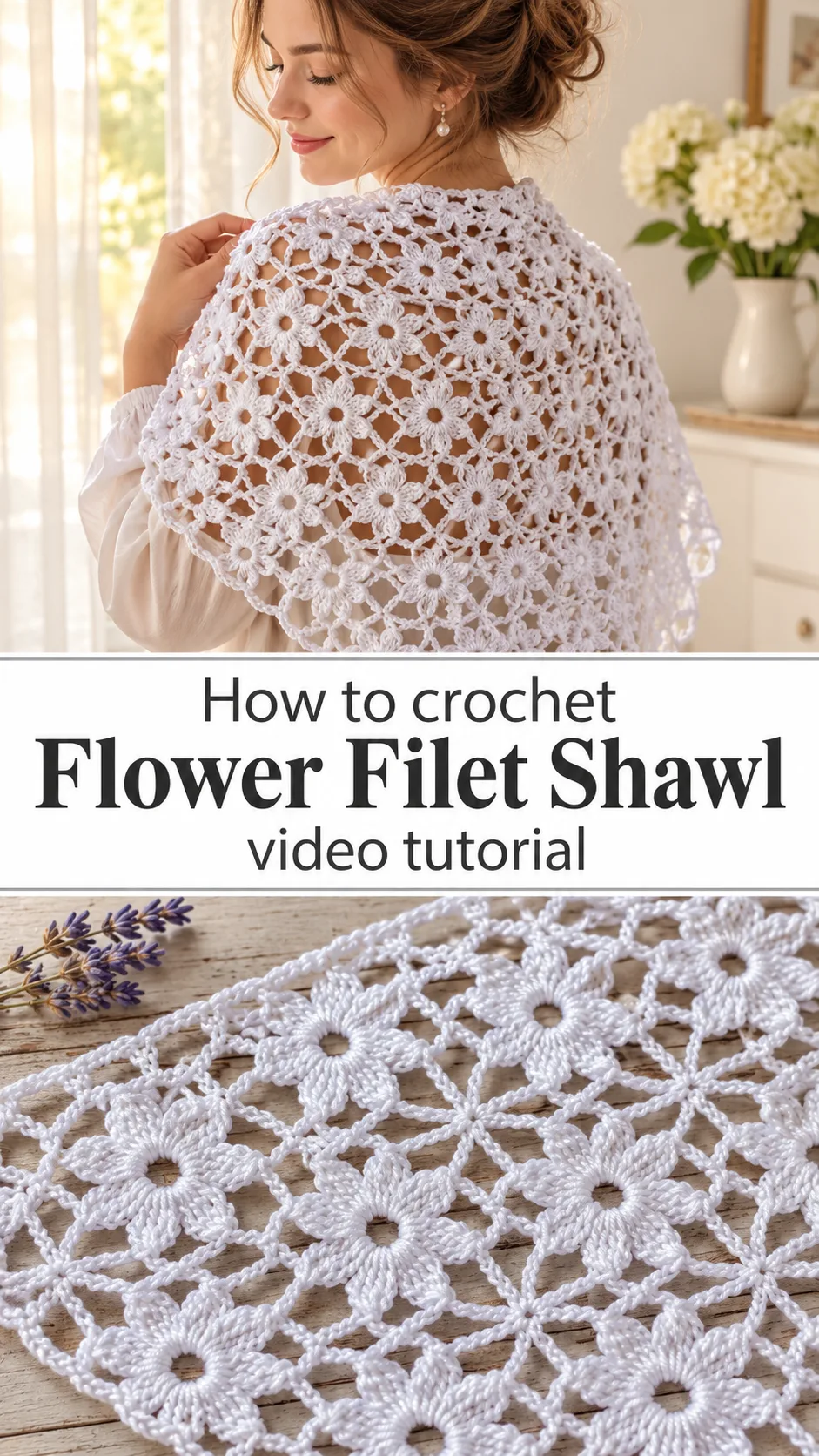
The Crochet Flower Filet Shawl
The crochet flower filet shawl is built from small white blossoms, each with a neat hollow centre and plump, rounded petals. Chain bridges link the flowers in every direction, so the fabric reads as a net of delicate spokes with a bloom at each crossing. Nothing about it is heavy. The petals give the surface a gentle, sculpted texture, while the spaces between them let air and light through. It suits warm evenings, wedding days, and any outfit that needs a whisper of lace across the shoulders. White thread makes it feel bridal and heirloom, yet the same design works in softer shades. Quiet, patient, and rewarding to make.
Besides a shawl, the same flower-and-bridge fabric can become a table runner, a collar, a panel for a summer top or a wide scarf. Because the piece grows flower by flower, it also makes a good gift project: you can stop at any size and still have something lovely. It teaches clean tension and tidy joining. Small, repeatable, calming.
Filet Shawl Related Posts:
- Crochet Crop Top: A Chic and Effortless Wardrobe Piece
- Crochet Round Ripple Baby Blanket: A Timeless Sunburst Treasure
- Crochet Basket Weave Blanket: A Timeless Handmade Classic
- Crochet Fillet Table Runner: A Timeless Lace Statement
Materials
For a crochet flower filet shawl you need a fine, smooth thread and a small hook. The sample shown looks worked in a mercerized cotton or a similar glossy white thread, and that choice makes sense: mercerized cotton holds the crisp definition of each petal and gives a soft sheen that suits lace. A hook in the 1.5 to 2.5 mm range is a sensible general guide for thread of this weight, and the slim steel hook with a comfortable handle used in the tutorial is easy on the hand over long sessions. Choose a hook that leaves the petals firm but not stiff, because loose stitches will make the flowers floppy and the bridges sag. You will also need a tapestry needle for weaving in ends, sharp scissors, rustproof pins and a flat surface for blocking. If you plan a large wrap, buy all the thread at once so the dye lot stays consistent.
Understanding the Flower Motif
Each flower has eight petals arranged around a small open centre. The petals look like puffed or clustered stitches worked into a ring, which gives them that raised, cushioned look against the flat chain lines around them. The centre hole is part of the charm, so keep it small and even.
Then comes the structure. From the outer edge of each bloom, short chain arches reach out to the neighbouring flowers. Where those arches meet, they form little crossings that look like tiny stars between the blooms. This is what gives the fabric its filet feeling: solid areas of flower, open areas of mesh.
Consistency matters more than speed here. If one flower has fuller petals than its neighbours, the eye catches it at once in white thread. Try to work every petal at the same height and keep your yarn tension steady from the first flower to the last.
If the petals look uneven, check where you insert the hook for each cluster. If the centre hole closes up, loosen your starting ring slightly. If a flower cups upward, your petals are likely too tight, so go up a hook size for the next motif and compare.
How the Fabric Grows
The shawl appears to be worked in a continuous, flat panel rather than as separate motifs sewn together. The flowers sit in a staggered grid, with each new flower attached to the previous ones as you work. This is a big advantage: there is almost no sewing at the end, and the joins are hidden inside the chain bridges.
The edge of the piece follows the flower shapes, so the outline is gently scalloped and a little uneven in the way hand lace should be. The corners show a single flower with open loops beside it, which means the shape is finished by simply leaving the outer arches free rather than adding a separate border.
Because the width is set by the number of flowers across, decide how wide you want the shawl before you start. A narrow strip makes a scarf or a collar. A wider panel with extra flowers drapes across the shoulders as a wrap. You can keep adding rows of flowers until the length feels right, then stop with a neat final row.
Keeping the Joins Tidy
The moments where a new flower meets its neighbours are where this design is easiest to spoil. Pull the joining stitch only until it lies flat, never tighter. If the bridges pucker, the join was too snug. If they hang in loops, it was too loose. Watch the tutorial at these points and pause to compare your hand position with the maker’s.
Choosing the Best Thread for a Delicate Wrap
Fine mercerized cotton is the safest option. It stays crisp, shows the petal texture clearly and survives repeated washing. A cotton and viscose blend will drape more softly and add extra sheen, though it can stretch when wet. A wool or alpaca lace yarn would make a warmer wrap, but the petals will blur and the filet bridges will look hazy.
Avoid anything fuzzy or heavily plied. Fuzz hides the chain crossings that make this fabric special, and thick plies make the hook catch on the small centre holes. A slightly tighter twist works better for sharp stitch definition.
For colour, white is the classic and shows off the shadows between petals beautifully. Ivory gives a warmer, vintage feel. Pale dusty rose, sage or powder blue turn the same pattern into a spring accessory. If you choose a darker shade, the lace effect fades, so stay with light to mid tones.
Skill Level and Techniques
This project sits at an upper-beginner to intermediate level. The individual stitches are simple, mostly chains, double crochet and clustered petals. What makes it challenging is repetition with accuracy. You will make dozens of flowers, and each must match the last.
The part that asks for the most patience is joining each new flower while keeping the chain arches the same length. Take it slowly during the first few motifs, until the rhythm becomes automatic. After that, the work moves quickly and becomes pleasantly meditative.
Fine thread is hard on the eyes, so work in good daylight and rest between rows. Keep a stitch marker at the start of each row, because in a pattern of identical flowers it is surprisingly easy to lose your place.
Blocking for Lace That Lies Flat
Blocking is not optional for this shawl. Straight off the hook, the flowers will curl slightly and the bridges will look uneven. Wet blocking solves both problems. Soak the finished piece in cool water with a drop of gentle wash, press out the water in a towel, and lay it on a flat surface.
Pin each flower so the petals sit open and the chain crossings form clean stars. Pin along the scalloped edge so the outline stays smooth. If you use thread with some stiffness, a light starch spray at this stage gives extra crispness, which suits a bridal or formal wrap.
Let it dry completely before unpinning. If a corner curls afterward, dampen it and pin it again. Cotton remembers the shape it dries in, which is exactly why this step pays off.
How to Style a Crochet Flower Filet Shawl
Against skin or a plain dress, the white lace stands out in clear detail. Drape it loosely around the shoulders over a simple sleeveless dress for a summer wedding or garden party. The open mesh lets the colour underneath show faintly through the gaps.
For everyday wear, fold it lengthwise and wrap it once around the neck over a linen shirt or a fitted tee. A dark top makes the white flowers pop. In cooler evenings, layer it over a denim jacket for a softer, more romantic look.
As a gift, it suits brides, bridesmaids, mothers and anyone who appreciates handmade lace. Fold it in tissue paper with a sprig of dried lavender, and it arrives looking like a keepsake.
Tips Before You Begin
Make a test flower first and measure it, so you can calculate how many flowers you need across and along. Your tension will decide the final size more than any plan on paper.
If the shawl is coming out too small, add another row or column of flowers rather than tugging at the stitches. If the fabric feels stiff, switch to a larger hook for the bridges. If the edges ripple, your outer arches are too long, so shorten them slightly in the next rows.
Weave in ends as you go whenever possible. In a lace this open, loose tails are hard to hide at the end, and a poorly woven end can pull a petal out of shape. Run each tail along the back of a petal cluster for a firm hold.
Finally, watch the video tutorial once through before picking up your hook, then replay the joining steps as many times as you need. Pausing at the first flower and again at the first connection saves a great deal of unravelling later.
A Delicate Handmade Heirloom
The crochet flower filet shawl is a quiet, patient project that rewards care. Its beauty comes from many small, identical blossoms joined by fine chain lines into one weightless fabric.
Four things decide how it turns out: a smooth thread with a little sheen, even petals, steady joins, and a thorough blocking. Get those right and the lace falls into soft, graceful lines.
Made in white or a gentle pastel, it becomes the kind of piece that is kept, folded away, and passed on.
Video tutorial for the crochet flower filet shawl by Knitting Love.
Spring in thread. Wear it lightly.
Follow us on Pinterest and subscribe to the Newsletter so you don’t miss a thing!
Tutorial and photos of this flower filet shawl by: Knitting Love 💗.